

20 years of Linux on the Desktop (part 4)
by Ploum on 2025-07-23
Previously in “20 years of Linux on the Deskop”: After contributing to the launch of Ubuntu as the “perfect Linux desktop”, Ploum realises that Ubuntu is drifting away from both Debian and GNOME. In the meantime, mobile computing threatens to make the desktop irrelevant.
- 20 years of Linux on the Desktop (part 1)
- 20 years of Linux on the Desktop (part 2)
- 20 years of Linux on the Desktop (part 3)
The big desktop schism
The fragmentation of the Ubuntu/GNOME communities became all too apparent when, in 2010, Mark Shuttleworth announced during the Ubuntu-summit that Ubuntu would drop GNOME in favour of its own in-house and secretly developed desktop: Unity.
I was in the audience. I remember shaking my head in disbelief while Mark was talking on stage, just a few metres from me.
Working at the time in the automotive industry, I had heard rumours that Canonical was secretly talking with BMW to put Ubuntu in their cars and that there was a need for a new touchscreen interface in Ubuntu. Mark hoped to make an interface that would be the same on computers and touchscreens. Hence the name: “Unity”. It made sense but I was not happy.
The GNOME community was, at the time, in great agitation about the future. Some thought that GNOME was looking boring. That there was no clear sense of direction except minor improvements. In 2006, the German Linux Company SUSE had signed a patent agreement with Microsoft covering patents related to many Windows 95 concepts like the taskbar, the tray, the startmenu. SUSE was the biggest contributor to KDE and the agreement was covering the project. But Red Hat and GNOME refused to sign that agreement, meaning that Microsoft suing the GNOME project was now plausible.
- Everyone seems to forget why GNOME and GNOME 3 and Unity happened (liam-on-linux.dreamwidth.org)
- How Microsoft shattered Gnome’s unity with Windows 95 (www.theregister.com)
An experiment of an alternative desktop breaking all Windows 95 concepts was done in JavaScript: GNOME-shell.
A JavaScript desktop? Seriously? Yeah, it was cool for screenshots but it was slow and barely usable. It was an experiment, nothing else. But there’s a rule in the software world: nobody will ever end an experiment. An experiment will always grow until it becomes too big to cancel and becomes its own project.
Providing the GNOME desktop to millions of users, Mark Shuttleworth was rightly concerned about the future of GNOME. Instead of trying to fix GNOME, he decided to abandon it. That was the end of Ubuntu as Debian+GNOME.
What concerned me was that Ubuntu was using more and more closed products. Products that were either proprietary, developed behind closed doors or, at the very least, were totally controlled by Canonical people.
In 2006, I had submitted a Summer of Code project to build a GTK interface to Ubuntu’s new bug tracker: Launchpad. Launchpad was an in-house project which looked like it was based on the Python CMS Plone and I had some experience with it. During that summer, I realised that Launchpad was, in fact, proprietary and had no API. To my surprise, there was no way I could get the source code of Launchpad. Naively, I had thought that everything Ubuntu was doing would be free software. Asking the dev team, I was promised Launchpad would become free “later”. I could not understand why Canonical people were not building it in the open.
I still managed to build “Conseil” by doing web scraping but it broke with every single change done internally by the Launchpad team.
As a side note, the name “Conseil” was inspired by the book “20.000 leagues under the sea”, by Jules Vernes, a book I had downloaded from the Gutenberg project and that I was reading on my Nokia 770. The device was my first e-reader and I’ve read tenths of public domain books on it. This was made possible thanks to the power of opensource: FBreader, a very good epub reading software, had been easily ported to the N770 and was easily installable.
I tried to maintain Conseil for a few months before giving up. It was my first realisation that Canonical was not 100% open source. Even technically free software was developed behind closed doors or, at the very least, with tight control over the community. This included Launchpad, Bzr, Upstart, Unity and later Mir. The worse offender would later be Snap.
To Mark Shuttleworth’s credit, it should be noted that, most of the time, they were really trying to fix core issues with Linux’s ecosystem. In retrospective, it looks easy to see those moves as “bad”. But, in reality, Canonical had a strong vision and keeping control was easier than to do everything in the open. Bzr was launched before git existed (by a few days). Upstard was created before Systemd. Those decisions made sense at the time.
Even the move to Unity would later prove to be very strategical as, in 2012, GNOME would suddenly depend on Systemd, which was explicitly developed as a competitor to Upstart. Ubuntu would concede defeat in 2015 by replacing Upstart with Systemd and in 2018 by reinstating GNOME as the default desktop. But those were not a given in 2010.
- systemd, 10 years later: a historical and technical retrospective (blog.darknedgy.net)
- What if Ubuntu were right, a discussion with Jonathan Riddel about KDE (ploum.net)
But even with the benefit of doubt, Canonical would sometimes cross huge red lines, like that time where Unity came bundled with some Amazon advertisement, tracking you on your own desktop. This was, of course, not really well received.
The end of Maemo: when incompetence is not enough, be malevolent
At the same time in the nascent mobile world, Nokia was not the only one suffering from the growing Apple/Google duopoly. Microsoft was going nowhere with its own mobile operating system, WindowsCE and running like a headless chicken. The director of the “Business division” of Microsoft, a guy named Stephen Elop, signed a contract with Nokia to develop some Microsoft Office feature on Symbian. This looked like an anecdotical side business until, a few months after that contract, in September 2010, Elop leaves Microsoft to become… CEO of Nokia.
This was important news to me because, at 2010’s GUADEC (GNOME’s annual conference) in Then Hague, I had met a small tribe of free software hackers called Lanedo. After a few nice conversations, I was excited to be offered a position in the team.
In my mind at the time, I would work on GNOME technologies full-time while being less and less active in the Ubuntu world! I had chosen my side: I would be a GNOME guy.
I was myself more and more invested in GNOME, selling GNOME t-shirts at FOSDEM and developing “Getting Things GNOME!”, a software that would later become quite popular.
Joining Lanedo without managing to land a job at Canonical (despite several tries) was the confirmation that my love affair with Ubuntu had to be ended.
In 2010, Lanedo biggest customer was, by far, Nokia. I had been hired to work on Maemo (or maybe Meego? This was unclear). We were not thrilled to see an ex-Microsoft executive take the reins of Nokia.
As we feared, one of Elop’s first actions as CEO of Nokia was to kill Maemo in an infamous “burning platform” memo. Elop is a Microsoft man and hates anything that looks like free software. In fact, like a good manager, he hates everything technical. It is all the fault of the developers which are not “bringing their innovation to the market fast enough”. Sadly, nobody highlighted the paradox that “bringing to the market” had never been the job of the developers. Elop’s impact on the Nokia company is huge and nearly immediate: the stock is in free fall.
One Nokia developer posted on Twitter: “Developers are blamed because they did what management asked them to do”. But, sometimes, management even undid the work of the developers.
The Meego team at Nokia was planning a party for the release of their first mass-produced phone, the N8. While popping Champaign during the public announcement of the N8 release, the whole team learned that the phone had eventually been shipped with… Symbian. Nobody had informed the team. Elop had been CEO for less than a week and Nokia was in total chaos.
But Stephen Elop is your typical “successful CEO”. “Successful” like in inheriting one of the biggest and most successful mobile phone makers and, in a couple of years, turning it into ashes. You can’t invent such “success”.
During Elop’s tenure, Nokia’s stock price dropped 62%, their mobile phone market share was halved, their smartphone market share fell from 33% to 3%, and the company suffered a cumulative €4.9 billion loss
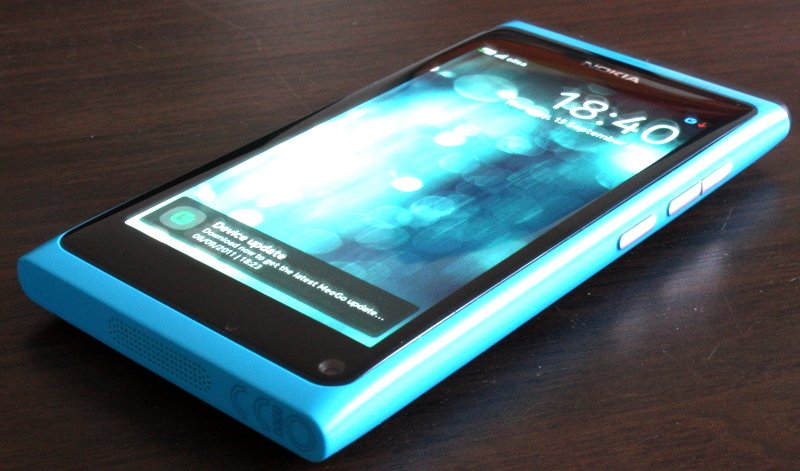
It should be noted that, against all odds, the Meego powered Nokia N9, which succeeded to the N8, was a success and was giving true hope of Meego competing with Android/iOS. N9 was considered a “flagship” and it showed. At Lanedo, we had discussed having an N9 bought by the company for each employee so we could “eat our own dog food” (something which was done at Collabora). But Elop announcement was clearly underderstood as the killing of Meego/Maemo and Symbian to leave room to… Windows Phone!
Well, Elop promised that, despite moving to Windows Phone, Nokia would release one Meego phone every year. I don’t remember if anyone bought that lie. We could not really believe that all those years of work would be killed just when the success of the N9 proved that we did it right. But that was it. The N9 was the first and the last of its kind.
Ironically, the very first Windows Phone, the Lumia 800, will basically be the N9 with Windows Phone replacing Meego. And it would receive worse reviews that the N9.
At that moment, one question is on everybody’s lips: is Stephen Elop such a bad CEO or is he destroying Nokia on purpose? Is it typical management incompetence or malevolence? Or both?
The answer comes when Microsoft, Elop’s previous employer, bought Nokia for a fraction of the price it would have paid if Elop hasn’t been CEO. It’s hard to argue that this was not premeditated: Elop managed to discredit and kill every software-related project Nokia had ever done. That way, Nokia could be sold as a pure hardware maker to Microsoft, without being encumbered by a software culture which was too distant from Microsoft. And Elop goes back to his old employer as a richer man, receiving a huge bonus for having tanked a company. But remember dear MBA students, he’s a “very successful manager”, you should aspire to become like him.
Les voies du capitalisme sont impénétrables.
As foolish as it sounds, this is what the situation was: the biggest historical phone maker in the world merged with the biggest historical software maker. Vic Gundotra, head of the Google+ social network, posted: “Two turkeys don’t make an eagle.” But one thing was clear: Microsoft was entering the mobile computing market because everything else was suddenly irrelevant.
Every business eyes were pointed towards mobile computing where, ironically, Debian+GNOME had been a precursor.
Just when it looked like Ubuntu managed to make Linux relevant on the desktop, nobody cared about the desktop anymore. How could Mark Shuttleworth makes Ubuntu relevant in that new world?
(to be continued)
Subscribe by email or by rss to get the next episodes of “20 years of Linux on the Desktop”.
I’m currently turning this story into a book. I’m looking for an agent or a publisher interested to work with me on this book and on an English translation of “Bikepunk”, my new post-apocalyptic-cyclist typewritten novel which sold out in three weeks in France and Belgium.
I’m Ploum, a writer and an engineer. I like to explore how technology impacts society. You can subscribe by email or by rss. I value privacy and never share your adress.
I write science-fiction novels in French. For Bikepunk, my new post-apocalyptic-cyclist book, my publisher is looking for contacts in other countries to distribute it in languages other than French. If you can help, contact me!

