

3 Common Reasons For A Transmission Fluid Leak
Calvin Chan Wai Meng/Getty Images
Modern cars can be quite good at letting us know when something is wrong. Perhaps it will emit strange smells, start shifting slowly, or activate a check engine light on the dashboard. Fluid leaks can also be one of your car’s ways of alerting you to an issue that needs addressing, not ignoring. A transmission fluid leak, in particular, can fill a driver with dread, because it can easily lead to costly repairs or complete transmission failure.
Much like engine oil, transmission fluid keeps the gearbox’s moving parts lubricated and cooled as they spin, shift, and so on. And if your manual or automatic transmission is shifting as it’s supposed to, you’ll probably not think about the transmission fluid until it’s too late. After all, even though modern cars still require transmission fluid change, just not as often, say after every 60,000 – 100,000 miles, depending on the type of vehicle and driving habits.
However, given that transmission fluid doesn’t burn off as much as oil, if you check the fluid level with a dipstick and notice that it is too low, you’ll want to act quickly — especially if that’s followed by a sweet smell around your vehicle and red puddles of fluid on your driveway. Chances are, you have a leak, and driving with low fluid levels is one of those mistakes that can damage your transmission. Since an average transmission repair job costs anywhere from a few hundred dollars to thousands of dollars, it’s understandable that you’ll want to know the most frequent causes of transmission leaks.
A worn-out transmission pan
One of the most common causes of a transmission fluid leak is a worn-out transmission pan. It’s a metal container that serves as a reservoir for transmission fluid. In most cases, the transmission pan can last for an extended period, but it can still be damaged by aggressive driving, such as hitting potholes or speed bumps at full speed. Rust on your car can also cause continuous damage to the transmission pan, which, in turn, will inevitably lead to transmission fluid leaks.
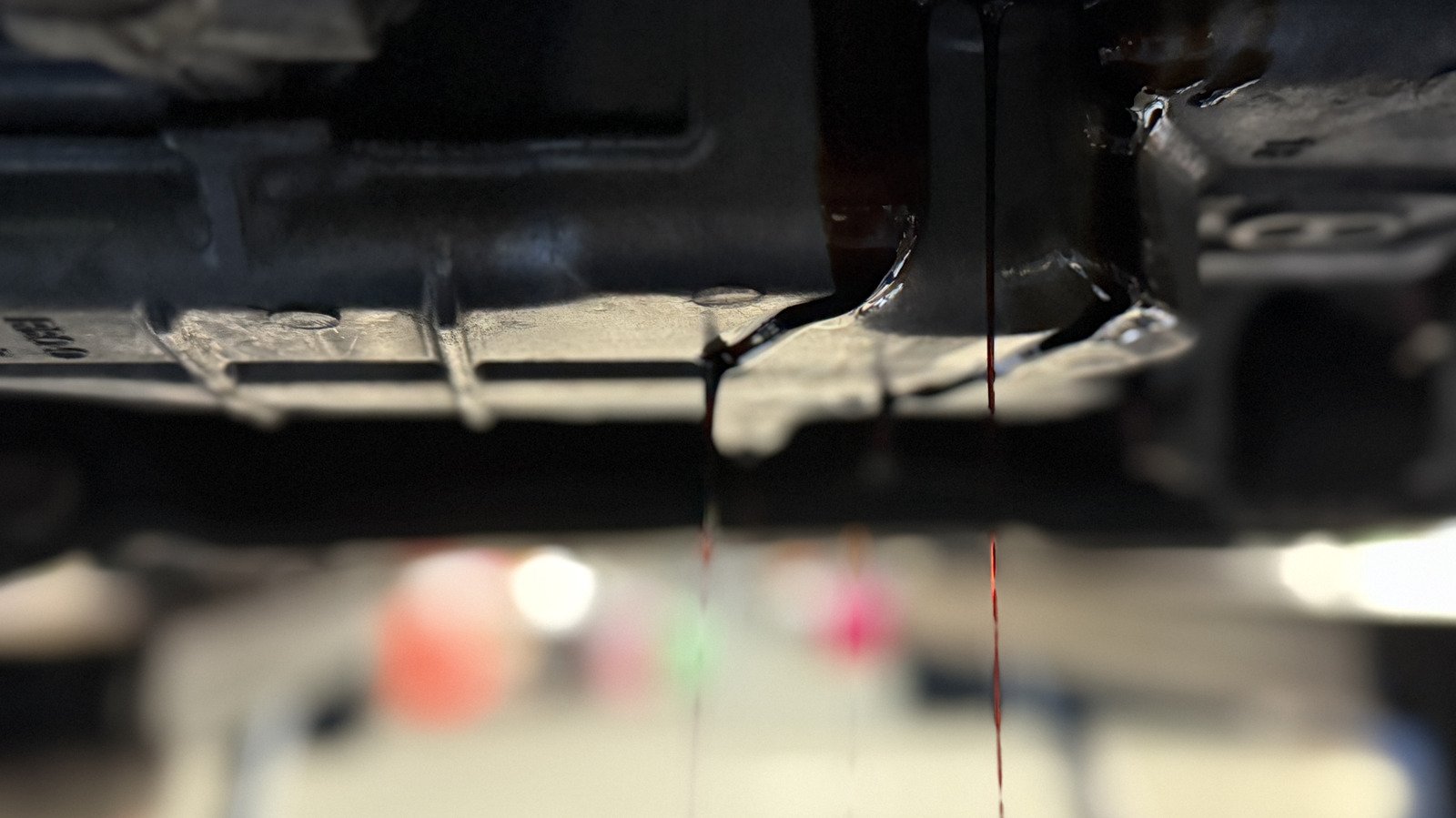
For this reason, if you peek under your car and see a telltale drooling of transmission fluid near the engine, you might want to have the pan checked. Often, the culprit is a poorly installed transmission pan. However, if the pan has a crack or is severely damaged, you’ll want to have it replaced as soon as possible. You can opt to visit a professional, but if you’re at a point in your DIY mechanic journey where you can trust yourself with some automotive projects, you can inspect and replace the transmission pan yourself.
Worn-out and poorly installed transmission pan gaskets
Setta Sornnoi/Shutterstock
When you’re replacing the transmission pan, make sure you inspect the pan gaskets as well. Unsung heroes of your transmission system, gaskets prevent automatic transmission fluid (ATF) from leaking. And while they’re designed to withstand exceedingly high temperatures and provide a good sealing effect for an extended period, some are made of flexible rubber, while others are cork composites. This means they may be susceptible to wear and tear over time, and when this occurs, the transmission fluid may leak.
There are also times when gaskets leak transmission fluid due to improper installation. Generally speaking, installing a transmission pan gasket is one of the easiest DIY engine maintenance tasks you can do to keep your vehicle functioning properly. But despite not being a complex task, you’re likely to encounter a nasty fluid leak if you engage in simple things like reusing a worn-out washer when closing a drain plug or using excess force when tightening bolts or installing the drain plug.
Whatever the cause of your transmission fluid leak, if it’s due to improper pan or gasket installation, it’s best to have a mechanic inspect the pan and gasket. Sure, the leak won’t damage your car’s transmission outright. But if neglected long enough, you’ll start experiencing tell-tale signs of a failing transmission like burning smells, strange sounds, and a sticky shifter.
Damaged transmission lines
Nafadh/Shutterstock
Every transmission system has cooling lines that prevent overheating. This is achieved by circulating fluids from one part of the transmission to another. However, while most fluid lines are built to last hundreds of thousands of miles, extreme temperature changes and road debris can cause wear, potentially leading to cracks, ruptures, or bursts.
If your transmission is shifting hard, overheating more than usual, or you notice fluid on the cooling lines, you likely have damaged fluid lines. And since transmission problems are something that you should not take lightly, you’ll want to call an expert right away to avoid headaches down the road.
Alternatively, if there’s a small hole or crack in one of the fluid lines and you don’t want to schedule a replacement immediately, there are quick and easy DIY remedies you can consider. You can cut out the leaking section and replace it with hose clamps, but keep in mind this is only a temporary fix. You’ll need to visit your mechanic to determine the true extent of the damage.
