Close Menu

    Subscribe to Updates

    Get the latest creative news from FooBar about art, design and business.

    What's Hot

    Spotify’s new feature makes it easier to find popular audiobooks

    This portable JBL Grip Bluetooth speaker is so good at 20% off

    ‘AI’ could dox your anonymous posts

    Facebook X (Twitter) Instagram
    • Artificial Intelligence
    • Business Technology
    • Cryptocurrency
    • Gadgets
    • Gaming
    • Health
    • Software and Apps
    • Technology
    Facebook X (Twitter) Instagram Pinterest Vimeo
    Tech AI Verse
    • Home
    • Artificial Intelligence

      What the polls say about how Americans are using AI

      February 27, 2026

      Tensions between the Pentagon and AI giant Anthropic reach a boiling point

      February 21, 2026

      Read the extended transcript: President Donald Trump interviewed by ‘NBC Nightly News’ anchor Tom Llamas

      February 6, 2026

      Stocks and bitcoin sink as investors dump software company shares

      February 4, 2026

      AI, crypto and Trump super PACs stash millions to spend on the midterms

      February 2, 2026
    • Business

      Weighing up the enterprise risks of neocloud providers

      March 3, 2026

      A stolen Gemini API key turned a $180 bill into $82,000 in two days

      March 3, 2026

      These ultra-budget laptops “include” 1.2TB storage, but most of it is OneDrive trial space

      March 1, 2026

      FCC approves the merger of cable giants Cox and Charter

      February 28, 2026

      Finding value with AI and Industry 5.0 transformation

      February 28, 2026
    • Crypto

      Strait of Hormuz Shutdown Shakes Asian Energy Markets

      March 3, 2026

      Wall Street’s Inflation Alarm From Iran — What It Means for Crypto

      March 3, 2026

      Ethereum Price Prediction: What To Expect From ETH In March 2026

      March 3, 2026

      Was Bitcoin Hijacked? How Institutional Interests Shaped Its Narrative Since 2015

      March 3, 2026

      XRP Whales Now Hold 83.7% of All Supply – What’s Next For Price?

      March 3, 2026
    • Technology

      Spotify’s new feature makes it easier to find popular audiobooks

      March 3, 2026

      This portable JBL Grip Bluetooth speaker is so good at 20% off

      March 3, 2026

      ‘AI’ could dox your anonymous posts

      March 3, 2026

      Microsoft says new Teams location feature isn’t for ’employee tracking’

      March 3, 2026

      OpenAI got ‘sloppy’ about the wrong thing

      March 3, 2026
    • Others
      • Gadgets
      • Gaming
      • Health
      • Software and Apps
    Check BMI
    Tech AI Verse
    You are at:Home»Technology»“Spare” living human bodies might provide us with organs for transplantation
    Technology

    “Spare” living human bodies might provide us with organs for transplantation

    TechAiVerseBy TechAiVerseMarch 28, 2025No Comments5 Mins Read2 Views
    Facebook Twitter Pinterest Telegram LinkedIn Tumblr Email Reddit
    “Spare” living human bodies might provide us with organs for transplantation
    Share
    Facebook Twitter LinkedIn Pinterest WhatsApp Email

    “Spare” living human bodies might provide us with organs for transplantation

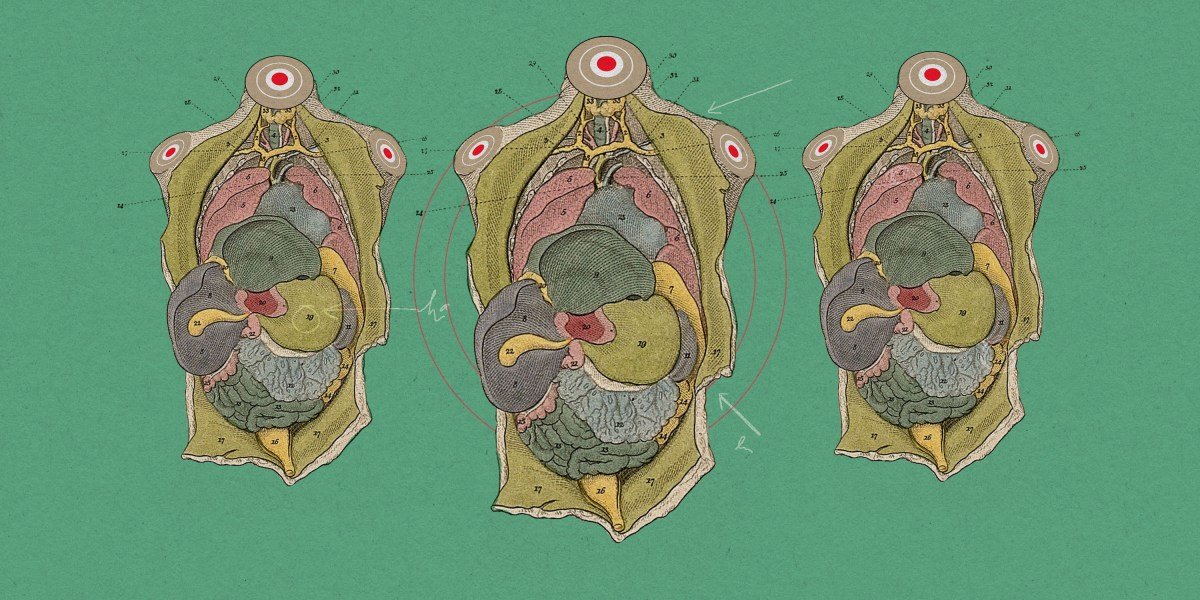
    This week, MIT Technology Review published a piece on bodyoids—living bodies that cannot think or feel pain. In the piece, a trio of scientists argue that advances in biotechnology will soon allow us to create “spare” human bodies that could be used for research, or to provide organs for donation.

    If you find your skin crawling at this point, you’re not the only one. It’s a creepy idea, straight from the more horrible corners of science fiction. But bodyoids could be used for good. And if they are truly unaware and unable to think, the use of bodyoids wouldn’t cross “most people’s ethical lines,” the authors argue. I’m not so sure.

    Either way, there’s no doubt that developments in science and biotechnology are bringing us closer to the potential reality of bodyoids. And the idea is already stirring plenty of ethical debate and controversy.

    One of the main arguments made for bodyoids is that they could provide spare human organs. There’s a huge shortage of organs for transplantation. More than 100,000 people in the US are waiting for a transplant, and 17 people on that waiting list die every day. Human bodyoids could serve as a new source.

    Scientists are working on other potential solutions to this problem. One approach is the use of gene-edited animal organs. Animal organs don’t typically last inside human bodies—our immune systems will reject them as “foreign.” But a few companies are creating pigs with a series of gene edits that make their organs more acceptable to human bodies.

    A handful of living people have received gene-edited pig organs. David Bennett Sr. was the first person to get a gene-edited pig heart, in 2022, and Richard Slayman was the first to get a kidney, in early 2024. Unfortunately, both men died around two months after their surgery.

    But Towana Looney, the third living person to receive a gene-edited pig kidney, has been doing well. She had her transplant surgery in late November of last year. “I am full of energy. I got an appetite I’ve never had in eight years,” she said at the time. “I can put my hand on this kidney and feel it buzzing.” She returned home in February.

    At least one company is taking more of a bodyoid-like approach. Renewal Bio, a biotech company based in Israel, hopes to grow “embryo-stage versions of people” for replacement organs.

    Their approach is based on advances in the development of “synthetic embryos.” (I’m putting that term in quotation marks because, while it’s the simplest descriptor of what they are, a lot of scientists hate the term.)

    Embryos start with the union of an egg cell and a sperm cell. But scientists have been working on ways to make embryos using stem cells instead. Under the right conditions, these cells can divide into structures that look a lot like a typical embryo.

    The very existence of synthetic embryos is throwing into question our understanding of what a human embryo even is. “Is it the thing that is only generated from the fusion of a sperm and an egg?” Naomi Moris, a developmental biologist at the Crick Institute in London, said to me a couple of years ago. “Is it something to do with the cell types it possesses, or the [shape] of the structure?”

    The authors of the new MIT Technology Review piece also point out that such bodyoids could also help speed scientific and medical research.

    At the moment, most drug research must be conducted in lab animals before clinical trials can start. But nonhuman animals may not respond the same way people do, and the vast majority of treatments that look super-promising in mice fail in humans. Such research can feel like a waste of both animal lives and time.

    Scientists have been working on solutions to these problems, too. Some are creating “organs on chips”—miniature collections of cells organized on a small piece of polymer that may resemble full-size organs and can be used to test the effects of drugs.

    Others are creating digital representations of human organs for the same purpose. Such digital twins can be extensively modeled, and can potentially be used to run clinical trials in silico.

    Both of these approaches seem somehow more palatable to me, personally, than running experiments on a human created without the capacity to think or feel pain. The idea reminds me of the recent novel Tender Is the Flesh by Agustina Bazterrica, in which humans are bred for consumption. In the book, their vocal cords are removed so that others do not have to hear them scream.

    When it comes to real-world biotechnology, though, our feelings about what is “acceptable” tend to shift. In vitro fertilization was demonized when it was first developed, for instance, with opponents arguing that it was “unnatural,” a “perilous insult,” and “the biggest threat since the atom bomb.” It is estimated that more than 12 million people have been born through IVF since Louise Brown became the first “test tube baby” 46 years ago. I wonder how we’ll all feel about bodyoids 46 years from now.

    This article first appeared in The Checkup, MIT Technology Review’s weekly biotech newsletter. To receive it in your inbox every Thursday, and read articles like this first, sign up here.

    Share. Facebook Twitter Pinterest LinkedIn Reddit WhatsApp Telegram Email
    Previous ArticleWhat is Signal? The messaging app, explained.
    Next Article The Download: peering inside an LLM, and the rise of Signal
    TechAiVerse
    • Website

    Jonathan is a tech enthusiast and the mind behind Tech AI Verse. With a passion for artificial intelligence, consumer tech, and emerging innovations, he deliver clear, insightful content to keep readers informed. From cutting-edge gadgets to AI advancements and cryptocurrency trends, Jonathan breaks down complex topics to make technology accessible to all.

    Related Posts

    Spotify’s new feature makes it easier to find popular audiobooks

    March 3, 2026

    This portable JBL Grip Bluetooth speaker is so good at 20% off

    March 3, 2026

    ‘AI’ could dox your anonymous posts

    March 3, 2026
    Leave A Reply Cancel Reply

    Top Posts

    Ping, You’ve Got Whale: AI detection system alerts ships of whales in their path

    April 22, 2025703 Views

    Lumo vs. Duck AI: Which AI is Better for Your Privacy?

    July 31, 2025285 Views

    6.7 Cummins Lifter Failure: What Years Are Affected (And Possible Fixes)

    April 14, 2025164 Views

    6 Best MagSafe Phone Grips (2025), Tested and Reviewed

    April 6, 2025124 Views
    Don't Miss
    Technology March 3, 2026

    Spotify’s new feature makes it easier to find popular audiobooks

    Spotify’s new feature makes it easier to find popular audiobooks Image: Spotify Summary created by…

    This portable JBL Grip Bluetooth speaker is so good at 20% off

    ‘AI’ could dox your anonymous posts

    Microsoft says new Teams location feature isn’t for ’employee tracking’

    Stay In Touch
    • Facebook
    • Twitter
    • Pinterest
    • Instagram
    • YouTube
    • Vimeo

    Subscribe to Updates

    Get the latest creative news from SmartMag about art & design.

    About Us
    About Us

    Welcome to Tech AI Verse, your go-to destination for everything technology! We bring you the latest news, trends, and insights from the ever-evolving world of tech. Our coverage spans across global technology industry updates, artificial intelligence advancements, machine learning ethics, and automation innovations. Stay connected with us as we explore the limitless possibilities of technology!

    Facebook X (Twitter) Pinterest YouTube WhatsApp
    Our Picks

    Spotify’s new feature makes it easier to find popular audiobooks

    March 3, 20262 Views

    This portable JBL Grip Bluetooth speaker is so good at 20% off

    March 3, 20262 Views

    ‘AI’ could dox your anonymous posts

    March 3, 20261 Views
    Most Popular

    7 Best Kids Bikes (2025): Mountain, Balance, Pedal, Coaster

    March 13, 20250 Views

    VTOMAN FlashSpeed 1500: Plenty Of Power For All Your Gear

    March 13, 20250 Views

    Best TV Antenna of 2025

    March 13, 20250 Views
    © 2026 TechAiVerse. Designed by Divya Tech.
    • Home
    • About Us
    • Contact Us
    • Privacy Policy
    • Terms & Conditions

    Type above and press Enter to search. Press Esc to cancel.