

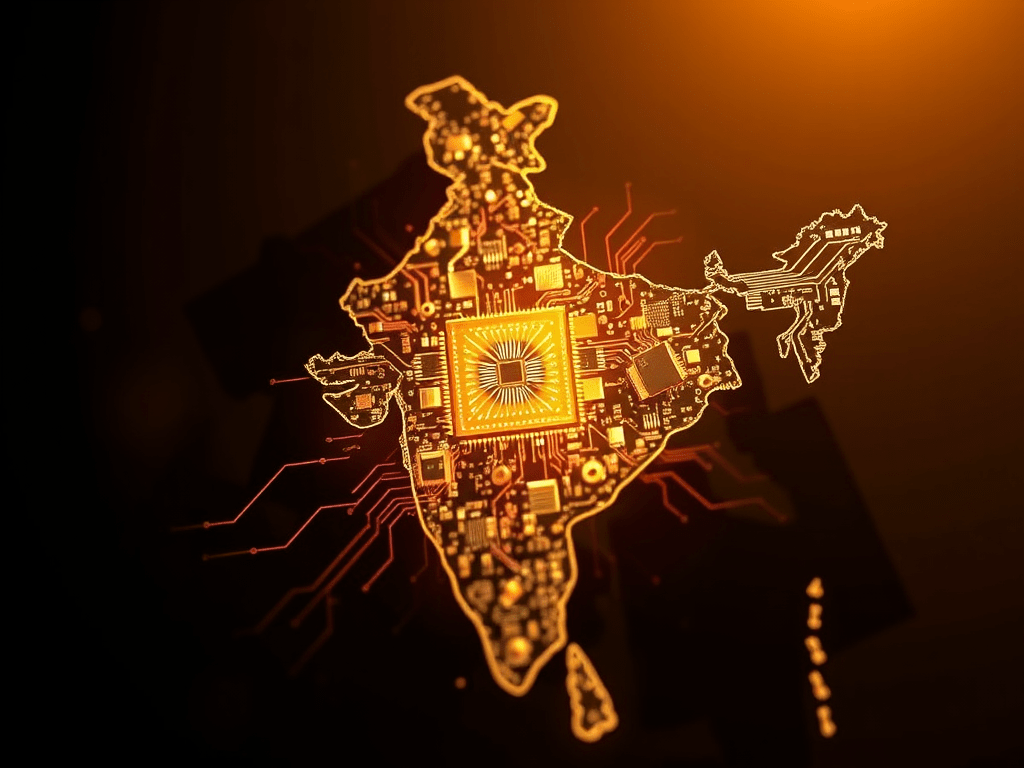
Zoho halts $700M semiconductor plan
Sridhar Vembu of Zoho announced the suspension of their semiconductor fab plans due to technological uncertainties, highlighting the capital-intensive nature of this industry and the need for government support. This reflects broader challenges in India’s semiconductor ambitions amid geopolitical tensions, necessitating sustained R&D investment, talent retention, and strategic partnerships for future success.
When Zoho’s founder Sridhar Vembu tweeted today, that his company had “shelved” its much-discussed semiconductor-fab plan for lack of confidence in the underlying technology, it was a rare moment of stark realism from one of India’s most optimistic entrepreneurs. “This business is so capital-intensive it requires government backing,” he wrote. “We did not have that confidence in the tech, so our board decided to pause—until we find a better approach.”
That pause may sting for a firm that has long thrived on bootstrapping and self-reliance. Zoho was in talks with the Department of Electronics & IT under India’s Semiconductor Mission, and reports reveal that they had set aside some $200 million for a pilot 28 nm wafer line in Tamil Nadu. Yet as the company dug into the requirements—extreme-UV lithography, sub-10 nm process nodes, global supply-chain partnerships—it realized that building a modern fab is an order of magnitude more complex than spinning up a new data center.
Zoho’s decision to halt $700 million semiconductor plan echoes a broader pattern in India’s semiconductor push. When Prime Minister Modi unveiled the Chips to Startup program in 2022, he dangled $10 billion in incentives to lure global giants. Vedanta-Foxconn broke ground first, only to pause last year amid concerns over domestic demand. The marquee Adani-Tower Semiconductor deal—touted as India’s first $10 billion chip plant—also unraveled in April 2025, with Adani citing financial and market uncertainties.
Taken together, these retreats underscore one harsh truth: fabs need deep pockets, decades of R&D, and a clear end-to-end technology path before asking taxpayers to underwrite the risks. Vembu’s candid admission—“until we find a better tech approach”—is a welcome pivot toward pragmatism. It reflects Modi’s own warning against “white elephants” in strategic industries, and it forces policymakers and entrepreneurs alike to reckon with the enormous gulf between bold vision and wafer-level reality.
Just a day before shelving the fab, Vembu had outlined what India does well—and where it still falls short—across four categories of innovation. He gave India oVembu argued. Yes, UPI transformed digital payments, but imaginative new hardware products—think new train designs, not merely running the same lines on time—remain rare.
When it comes to technology innovation, he refused to grade India at all, noting that “we export most of our technology talent.” Retaining that talent, he insisted, will require homegrown, ambitious deep-tech projects—exactly the kind of challenge a new semiconductor fab could have provided. And on the lofty domain of scientific breakthroughs, India doesn’t even register; Vembu called for a state-backed “Bell Labs 2.0” to fund basic research, because long-lag breakthroughs are the wellspring of tomorrow’s technology.
Taken together, his framework explains why Zoho’s board demurred on the fab. A successful semiconductor plant hinges on two pillars that India is only just building: cutting-edge process know-how (the 7 nm and below nodes) and fundamental science (next-generation materials, novel EUV techniques). Without both, any fab risks becoming a sprawling white elephant.
Zoho’s retreat therefore offers a roadmap for India’s next steps. First, hybrid models with global partners could share risk and transfer critical know-how, much like partnerships in high-energy physics or aerospace. Second, private-sector deep-tech hubs—university consortia funded to tackle advanced node research—could seed breakthroughs in semiconductor materials and lithography. Third, a concerted talent-repatriation drive, backed by fellowships and mission-oriented projects, could halt the brain-drain. And finally, a government-led, decade-long commitment to pure science—envisioned as India’s own Bell Labs—would rebuild the fundamental foundations needed for future fabs.
The ongoing conflict between the U.S. and China has created a unique set of circumstances in the global semiconductor industry. As the two largest economies engage in a technological cold war, the semiconductor supply chain has become one of the key battlegrounds. The U.S. has ramped up sanctions on China, particularly targeting key players like TSMC and SMIC, to prevent the transfer of critical semiconductor technology. Meanwhile, China has been aggressively investing in its own semiconductor production capabilities in an attempt to reduce its dependence on foreign suppliers.
This geopolitical tension presents an opportunity for India to position itself as a key player in the global semiconductor supply chain. With its large, highly skilled workforce, an emerging startup ecosystem, and increasing government focus on the sector, India could capitalize on the decoupling of the U.S. and China, attracting both investment and talent. The government’s push to establish semiconductor fabs, such as the PLI (Production-Linked Incentive) scheme, signals its intent to make India a global semiconductor hub.
However, India’s ambitions in the semiconductor space are not without significant challenges. As Sridhar Vembu of Zoho pointed out, semiconductor manufacturing is capital-intensive and requires cutting-edge technology. The country faces several obstacles, including the need for significant investment in infrastructure, the lack of advanced manufacturing capabilities, and the challenge of attracting and retaining top-tier talent. Moreover, the complex nature of semiconductor fabrication means that even with government backing, India will need to overcome steep technological and scientific hurdles.
The semiconductor ambitions of both private and public sectors in India must be matched by a long-term commitment to research and development. Without significant breakthroughs in scientific research, the country’s drive to build its semiconductor ecosystem may fall short. The U.S.-China rivalry provides an opening, but India will need to make substantial strides in both product and technology innovation to fully capitalize on this opportunity.
Sridhar Vembu’s remarks, coupled with India’s ongoing semiconductor push, paint a picture of both optimism and realism. While the geopolitical situation may provide a temporary window for India to position itself as a semiconductor power, the nation must be prepared to tackle the inherent challenges that come with such an ambitious goal. The path ahead will require strategic government policies, private-sector innovation, and most importantly, a sustained investment in scientific and technological research.
None of this is a retreat from ambition. Rather, Zoho’s measured pause signals a maturing ecosystem—one that acknowledges the massive scale and deep expertise required for semiconductor leadership. Vembu’s unvarnished honesty reminds us that the path to a thriving chip industry is not paved by incentives alone, but by the patient cultivation of technology, talent, and tough-minded realism. In the coming years, India will need both the bold visions of its founders and the hard-headed pragmatism of its boardrooms to turn its semiconductor dreams into silicon-wafer reality.
