Close Menu

    Subscribe to Updates

    Get the latest creative news from FooBar about art, design and business.

    What's Hot

    Resident Evil Requiem shows how sequels can drive sales of previous releases

    Rogue Point aims to prove old school is the new cool with a back-to-basics shooter

    Nexon revenue rises 6.5% to $3.1bn in 2025, driven by ongoing success of Arc Raiders

    Facebook X (Twitter) Instagram
    • Artificial Intelligence
    • Business Technology
    • Cryptocurrency
    • Gadgets
    • Gaming
    • Health
    • Software and Apps
    • Technology
    Facebook X (Twitter) Instagram Pinterest Vimeo
    Tech AI Verse
    • Home
    • Artificial Intelligence

      Read the extended transcript: President Donald Trump interviewed by ‘NBC Nightly News’ anchor Tom Llamas

      February 6, 2026

      Stocks and bitcoin sink as investors dump software company shares

      February 4, 2026

      AI, crypto and Trump super PACs stash millions to spend on the midterms

      February 2, 2026

      To avoid accusations of AI cheating, college students are turning to AI

      January 29, 2026

      ChatGPT can embrace authoritarian ideas after just one prompt, researchers say

      January 24, 2026
    • Business

      The HDD brand that brought you the 1.8-inch, 2.5-inch, and 3.5-inch hard drives is now back with a $19 pocket-sized personal cloud for your smartphones

      February 12, 2026

      New VoidLink malware framework targets Linux cloud servers

      January 14, 2026

      Nvidia Rubin’s rack-scale encryption signals a turning point for enterprise AI security

      January 13, 2026

      How KPMG is redefining the future of SAP consulting on a global scale

      January 10, 2026

      Top 10 cloud computing stories of 2025

      December 22, 2025
    • Crypto

      How Polymarket Is Turning Bitcoin Volatility Into a Five-Minute Betting Market

      February 13, 2026

      Israel Indicts Two Over Secret Bets on Military Operations via Polymarket

      February 13, 2026

      Binance’s October 10 Defense at Consensus Hong Kong Falls Flat

      February 13, 2026

      Argentina Congress Strips Workers’ Right to Choose Digital Wallet Deposits

      February 13, 2026

      Monero Price Breakdown Begins? Dip Buyers Now Fight XMR’s Drop to $135

      February 13, 2026
    • Technology

      Nvidia’s new technique cuts LLM reasoning costs by 8x without losing accuracy

      February 13, 2026

      MiniMax’s new open M2.5 and M2.5 Lightning near state-of-the-art while costing 1/20th of Claude Opus 4.6

      February 13, 2026

      OpenAI deploys Cerebras chips for ‘near-instant’ code generation in first major move beyond Nvidia

      February 13, 2026

      Google Chrome ships WebMCP in early preview, turning every website into a structured tool for AI agents

      February 13, 2026

      AI inference costs dropped up to 10x on Nvidia’s Blackwell — but hardware is only half the equation

      February 13, 2026
    • Others
      • Gadgets
      • Gaming
      • Health
      • Software and Apps
    Check BMI
    Tech AI Verse
    You are at:Home»Technology»FEMA Is Ending Door-to-Door Canvassing in Disaster Areas
    Technology

    FEMA Is Ending Door-to-Door Canvassing in Disaster Areas

    TechAiVerseBy TechAiVerseMay 6, 2025No Comments6 Mins Read2 Views
    Facebook Twitter Pinterest Telegram LinkedIn Tumblr Email Reddit
    FEMA Is Ending Door-to-Door Canvassing in Disaster Areas
    Share
    Facebook Twitter LinkedIn Pinterest WhatsApp Email

    FEMA Is Ending Door-to-Door Canvassing in Disaster Areas

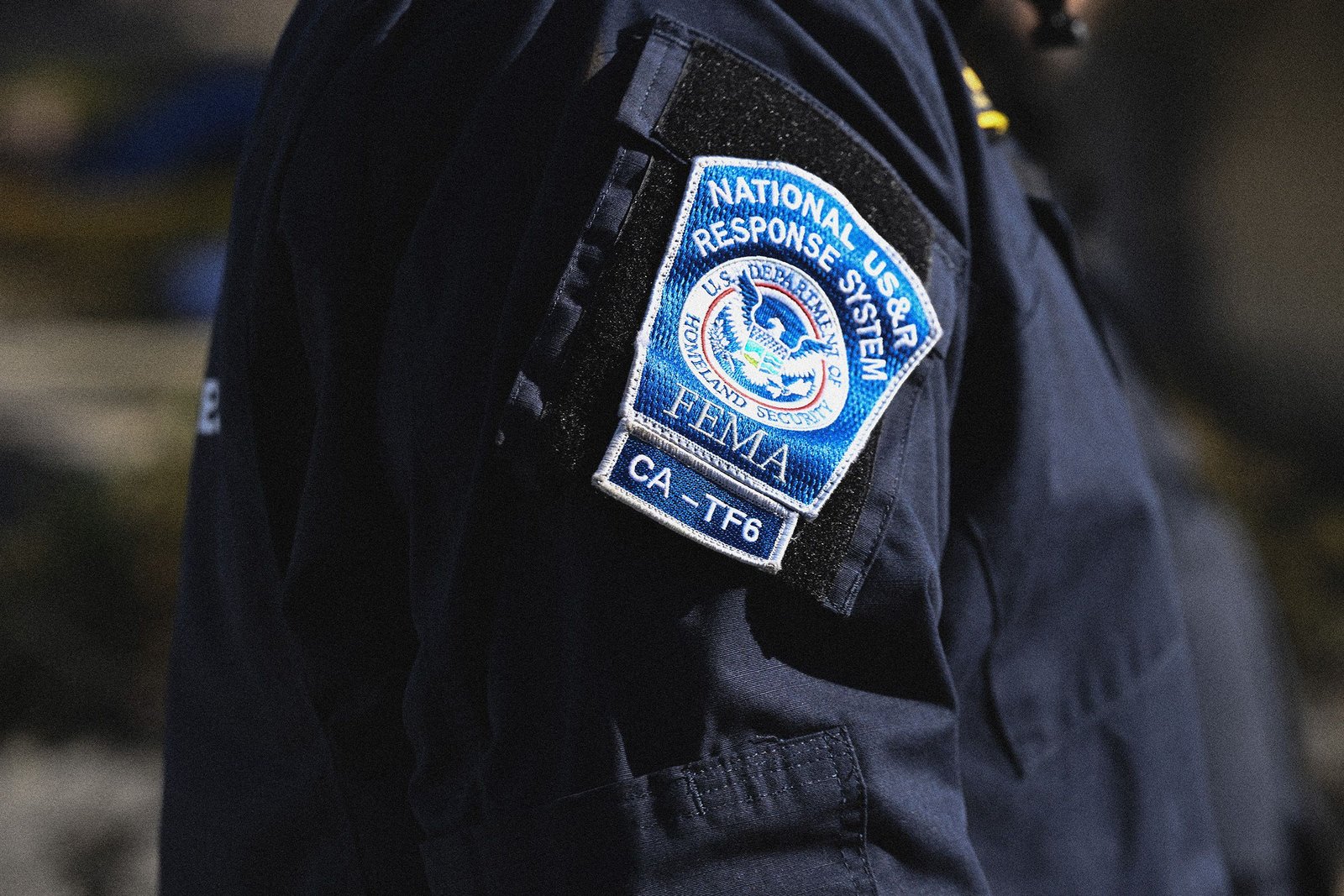
    The Federal Emergency Management Agency is making significant changes to how it will respond to disasters on the ground this season, including ending federal door-to-door canvassing of survivors in disaster areas, WIRED has learned.

    A memo reviewed by WIRED, dated May 2 and addressed to regional FEMA leaders from Cameron Hamilton, a senior official performing the duties of the administrator, instructs program offices to “take steps to implement” five “key reforms” for the upcoming hurricane and wildfire season.

    Under the first reform, titled “Prioritize Survivor Assistance at Fixed Facilities,” the memo states that “FEMA will discontinue unaccompanied FEMA door-to-door canvassing to focus survivor outreach and assistance registration capabilities in more targeted venues, improving access to those in need, and increasing collaboration with [state, local, tribal, and territorial] partners and nonprofit service providers.”

    FEMA has for years deployed staff to travel door-to-door in disaster areas, interacting directly with survivors in their homes to give an overview of FEMA aid application processes and help them register for federal aid. This group of workers is part of a larger cadre often called FEMA’s “boots on the ground” in disaster areas.

    Ending door-to-door canvassing, one FEMA worker says, will “severely hamper our ability to reach vulnerable people.” The assistance provided by workers going door-to-door, they say, “has usually focused on the most impacted and the most vulnerable communities where there may be people who are elderly or with disabilities or lack of transportation and are unable to reach Disaster Recovery Centers.” This person spoke to WIRED on the condition of anonymity as they were not authorized to speak to the press.

    “Door-to-door canvassing is another example of a wasteful and ineffective FEMA program,” Geoff Harbaugh, FEMA’s associate administrator for the Office of External Affairs tells WIRED in an email. “Under the leadership of President Trump and Secretary Noem, FEMA is changing how it operates and reforming its policies to better support disaster survivors and the American people. President Trump’s recent executive orders empower states to effectively respond to natural disasters and provide resources at the community level.”

    Todd DeVoe, the emergency management coordinator for the city of Inglewood, California, and the second vice president at the International Association of Emergency Managers, says that in his years of working in disaster management he has seen how many survivors don’t get information about recovery or resources without door-to-door outreach—despite emergency managers using strategies like direct mailers and radio and newspaper ads.

    “Going door-to-door, especially in critically hit areas, to share information is very important,” he says. “There’s a need for it. Can it be done more efficiently? Probably, but getting rid of it completely is really going to hamper some things.”

    FEMA’s door-to-door canvassing became a political flash point last year during Hurricane Milton, when an agency whistleblower alerted the conservative news site The Daily Wire that one official had told workers in Florida to avoid approaching homes with Trump yard signs. Former FEMA administrator Deanne Criswell told the House Committee on Oversight and Accountability during a hearing last year that the incident was isolated to one employee, who had since been fired. The employee, in turn, claimed that she acted on orders from a superior and that the issue was a pattern of “hostile encounters” with survivors who had Trump yard signs.

    Republicans on the Oversight Committee alleged that they had received information indicating “widespread discrimination against individuals displaying Trump campaign signs on their property” throughout FEMA. In March, the agency fired three more employees following an internal investigation into the issue.

    The Office of Professional Responsibility “investigation found no evidence that this was a systemic problem, nor that it was directed by agency or field leadership,” Hamilton wrote in a letter sent to Oversight chair James Comer.

    The canvassing controversy made it into the White House’s 2026 budget, released Friday, which decries “woke FEMA grant programs” and proposes cutting $646 million from “non-disaster” FEMA programs.

    “FEMA discriminated against Americans who voted for the President in the wake of recent hurricanes, skipping over their homes when providing aid. This activity will no longer be tolerated,” the budget document states. The White House did not immediately respond to a request for comment.

    There is no mention in the FEMA memo of the investigation or recent controversy and no reasoning provided for ending the door-to-door canvassing process. FEMA has deployed door-to-door canvassing in states with federal disaster declarations approved under the Trump administration: An agency press release from March mentions teams going door-to-door in West Virginia following February’s severe storms.

    The memo comes at a turbulent time for the agency as it prepares for disaster season. In late April, CNN reported that FEMA stood to lose around 20 percent of its staff in buyouts as part of cuts related to Elon Musk’s so-called Department of Government Efficiency. Last week, Politico reported that the administration had stopped approving allocations for a crucial hazard-mitigation program just a few weeks after news broke that the agency would end one of the federal government’s biggest climate-adaptation programs.

    Some of the other reforms in the memo include directives for the agency to “emphasize assistance available from other partners” over federal aid, as well as to emphasize efforts to rely on local- and state-run recovery centers rather than federally-run ones, “reducing the need to establish FEMA Disaster Recovery Centers and optimizing support for state and locally led recovery efforts.” The memo emphasizes that the agency intends to “respect the primacy of states, territories, and Tribal Nations in disaster response.”

    “Our role is to support our partners, not replace them,” the memo states. “FEMA does not act alone.”

    DeVoe says that like many of the responsibilities being shifted from FEMA to local response, the task of surveying survivors door-to-door will now fall to local and state responders. These groups may be hard-pressed to find the budget and manpower, especially as federal programs and grants keep getting cut.

    “California, New York, Massachusetts, Florida, Washington, Oregon, Florida, Texas—they’re going to be OK,” he says. “It’s going to be those smaller states—are they going to be OK?”

    Updated: 5/5/2025, 4:13 pm EDT: Updated to include comment from FEMA.

    Share. Facebook Twitter Pinterest LinkedIn Reddit WhatsApp Telegram Email
    Previous ArticleTake a Tour of All the Essential Features in ChatGPT
    Next Article Signal Clone Used by Mike Waltz Pauses Service After Reports It Got Hacked
    TechAiVerse
    • Website

    Jonathan is a tech enthusiast and the mind behind Tech AI Verse. With a passion for artificial intelligence, consumer tech, and emerging innovations, he deliver clear, insightful content to keep readers informed. From cutting-edge gadgets to AI advancements and cryptocurrency trends, Jonathan breaks down complex topics to make technology accessible to all.

    Related Posts

    Nvidia’s new technique cuts LLM reasoning costs by 8x without losing accuracy

    February 13, 2026

    MiniMax’s new open M2.5 and M2.5 Lightning near state-of-the-art while costing 1/20th of Claude Opus 4.6

    February 13, 2026

    OpenAI deploys Cerebras chips for ‘near-instant’ code generation in first major move beyond Nvidia

    February 13, 2026
    Leave A Reply Cancel Reply

    Top Posts

    Ping, You’ve Got Whale: AI detection system alerts ships of whales in their path

    April 22, 2025668 Views

    Lumo vs. Duck AI: Which AI is Better for Your Privacy?

    July 31, 2025256 Views

    6.7 Cummins Lifter Failure: What Years Are Affected (And Possible Fixes)

    April 14, 2025153 Views

    6 Best MagSafe Phone Grips (2025), Tested and Reviewed

    April 6, 2025111 Views
    Don't Miss
    Gaming February 13, 2026

    Resident Evil Requiem shows how sequels can drive sales of previous releases

    Resident Evil Requiem shows how sequels can drive sales of previous releases Analyst data indicates…

    Rogue Point aims to prove old school is the new cool with a back-to-basics shooter

    Nexon revenue rises 6.5% to $3.1bn in 2025, driven by ongoing success of Arc Raiders

    Industry leaders honour Vince Zampella at DICE Summit

    Stay In Touch
    • Facebook
    • Twitter
    • Pinterest
    • Instagram
    • YouTube
    • Vimeo

    Subscribe to Updates

    Get the latest creative news from SmartMag about art & design.

    About Us
    About Us

    Welcome to Tech AI Verse, your go-to destination for everything technology! We bring you the latest news, trends, and insights from the ever-evolving world of tech. Our coverage spans across global technology industry updates, artificial intelligence advancements, machine learning ethics, and automation innovations. Stay connected with us as we explore the limitless possibilities of technology!

    Facebook X (Twitter) Pinterest YouTube WhatsApp
    Our Picks

    Resident Evil Requiem shows how sequels can drive sales of previous releases

    February 13, 20263 Views

    Rogue Point aims to prove old school is the new cool with a back-to-basics shooter

    February 13, 20263 Views

    Nexon revenue rises 6.5% to $3.1bn in 2025, driven by ongoing success of Arc Raiders

    February 13, 20263 Views
    Most Popular

    7 Best Kids Bikes (2025): Mountain, Balance, Pedal, Coaster

    March 13, 20250 Views

    VTOMAN FlashSpeed 1500: Plenty Of Power For All Your Gear

    March 13, 20250 Views

    This new Roomba finally solves the big problem I have with robot vacuums

    March 13, 20250 Views
    © 2026 TechAiVerse. Designed by Divya Tech.
    • Home
    • About Us
    • Contact Us
    • Privacy Policy
    • Terms & Conditions

    Type above and press Enter to search. Press Esc to cancel.