

No, Kosmos-482 didn’t land on anyone’s head
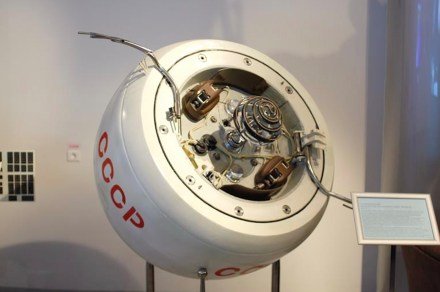
A mockup of the Venera 7 lander, similar to the object that fell to Earth. The Soviet’s Venera 7 made it to Venus in 1970.
ESA
If you’ve been spending much of the last 24 hours inside a secure building fearing that a spent Soviet spacecraft part might land on your head, then the good news is that it’s safe to come out now.
The object — part of the Kosmos-482 spacecraft that launched 53 years ago — crashed to Earth at around 9:24 a.m. Moscow time (2:24 a.m. ET) on Saturday, according to the Russian space agency Roscosmos.
While there have been no eyewitness reports of the 1,000-pound part coming down, Roscosmos has said it believes the object landed in the Indian Ocean west of Jakarta, Indonesia.
Debris from spent rockets or satellites enters Earth’s atmosphere all the time, but most of it burns up before reaching our planet’s surface. Kosmos-482, however, was made of sterner stuff, as it had been designed to withstand the extreme pressure and heat of Venus, the planet where it was supposed to have landed just over 100 days after its launch back in 1972.
The Kosmos-482 mission was over shortly after it began, when a rocket malfunction during launch meant that it would never be able to reach its destination. After the vehicle’s upper stage failed to properly ignite, it remained trapped in a highly elliptical Earth orbit where it stayed for more than half a century before eventually reentering Earth’s atmosphere on Saturday.
While some folks may have had concerns about the great lump of metal landing on their head, the European Space Agency had tried to put things into perspective prior to its return, saying: “The risk of any satellite reentry causing injury is extremely remote. The annual risk of an individual human being injured by space debris is under 1 in 100 billion. In comparison, a person is about 65,000 times more likely to be struck by lightning.”
Not so many moons ago, Trevor moved from one tea-loving island nation that drives on the left (Britain) to another (Japan)…
Elon Musk reveals ambitious SpaceX plan for landing Super Heavy booster
After years of hard work, SpaceX has managed to nail its extraordinary launch-and-landing procedure that allows the reuse of its first-stage Falcon 9 booster.
SpaceX boss Elon Musk has now revealed that his team is planning something far bolder for its much larger next-generation Super Heavy rocket that will one day carry the Starship spacecraft into space.
SpaceX’s latest Starship static fire test didn’t go as planned
SpaceX performed a static fire test of its latest Starship prototype this week, but not all went as planned.
This was the third static fire test of the SN8 prototype, in which the rocket is fueled as if it were to be launched, then fires its engines for a few seconds which remains attached to the ground. But this time the test experienced some issues. As the vehicle fired its engines, some kind of material could be seen dripping from the base of the prototype, as reported by space.com. This is not a normal part of the test and indicates that something was going wrong.
The ISS just dodged part of a 20-year-old Chinese rocket
The International Space Station (ISS) had to raise its orbit on Wednesday to reduce the risk of being struck by a piece of space junk.
The maneuver was carried out at 6:10 p.m. ET by firing the thrusters on the docked Progress 91 spacecraft for 3 minutes and 33 seconds, NASA said in a post on its website.
