

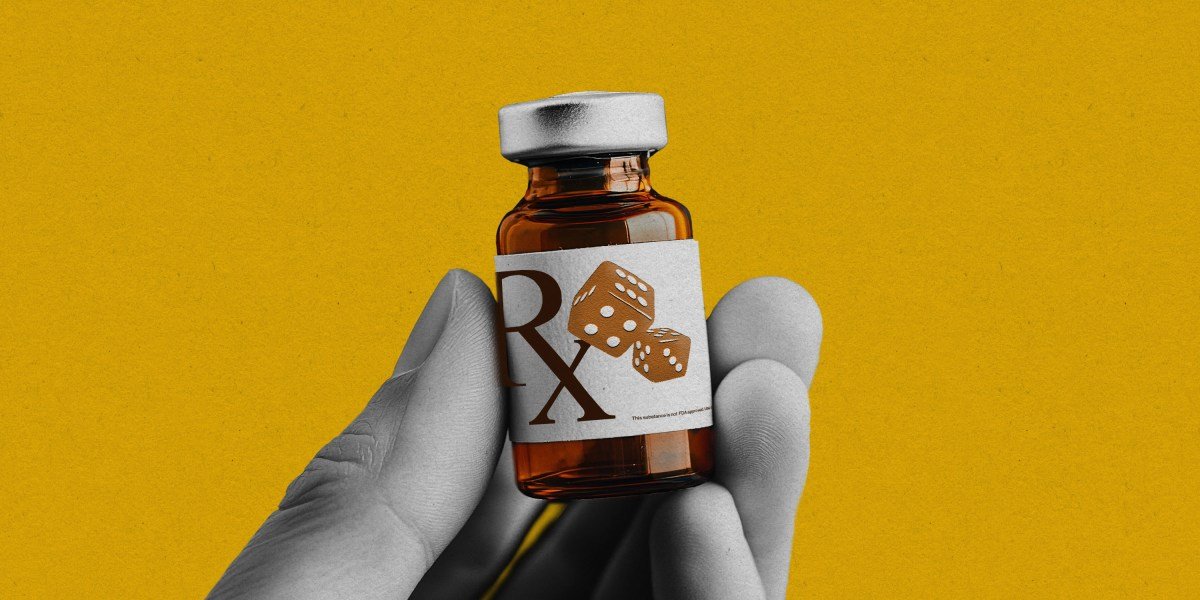
Access to experimental medical treatments is expanding across the US
A couple of weeks ago I was in Washington, DC, for a gathering of scientists, policymakers, and longevity enthusiasts. They had come together to discuss ways to speed along the development of drugs and other treatments that might extend the human lifespan.
One approach that came up was to simply make experimental drugs more easily accessible. Let people try drugs that might help them live longer, the argument went. Some groups have been pushing bills to do just that in Montana, a state whose constitution explicitly values personal liberty.
A couple of years ago, a longevity lobbying group helped develop a bill that expanded on the state’s existing Right to Try law, which allowed seriously ill people to apply for access to experimental drugs (that is, drugs that have not been approved by drug regulators). The expansion, which was passed in 2023, opened access for people who are not seriously ill.
Over the last few months, the group has been pushing further—for a new bill that sets out exactly how clinics can sell experimental, unproven treatments in the state to anyone who wants them. At the end of the second day of the event, the man next to me looked at his phone. “It just passed,” he told me. (The lobbying group has since announced that the state’s governor Greg Gianforte has signed the bill into law, but when I called his office, Gianforte’s staff said they could not legally tell me whether or not he has.)
The passing of the bill could make Montana something of a US hub for experimental treatments. But it represents a wider trend: the creep of Right to Try across the US. And a potentially dangerous departure from evidence-based medicine.
In the US, drugs must be tested in human volunteers before they can be approved and sold. Early-stage clinical trials are small and check for safety. Later trials test both the safety and efficacy of a new drug.
The system is designed to keep people safe and to prevent manufacturers from selling ineffective or dangerous products. It’s meant to protect us from snake oil.
But people who are seriously ill and who have exhausted all other treatment options are often desperate to try experimental drugs. They might see it as a last hope. Sometimes they can volunteer for clinical trials, but time, distance, and eligibility can rule out that option.
Since the 1980s, seriously or terminally ill people who cannot take part in a trial for some reason can apply for access to experimental treatments through a “compassionate use” program run by the US Food and Drug Administration (FDA). The FDA authorizes almost all of the compassionate use requests it receives (although manufacturers don’t always agree to provide their drug for various reasons).
But that wasn’t enough for the Goldwater Institute, a libertarian organization that in 2014 drafted a model Right to Try law for people who are terminally ill. Versions of this draft have since been passed into law in 41 US states, and the US has had a federal Right to Try law since 2018. These laws generally allow people who are seriously ill to apply for access to drugs that have only been through the very first stages of clinical trials, provided they give informed consent.
Some have argued that these laws have been driven by a dislike of both drug regulation and the FDA. After all, they are designed to achieve the same result as the compassionate use program. The only difference is that they bypass the FDA.
Either way, it’s worth noting just how early-stage these treatments are. A drug that has been through phase I trials might have been tested in just 20 healthy people. Yes, these trials are designed to test the safety of a drug, but they are never conclusive. At that point in a drug’s development, no one can know how a sick person—who is likely to be taking other medicines— will react to it.
Now these Right to Try laws are being expanded even more. The Montana bill, which goes the furthest, will enable people who are not seriously ill to access unproven treatments, and other states have been making moves in the same direction.
Just this week, Georgia’s governor signed into law the Hope for Georgia Patients Act, which allows people with life-threatening illnesses to access personalized treatments, those that are “unique to and produced exclusively for an individual patient based on his or her own genetic profile.” Similar laws, known as “Right to Try 2.0,” have been passed in other states, too, including Arizona, Mississippi, and North Carolina.
And last year, Utah passed a law that allows health care providers (including chiropractors, podiatrists, midwives, and naturopaths) to deliver unapproved placental stem cell therapies. These treatments involve cells collected from placentas, which are thought to hold promise for tissue regeneration. But they haven’t been through human trials. They can cost tens of thousands of dollars, and their effects are unknown. Utah’s law was described as a “pretty blatant broadbrush challenge to the FDA’s authority” by an attorney who specializes in FDA law. And it’s one that could put patients at risk.
Laws like these spark a lot of very sensitive debates. Some argue that it’s a question of medical autonomy, and that people should have the right to choose what they put in their own bodies.
And many argue there’s a cost-benefit calculation to be made. A seriously ill person potentially has more to gain and less to lose from trying an experimental drug, compared to someone who is in good health.
But everyone needs to be protected from ineffective drugs. Most ethicists think it’s unethical to sell a treatment when you have no idea if it will work, and that argument has been supported by numerous US court decisions over the years.
There could be a financial incentive for doctors to recommend an experimental drug, especially when they are granted protections by law. (Right to Try laws tend to protect prescribing doctors from disciplinary action and litigation should something go wrong.)
On top of all this, many ethicists are also concerned that the FDA’s drug approval process itself has been on a downward slide over the last decade or so. An increasing number of drug approvals are fast-tracked based on weak evidence, they argue.
Scientists and ethicists on both sides of the debate are now waiting to see what unfolds under the new US administration.
In the meantime, a quote from Diana Zuckerman, president of the nonprofit National Center for Health Research, comes to mind: “Sometimes hope helps people do better,” she told me a couple of years ago. “But in medicine, isn’t it better to have hope based on evidence rather than hope based on hype?”
This article first appeared in The Checkup, MIT Technology Review’s weekly biotech newsletter. To receive it in your inbox every Thursday, and read articles like this first, sign up here.
