

What would a cheap, Apple A18-powered MacBook actually be good at?
Some Apple rumors just don’t go away, hanging around in perpetuity either because they reflect things that Apple is actually testing in its labs or because hope springs eternal. A HomePod-like device with a screen? A replacement for the dear, departed 27-inch iMac? Touchscreen MacBooks? The return of TouchID fingerprint scanning via a sensor located beneath a screen? Maybe these things are coming, but they ain’t here yet.
However, few rumors have had the longevity or staying power of “Apple is planning a low-cost MacBook,” versions of which have been circulating since at least the late-2000s netbook craze. And yet, despite seismic shifts in just about everything—three distinct processor instruction sets, two CEOs, innumerable design changes, and global trade upheaval—Apple’s cheapest modern laptops have started around $1,000 for more than two decades.
Last week, supply chain analyst Ming-Chi Kuo (whose Apple predictions aren’t always correct, but whose track record is better than your garden variety broken-clock prognosticators) kicked up another round of these rumors, claiming that Apple was preparing to manufacture a new low-cost MacBook based on the iPhone’s A18 Pro chip. Kuo claims it will come in multiple colors, similar to Apple’s lower-cost A16 iPad, and will use a 13-inch screen.
MacRumors chipped in with its own contribution, claiming that a “Mac17,1” model it had found listed in an older macOS update was actually that A18 Pro MacBook model, apparently far enough along in development that Apple’s beta operating systems were running on it.
The last round of “cheap MacBook” rumors happened in late 2023 (also instigated by Kuo, but without the corroboration from Apple’s own software). As we wrote then, Apple’s control over its own chips could make this kind of laptop more plausible. But if it existed, what would this laptop be good for? Who could buy it instead of a MacBook Air, and who would want to stick to Apple’s current $999 status quo? To commemorate the “budget MacBook” idea becoming infinitesimally more likely, let’s ruminate on those questions a bit.
Good for: Basic computing
The A18 Pro combines two high-performance CPU cores, four high-efficiency CPU cores, and six GPU cores. Assuming this A18 Pro MacBook would ship with that fully enabled version of the chip—not a guarantee, especially if Apple is trying to cut costs—that’s two big CPU cores, two little CPU cores, and between two and four GPU cores fewer than the basic Apple M4.
But as pointed out by Jason Snell at Sixcolors, the A18 Pro actually far outstrips the old M1 in single-core processor benchmarks, and essentially matches it in both multicore and graphics benchmarks—despite having fewer cores, the other architectural improvements Apple has made over a few generations have helped elevate its performance into a performance category that would still probably read as sufficiently Mac-like for most people.
I still use an M1 MacBook Air with some regularity, and nearly five years on, its combination of performance and efficiency still strikes a really good balance for basic computing. I’m not using it to play games, or edit 8K videos, or transcode my media library. But for Messages? Safari? Photos? Google Chrome? Microsoft Word? Slack? For bread-and-butter computing, including office work and communication, I don’t especially miss the extra speed of my Mac Studio’s M2 Max, or even the faster M4 chip in Apple’s latest MacBook Air.
Good for: All-portable use
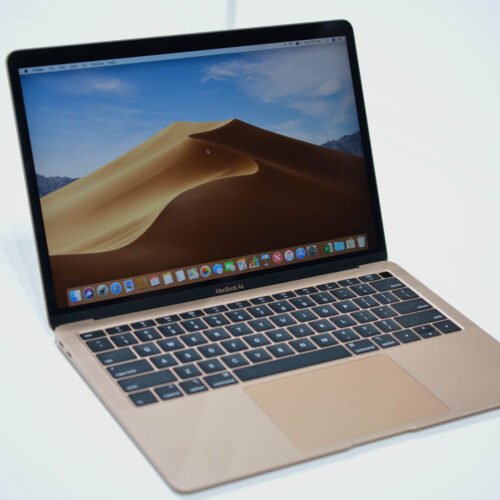
No one knows what design Apple would use for a hypothetical low-cost MacBook, though past precedent and the 13-inch screen rumor would suggest that Apple could continue to roll with the old 2018-vintage MacBook Air design (“old shell with new guts” being Apple’s standard formula for this kind of thing).
But whatever the company does, the 13-inch MacBook Air is still a great all-rounder, and a good combination of size and speed for people whose laptop is a purely portable computer that floats from room to room in their house rather than traveling for work or getting docked on a desk.
There are MacBooks that will never see an external display; there are MacBooks that will never crop or edit a photo; there are MacBooks whose USB-C ports will never be plugged into anything other than their charger. As the MacBook Air has gotten more capable—it’s added a 15-inch screen size, more performance, more RAM, and more display outputs in the last couple of years, closing a lot of the gap between the Air and the cheapest of the MacBook Pros—it has left more space underneath it for a cheaper model that can serve audience who don’t need those kinds of features.
Bad for: Heavy multitaskers
Apple’s A18 Pro is smaller and slower than a chip like the M3 or M4, but it’s as fast or faster than the M1. That could make it a decent fit for a low-cost Mac, though it might not be enough for power users.
Credit:
Apple
The A18 Pro’s single-core performance is going to keep things feeling snappy when you’re just hopping between a couple of apps at a time, but having two fewer high-performance cores and two fewer high-efficiency cores than the M4 is going to take a big bite out of your multicore performance—how your Mac feels when you’re doing something that uses all of its processor cores at once, especially for an extended period of time.
An A18 MacBook—or any Mac built around an A-series iPhone processor—could also have other limitations because of its handheld pedigree. We already know from the iPhone 16 Pro that the A18 Pro only supports 10Gbps USB 3 connections, rather than full Thunderbolt speeds as the M-class processors do. But do they include display controllers that could be used to extend a Mac’s desktop to even a single external display? The A17 Pro chip used in the latest iPad mini doesn’t support extended displays; it could be because it’s an older chip, or it could be because Apple doesn’t spend precious transistors on adding features that its phones don’t need.
Another big question mark here is how much RAM the laptop will have. Would it stick to the same 8GB that the iPhone versions of the processors use? Or could Apple package up a version with 16GB or even 12GB of RAM instead? If the point is to keep the laptop cheap, Apple’s costs would go up when paying for the RAM itself and when asking TSMC to package purpose-built versions of the A18 with extra RAM that could only be used for MacBooks.
It would feel like a step back, since Apple just bumped entry-level Macs up to 16GB of RAM for the first time last fall. But dipping back down to 8GB could be the thing that makes the most financial sense for this kind of laptop.
Bad for: Future-proofing
If you’re already spending a lot of money on new hardware, it’s best to buy a little more than you think you’ll currently need, at least if your budget will bear it. That’s because you don’t know how demanding future software will get, or what new apps you’ll get into that you weren’t thinking of when you bought it. (Case in point: One Ars Technica staffer who bought an M1 Mac mini with 8GB of RAM and needed to replace it before its time because 8GB of RAM wasn’t enough to handle Logic Pro when they decided to start experimenting with it.)
Even stuck with 8GB of RAM, an A18 MacBook would serve a lot of people well, particularly the class of casual Internet browsers and email checkers who want a Mac because they’re comfortable with its interface but for whom an Apple M4 would be overkill. But it could be iffy as a starter laptop for someone who wants to experiment with new software. And they’d be less useful hand-me-downs, because the person having the laptop handed down to them could already have needs that outstrip the modest hardware.
Good for: Apple’s lineup
Apple’s iPhone and iPad lineups both include products that were purpose-built to cost a couple hundred dollars less than its flagships (right now, the $599 iPhone 16e, and the A16-powered 11th-generation iPad). Even the Apple Watch has a cheaper “SE” version that’s sold alongside the Series 10 and Ultra 2.
These products have always been slow to adopt new designs and lack certain features that Apple uses to differentiate its midrange and high-end offerings. But they still get the basics right, and integrate into buyers’ individual Apple ecosystems just as well as the more expensive products do. A cheap MacBook still syncs with iCloud; it still gives you easy access to iMessage and your photo library; it still runs the same software and apps, even if it doesn’t always do it as quickly.
You could argue that 2020’s M1 MacBook Air currently fills that niche, even though Apple itself no longer offers it for sale through its own site—you can head to Walmart and buy one right now for $649 if you wanted. But buying a nearly 5-year-old MacBook design also means you’re probably buying fewer macOS versions and security updates, potentially lopping years off the useful life of your new-to-you laptop.
Replacing that M1 Air, possibly with an A18-powered version that uses the exact same design, fills a gap in the Mac lineup that Apple has filled in all of its other product families. Buyers would be able to rest easier, knowing they were buying a modern product with years of software support ahead of it (Apple sometimes cuts off its “cheap” devices a year or two before higher-end ones, but it varies from device to device). And Apple has already proven that it can make and sell a MacBook that serves basic needs for way less than $1,000, without (apparently) totally wrecking demand for new MacBook Airs and Pros.
Andrew is a Senior Technology Reporter at Ars Technica, with a focus on consumer tech including computer hardware and in-depth reviews of operating systems like Windows and macOS. Andrew lives in Philadelphia and co-hosts a weekly book podcast called Overdue.
