

Researchers announce babies born from a trial of three-person IVF
Eight babies have been born in the UK thanks to a technology that uses DNA from three people: the two biological parents plus a third person who supplies healthy mitochondrial DNA. The babies were born to mothers who carry genes for mitochondrial diseases and risked passing on severe disorders. The eight babies are healthy, say the researchers behind the trial.
“Mitochondrial disease can have a devastating impact on families,” Doug Turnbull of Newcastle University, one of the researchers behind the study, said in a statement. “Today’s news offers fresh hope to many more women at risk of passing on this condition, who now have the chance to have children growing up without this terrible disease.”
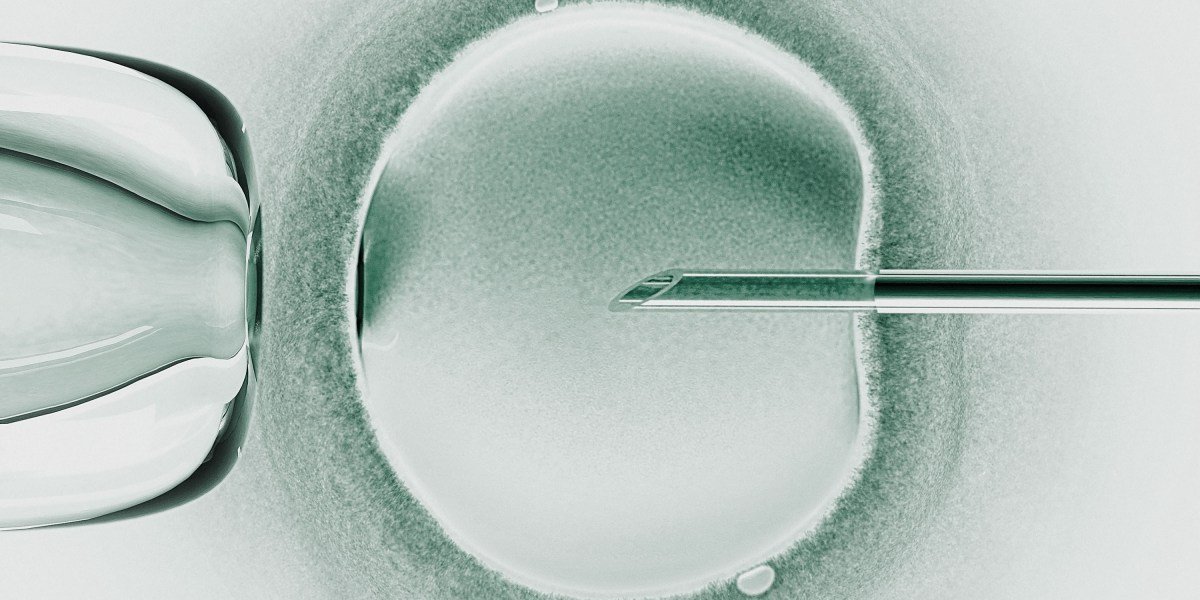
The study, which makes use of a technology called mitochondrial donation, has been described as a “tour de force” and “a remarkable accomplishment” by others in the field. In the team’s approach, patients’ eggs are fertilized with sperm, and the DNA-containing nuclei of those cells are transferred into donated fertilized eggs that have had their own nuclei removed. The new embryos contain the DNA of the intended parents along with a tiny fraction of mitochondrial DNA from the donor, floating in the embryos’ cytoplasm.
“The concept of [mitochondrial donation] has attracted much commentary and occasionally concern and anxiety,” Stuart Lavery, a consultant in reproductive medicine at University College Hospitals NHS Foundation Trust, said in a statement. “The Newcastle team have demonstrated that it can be used in a clinically effective and ethically acceptable way to prevent disease and suffering.”
Not everyone sees the trial as a resounding success. While five of the children were born “with no health problems,” one developed a fever and a urinary tract infection, and another had muscle jerks. A third was treated for an abnormal heart rhythm. Three of the babies were born with a low level of the very mitochondrial-DNA mutations the treatment was designed to prevent.
Heidi Mertes, a medical ethicist at Ghent University, says she is “moderately optimistic.” “I’m happy that it worked,” she says. “But at the same time, it’s concerning … it’s a call for caution and treading carefully.”
Pavlo Mazur, a former embryologist who has used a similar approach in the conception of 15 babies in Ukraine, believes that trials like this one should be paused until researchers figure out what’s going on. Others believe that researchers should study the technique in people who don’t have mitochondrial mutations, to lower the risk of passing any disease-causing mutations to children.
Long time coming
The news of the births has been long awaited by researchers in the field. Mitochondrial donation was first made legal in the UK in 2015. Two years later, the Human Fertility and Embryology Authority (HFEA), which regulates fertility treatment and research in the UK, granted a fertility clinic in Newcastle the sole license to perform the procedure. Newcastle Fertility Centre at Life launched a trial of mitochondrial donation in 2017 with the aim of treating 25 women a year.
That was eight years ago. Since then, the Newcastle team have been extremely tight-lipped about the trial. That’s despite the fact that other teams elsewhere have used mitochondrial donation to help people achieve pregnancy. A New York–based doctor used a type of mitochondrial donation to help a Jordanian couple conceive in Mexico in 2016. Mitochondrial donation has also been trialed by teams in Ukraine and Greece.
But as the only trial overseen by the HFEA, the Newcastle team’s study was viewed by many as the most “official.” Researchers have been itching to hear how the work has been going, given the potential implications for researchers elsewhere (mitochondrial donation was officially made legal in Australia in 2022). “I’m very glad to see [the results] come out at last,” says Dagan Wells, a reproductive biologist at the University of Oxford who worked on the Greece trial. “It would have been nice to have some information out along the way.”
At the Newcastle clinic, each patient must receive approval from the HFEA to be eligible for mitochondrial donation. Since the trial launched in 2017, 39 patients have won this approval. Twenty-five of them underwent hormonal stimulation to release multiple eggs that could be frozen in storage.
Nineteen of those women went on to have mitochondrial donation. So far, seven of the women have given birth (one had twins), and an eighth is still pregnant. The oldest baby is two years old. The results were published today in the New England Journal of Medicine.
“As parents, all we ever wanted was to give our child a healthy start in life,” one of the mothers, who is remaining anonymous, said in a statement. “Mitochondrial donation IVF made that possible. After years of uncertainty this treatment gave us hope—and then it gave us our baby … Science gave us a chance.”
When each baby was born, the team collected a blood and urine sample to look at the child’s mitochondrial DNA. They found that the levels of mutated DNA were far lower than they would have expected without mitochondrial donation. Three of the mothers were “homoplasmic”—100% of their mitochondrial DNA carried the mutation. But blood tests showed that in the women’s four babies (including the twins), 5% or less of the mitochondrial DNA had the mutation, suggesting they won’t develop disease.
A mixed result
The researchers see this as a positive result. “Children who would otherwise have inherited very high levels are now inheriting levels that are reduced by 77% to 100%,” coauthor Mary Herbert, a professor of reproductive biology at Newcastle University and Monash University, told me during a press briefing.
But three of the eight babies had health symptoms. At seven months, one was diagnosed with a rare form of epilepsy, which seemed to resolve within the following three months. Another baby developed a urinary tract infection.
A third baby developed “prolonged” jaundice, high levels of fat in the blood, and a disturbed heart rhythm that required treatment. The baby seemed to have recovered by 18 months, and doctors believe that the symptoms were not related to the mitochondrial mutations, but the team members admit that they can’t be sure. Given the small sample size, it’s hard to make comparisons with babies conceived in other ways.
And they acknowledge that a phenomenon called “reversal” is happening in some of the babies. In theory, the children shouldn’t inherit any “bad” mitochondrial DNA from their mothers. But three of them did. The levels of “bad” mitochondrial DNA in the babies’ blood ranged between 5% and 16%. And they were higher in the babies’ urine—the highest figure being 20%.
The researchers don’t know why this is happening. When an embryologist pulls out the nucleus of a fertilized egg, a bit of mitochondria-containing cytoplasm will inevitably be dragged along with it. But the team didn’t see any link between the amount of carried-over cytoplasm and the level of “bad” mitochondria. “We continue to investigate this issue,” Herbert said.
“As long as they don’t understand what’s happening, I would still be worried,” says Mertes.
Such low levels aren’t likely to cause mitochondrial diseases, according to experts contacted by MIT Technology Review. But some are concerned that the percentage of mutated DNA could be higher in different tissues, such as the brain or muscle, or that the levels might change with age. “You never know which tissues [reversal] will show up in,” says Mazur, who has seen the phenomenon in babies born through mitochondrial donation to parents who didn’t have mitochondrial mutations. “It’s chaotic.”
The Newcastle team says it hasn’t looked at other tissues, because it designed the study to be noninvasive.
There has been at least one case in which similar levels of “bad” mitochondria have caused symptoms, says Joanna Poulton, a mitochondrial geneticist at the University of Oxford. She thinks it’s unlikely that the children in the trial will develop any symptoms but adds that “it’s a bit of a worry.”
The age of reversal
No one knows exactly when this reversal happens. But Wells and his colleagues have some idea. In their study in Greece, they looked at the mitochondrial DNA of embryos and checked them again during pregnancy and after birth. The trial was designed to study the impact of mitochondrial donation for infertility—none of the parents involved had genes for mitochondrial disease.
The team has seen mitochondrial reversal in two of the seven babies born in the trial, says Wells. If you put the two sets of results together, mitochondrial donation “seems to have this possibility of reversal occurring in maybe about a third of children,” he says.
In his study, the reversal seemed to occur early on in the embryos’ development, Wells says. Five-day-old embryos “look perfect,” but mitochondrial mutations start showing up in tests taken at around 15 weeks of pregnancy, he says. After that point, the levels appear to be relatively stable. The Newcastle researchers say they will monitor the children until they are five years old.
People enrolling in future trials might opt for amniocentesis, which involves sampling blood from the fetus’s amniotic sac at around 15 to 18 weeks, suggests Mertes. That test might reveal the likely level of mitochondrial mutations in the resulting child. “Then the parents could decide what to do,” says Mertes. “If you could see there was a 90% mutation load [for a] very serious mitochondrial disease, they would still have an option to cancel the pregnancy,” she says.
Wells thinks the Newcastle team’s results are “generally reassuring.” He doesn’t think the trials should be paused. But he wants people to understand that mitochondrial donation is not without risk. “This can only be viewed as a risk reduction strategy, and not a guarantee of having an unaffected child,” he says.
And, as Mertes points out, there’s another option for women who carry mitochondrial DNA mutations: egg donation. Donor eggs fertilized with a partner’s sperm and transferred to a woman’s uterus won’t have her disease-causing mitochondria.
That option won’t appeal to people who feel strongly about having a genetic link to their children. But Poulton asks: “If you know whose uterus you came out of, does it matter that the [egg] came from somewhere else?”
