Close Menu

    Subscribe to Updates

    Get the latest creative news from FooBar about art, design and business.

    What's Hot

    These Toyotas Were Built For America, But Now They’re Going To Japan

    USS Massachusetts: What Happened To The Ship That Fired WWII’s Final Shot

    Tesla’s Cheapest Cybertruck Yet Hits The Market – With One Big Limitation

    Facebook X (Twitter) Instagram
    • Artificial Intelligence
    • Business Technology
    • Cryptocurrency
    • Gadgets
    • Gaming
    • Health
    • Software and Apps
    • Technology
    Facebook X (Twitter) Instagram Pinterest Vimeo
    Tech AI Verse
    • Home
    • Artificial Intelligence

      Tensions between the Pentagon and AI giant Anthropic reach a boiling point

      February 21, 2026

      Read the extended transcript: President Donald Trump interviewed by ‘NBC Nightly News’ anchor Tom Llamas

      February 6, 2026

      Stocks and bitcoin sink as investors dump software company shares

      February 4, 2026

      AI, crypto and Trump super PACs stash millions to spend on the midterms

      February 2, 2026

      To avoid accusations of AI cheating, college students are turning to AI

      January 29, 2026
    • Business

      Gartner: Why neoclouds are the future of GPU-as-a-Service

      February 21, 2026

      The HDD brand that brought you the 1.8-inch, 2.5-inch, and 3.5-inch hard drives is now back with a $19 pocket-sized personal cloud for your smartphones

      February 12, 2026

      New VoidLink malware framework targets Linux cloud servers

      January 14, 2026

      Nvidia Rubin’s rack-scale encryption signals a turning point for enterprise AI security

      January 13, 2026

      How KPMG is redefining the future of SAP consulting on a global scale

      January 10, 2026
    • Crypto

      BitMine Buys $93 Million in ETH, but Ethereum Slides as Holders Resume Selling

      February 24, 2026

      XRP Ledger Sets Multiple Key Records in February Despite Price Decline

      February 24, 2026

      Bhutan Rolls Out Solana-Backed Visas Even As Demand Stays Weak

      February 24, 2026

      ZachXBT Teases Major Crypto Exposé Ahead of Feb. 26 — How Is Smart Money Positioned?

      February 24, 2026

      Acurast turns 225,000 smartphones into a secure AI network on Base

      February 24, 2026
    • Technology

      These Toyotas Were Built For America, But Now They’re Going To Japan

      February 24, 2026

      USS Massachusetts: What Happened To The Ship That Fired WWII’s Final Shot

      February 24, 2026

      Tesla’s Cheapest Cybertruck Yet Hits The Market – With One Big Limitation

      February 24, 2026

      5 Honda Engines Drivers Say You Should Steer Clear Of

      February 24, 2026

      Your Apple TV Has A Hidden Menu — Here’s How To Access It

      February 24, 2026
    • Others
      • Gadgets
      • Gaming
      • Health
      • Software and Apps
    Check BMI
    Tech AI Verse
    You are at:Home»Technology»The hidden fingerprints inside 3D-printed ghost guns
    Technology

    The hidden fingerprints inside 3D-printed ghost guns

    TechAiVerseBy TechAiVerseJuly 19, 2025No Comments5 Mins Read3 Views
    Facebook Twitter Pinterest Telegram LinkedIn Tumblr Email Reddit
    The hidden fingerprints inside 3D-printed ghost guns
    Share
    Facebook Twitter LinkedIn Pinterest WhatsApp Email

    The hidden fingerprints inside 3D-printed ghost guns

    Serving tech enthusiasts for over 25 years.

    TechSpot means tech analysis and advice you can trust.

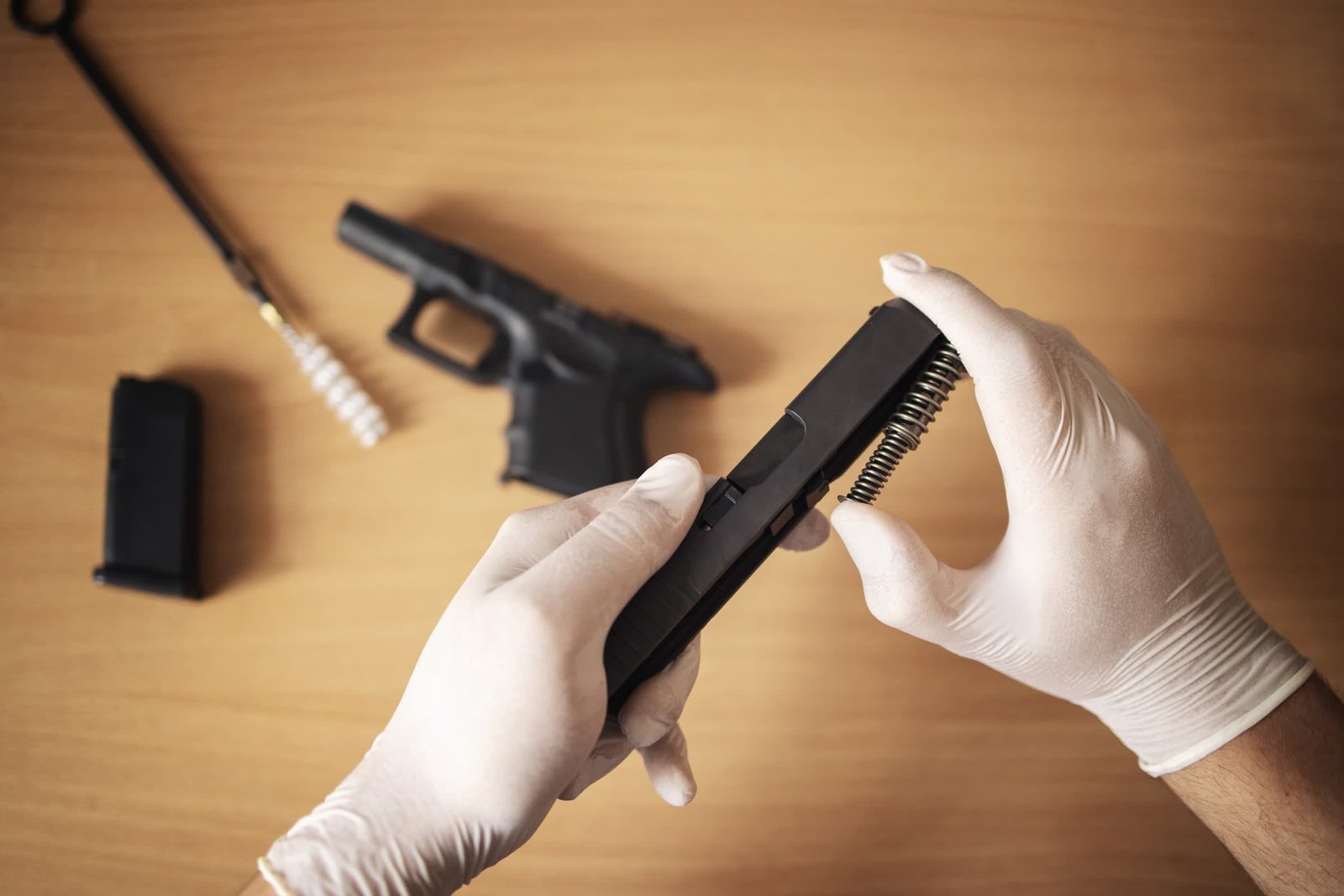
    TL;DR: A small group of forensic researchers is challenging the belief that 3D-printed ghost guns – unserialized firearms built at home – are completely untraceable. Their work offers a glimmer of hope to investigators and lawmakers grappling with the growing threat of criminals using these weapons.

    Kirk Garrison, a forensics expert with the San Bernardino Sheriff’s Department, has spent years working at the intersection of digital blueprints, heated plastic filaments, and real-life criminal cases. He recently told 404 Media that he has started finding ways to match 3D-printed objects to the specific machines that produced them.

    “That’s when I was like, ‘We might need to know a little bit more about this now if we’re actually going to be seeing this stuff and potentially have to testify to it,'” Garrison said. “What I’m doing is in its infancy and it might be years before authorities can reliably match a gun to the machine that made it, if they can do it at all.”

    The science is still young, and Garrison makes clear he speaks only for himself, not his department. His journey into 3D-printed forensics began in 2018, when he started seeing a wave of gun parts produced with consumer-grade printers. Most were 80 percent kits or conversion kits – small plastic components that enable standard firearms to fire automatically. The first time he worked a case involving a fully 3D-printed gun frame, he realized more specialized expertise would be necessary.

    A pivotal moment came when Garrison, attending a conference in Atlanta, heard FBI lab technician Corey Scott describe seeing consistent toolmarks on objects printed with a 3D printer.

    “He was just like, ‘Hey, I noticed on these 3D-printed items, there are these marks, but I’m not actually a firearms or toolmark examiner,'” Garrison recalled.

    In forensics, toolmarks – unique scratches and impressions left by a manufacturing tool – act as a kind of fingerprint. They include the gouges left by a screwdriver on a screw head or the bite marks bolt cutters leave on a chain. A 3D printer’s nozzle can leave behind a similarly consistent signature that investigators can use to link an object to a specific printer.

    Back at his lab, Garrison investigated printed weapon frames under a microscope and began noticing what he called stria – microscopic scratch marks deposited during the printing process. The implication: every 3D printer, working much like a hot glue gun, might inscribe a unique pattern as it lays down hundreds of layers of melted plastic.

    “So on the firearm, I’m seeing consistent marks from the trigger guard – maybe print line 200 – to the top of the magazine well – print line 400,” he explained.

    The findings were tantalizing, but Garrison cautions they are far from courtroom-ready. He emphasized that, despite the promise of eventually matching a printer to the object it produced, the science is still in its early stages and that it may take years – perhaps even a decade – to understand the relationship between toolmarks and 3D printers fully.

    Limited by the demands of his day job and the constraints of self-driven research, Garrison published preliminary results in Forensic Science International but continued to call for more expansive, university-led studies. Answering that call, Eric Law, assistant professor at the University of Central Oklahoma Forensic Science Institute, and graduate student Cooper Blair joined forces with Garrison to coauthor a forthcoming study. Their research aims to break new ground by determining whether investigators can trace 3D-printed objects back to the exact nozzle and print bed that produced them.

    The team began by examining print sheets – the surfaces where printers build objects. Since print sheets vary widely in texture and material, they focused on textured sheets, reasoning that those characteristics might transfer to the plastic and make comparisons easier, Law told 404 Media. His team’s experiments produced a striking result: they differentiated the sheets 100 percent of the time. Using both visual and computerized analysis, they matched objects to the print bed from which they originated.

    This prospect comes with complications. Print positions matter, as objects produced on a different part of the same bed can appear to come from another printer. Additionally, print beds are easy to swap or discard.

    The study then moved on to printer nozzles, and although the results were encouraging, they proved less definitive. Law said the algorithm could identify the correct nozzles, estimating accuracy at about 75 percent, though accuracy was probably a bit lower with just visual examination.

    This research faces many challenges. So far, all of Law’s and Blair’s work has focused on a single 3D printer model, the Prusa MK4S – just one among many in a rapidly expanding market. Additionally, wear and tear on brass nozzles, variations in nozzle materials, and the ease of swapping components mean any forensic signature can change or vanish.

    For now, Law and his fellow researchers agree that the science may one day offer a breakthrough, but no one is ready to testify in court yet.

    Share. Facebook Twitter Pinterest LinkedIn Reddit WhatsApp Telegram Email
    Previous ArticleThreat actors downgrade FIDO2 MFA auth in PoisonSeed phishing attack
    Next Article HWMonitor is a free tool for real-time hardware monitoring
    TechAiVerse
    • Website

    Jonathan is a tech enthusiast and the mind behind Tech AI Verse. With a passion for artificial intelligence, consumer tech, and emerging innovations, he deliver clear, insightful content to keep readers informed. From cutting-edge gadgets to AI advancements and cryptocurrency trends, Jonathan breaks down complex topics to make technology accessible to all.

    Related Posts

    These Toyotas Were Built For America, But Now They’re Going To Japan

    February 24, 2026

    USS Massachusetts: What Happened To The Ship That Fired WWII’s Final Shot

    February 24, 2026

    Tesla’s Cheapest Cybertruck Yet Hits The Market – With One Big Limitation

    February 24, 2026
    Leave A Reply Cancel Reply

    Top Posts

    Ping, You’ve Got Whale: AI detection system alerts ships of whales in their path

    April 22, 2025691 Views

    Lumo vs. Duck AI: Which AI is Better for Your Privacy?

    July 31, 2025279 Views

    6.7 Cummins Lifter Failure: What Years Are Affected (And Possible Fixes)

    April 14, 2025160 Views

    6 Best MagSafe Phone Grips (2025), Tested and Reviewed

    April 6, 2025122 Views
    Don't Miss
    Technology February 24, 2026

    These Toyotas Were Built For America, But Now They’re Going To Japan

    These Toyotas Were Built For America, But Now They’re Going To Japan Toyota, being ranked…

    USS Massachusetts: What Happened To The Ship That Fired WWII’s Final Shot

    Tesla’s Cheapest Cybertruck Yet Hits The Market – With One Big Limitation

    5 Honda Engines Drivers Say You Should Steer Clear Of

    Stay In Touch
    • Facebook
    • Twitter
    • Pinterest
    • Instagram
    • YouTube
    • Vimeo

    Subscribe to Updates

    Get the latest creative news from SmartMag about art & design.

    About Us
    About Us

    Welcome to Tech AI Verse, your go-to destination for everything technology! We bring you the latest news, trends, and insights from the ever-evolving world of tech. Our coverage spans across global technology industry updates, artificial intelligence advancements, machine learning ethics, and automation innovations. Stay connected with us as we explore the limitless possibilities of technology!

    Facebook X (Twitter) Pinterest YouTube WhatsApp
    Our Picks

    These Toyotas Were Built For America, But Now They’re Going To Japan

    February 24, 20262 Views

    USS Massachusetts: What Happened To The Ship That Fired WWII’s Final Shot

    February 24, 20261 Views

    Tesla’s Cheapest Cybertruck Yet Hits The Market – With One Big Limitation

    February 24, 20262 Views
    Most Popular

    7 Best Kids Bikes (2025): Mountain, Balance, Pedal, Coaster

    March 13, 20250 Views

    VTOMAN FlashSpeed 1500: Plenty Of Power For All Your Gear

    March 13, 20250 Views

    This new Roomba finally solves the big problem I have with robot vacuums

    March 13, 20250 Views
    © 2026 TechAiVerse. Designed by Divya Tech.
    • Home
    • About Us
    • Contact Us
    • Privacy Policy
    • Terms & Conditions

    Type above and press Enter to search. Press Esc to cancel.