Close Menu

    Subscribe to Updates

    Get the latest creative news from FooBar about art, design and business.

    What's Hot

    Honda Malaysia Targets 60,000 Sales in 2026 with Expanded e:HEV Lineup

    Older Windows 11 PCs need a Secure Boot fix ASAP

    Why Ring’s Super Bowl ad hits so sinister

    Facebook X (Twitter) Instagram
    • Artificial Intelligence
    • Business Technology
    • Cryptocurrency
    • Gadgets
    • Gaming
    • Health
    • Software and Apps
    • Technology
    Facebook X (Twitter) Instagram Pinterest Vimeo
    Tech AI Verse
    • Home
    • Artificial Intelligence

      Read the extended transcript: President Donald Trump interviewed by ‘NBC Nightly News’ anchor Tom Llamas

      February 6, 2026

      Stocks and bitcoin sink as investors dump software company shares

      February 4, 2026

      AI, crypto and Trump super PACs stash millions to spend on the midterms

      February 2, 2026

      To avoid accusations of AI cheating, college students are turning to AI

      January 29, 2026

      ChatGPT can embrace authoritarian ideas after just one prompt, researchers say

      January 24, 2026
    • Business

      New VoidLink malware framework targets Linux cloud servers

      January 14, 2026

      Nvidia Rubin’s rack-scale encryption signals a turning point for enterprise AI security

      January 13, 2026

      How KPMG is redefining the future of SAP consulting on a global scale

      January 10, 2026

      Top 10 cloud computing stories of 2025

      December 22, 2025

      Saudia Arabia’s STC commits to five-year network upgrade programme with Ericsson

      December 18, 2025
    • Crypto

      HBAR Shorts Face $5 Million Risk if Price Breaks Key Level

      February 10, 2026

      Ethereum Holds $2,000 Support — Accumulation Keeps Recovery Hopes Alive

      February 10, 2026

      Miami Mansion Listed for 700 BTC as California Billionaire Tax Sparks Relocations

      February 10, 2026

      Solana Drops to 2-Year Lows — History Suggests a Bounce Toward $100 is Incoming

      February 10, 2026

      Bitget Cuts Stock Perps Fees to Zero for Makers Ahead of Earnings Season, Expanding Access Across Markets

      February 10, 2026
    • Technology

      Older Windows 11 PCs need a Secure Boot fix ASAP

      February 11, 2026

      Why Ring’s Super Bowl ad hits so sinister

      February 11, 2026

      This dual-CPU PC from 1995 was so cool, Microsoft had to kill it

      February 11, 2026

      1,300 games for $10: ‘No ICE in Minnesota’ bundle launched

      February 11, 2026

      Gemini gave my Plex server a checkup. Its diagnosis surprised me

      February 11, 2026
    • Others
      • Gadgets
      • Gaming
      • Health
      • Software and Apps
    Check BMI
    Tech AI Verse
    You are at:Home»Technology»Scientists transform peacock feathers into tiny biological laser beams
    Technology

    Scientists transform peacock feathers into tiny biological laser beams

    TechAiVerseBy TechAiVerseAugust 4, 2025No Comments4 Mins Read3 Views
    Facebook Twitter Pinterest Telegram LinkedIn Tumblr Email Reddit
    Scientists transform peacock feathers into tiny biological laser beams
    Share
    Facebook Twitter LinkedIn Pinterest WhatsApp Email

    Scientists transform peacock feathers into tiny biological laser beams

    Serving tech enthusiasts for over 25 years.

    TechSpot means tech analysis and advice you can trust.

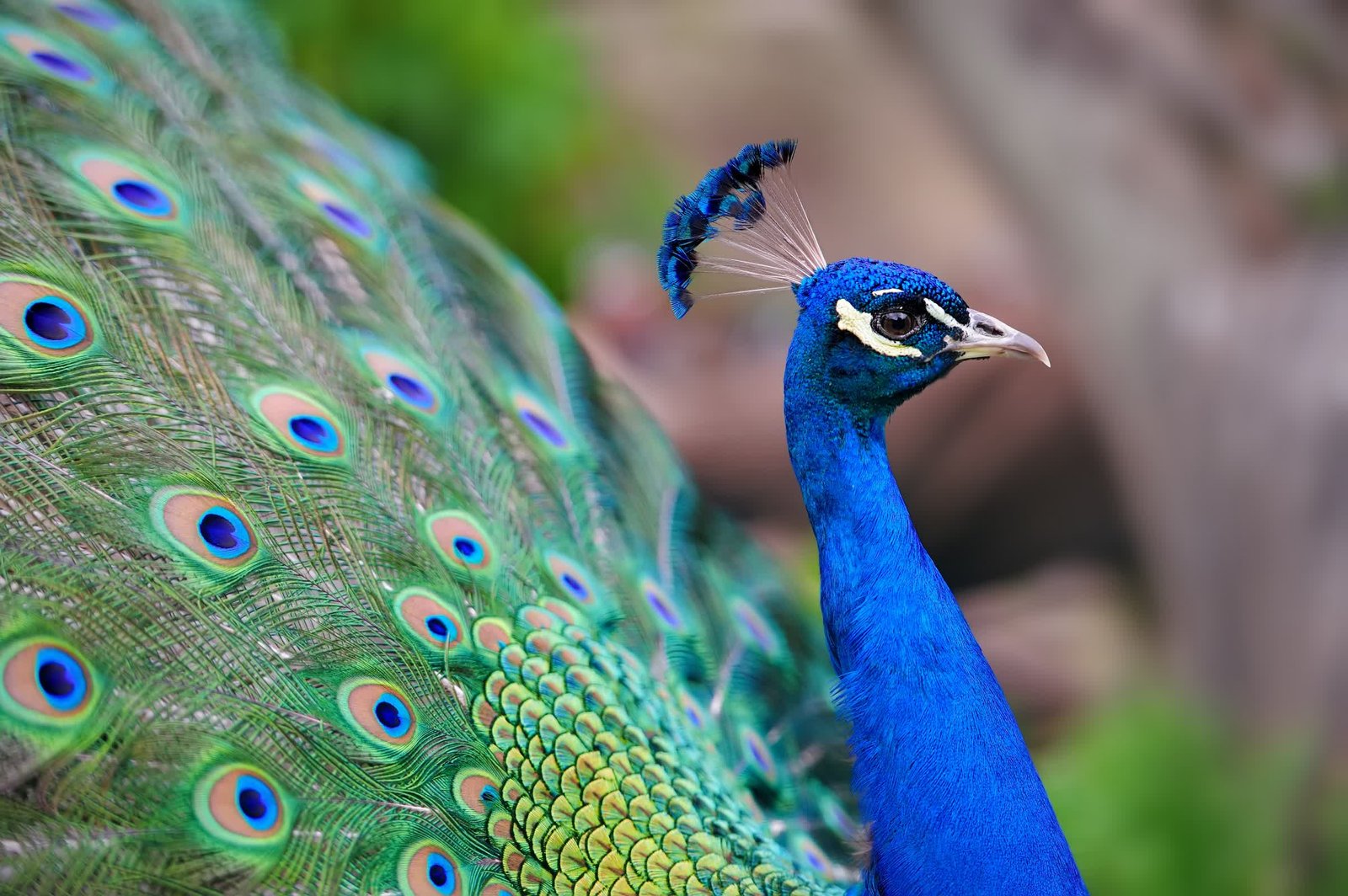
    TL;DR: Scientists have long been fascinated by the vibrant colors and intricate structures found in the feathers of birds like the Indian Peafowl (commonly known as the peacock). A new study has shed light on a surprising property of these iconic tail feathers: their ability to act as tiny laser resonators when infused with a common fluorescent dye.

    The research, conducted by researchers from several US universities and published in Nature, set out to explore the behavior of peacock feather barbules – microscopic structures that help create the bird’s famous shimmering eyespots – when treated with the laser dye rhodamine 6G. The aim was to determine if light emitted from these dyed feathers would reveal insights about the underlying biological structure, and whether the colorful photonic crystals in the feathers themselves might serve as feedback mechanisms to produce laser light.

    To conduct the experiment, scientists obtained natural peacock feathers, carefully cut them to isolate the eyespot area, and repeatedly wetted and dried specific regions with a solution containing rhodamine 6G. This dye is well-known for its bright fluorescence when exposed to green laser light. Using pulses from a green laser, the team illuminated the prepared feathers and collected the emitted light through a specialized spectrometer system.

    (a) Illustration of a barbule’s cross section that is repeatedly stained with a dye solution. (b) Experimental setup for detecting emission from a male Indian peafowl tail feather stained with R6g.

    Initial results showed that simply staining the feathers once was not enough – laser emission only appeared after several cycles of wetting and drying. This suggested that both the dye and solvent must deeply penetrate the barbules and possibly alter the microstructure for the effect to manifest.

    When the laser was aimed at different parts of the eyespot, whether they appeared blue, green, yellow, or brown, the researchers found sharp, consistent laser emission peaks, especially at wavelengths of 574nm and 583nm. These lines stood out against the broader fluorescence of the dye and appeared in all feather samples and color regions tested, indicating a repeatable and stable effect.

    Image of a peafowl tail feather’s eyespot surrounded by reflection spectra for four distinct color regions. Each spectrum has two insets, a low-magnification and a high-magnification microscope image of that color region.

    The researchers analyzed the emission spectra and found that the observed laser behavior didn’t match expectations for so-called random lasers, which usually arise from irregular, highly scattering environments and generate less predictable, variable emission lines. Instead, the peacock feathers produced consistent modes at specific wavelengths, regardless of the local color or structure, prompting the team to conclude that the laser feedback mechanism was not the same as that responsible for the feathers’ iridescent colors.

    Emission spectra from marked regions (a – f) of the R6g-infused peafowl tail feather.

    Advanced analysis of the spectral lines suggested that the feedback most likely comes from regular mesoscale structures, which persist throughout the eyespot, within the feather barbules, not from long-range photonic crystal ordering or randomly dispersed scattering paths. The study ruled out alternative explanations such as whispering gallery mode lasers, which would require precise circular cavities not naturally found in peacock feathers.

    The lasing effect also required relatively high pump intensities close to, or just above, those found in random laser experiments, but the stable and repeatable nature of the emission points to an underlying order in the biological microstructure. The results collectively show that natural polycrystalline or heterogeneous materials, once infused with the right molecules and subjected to appropriate treatment, can reveal hidden regularities through laser emission.

    Emission spectrum observed while pumping the iridescent blue region of the tail feather. A 4-peak Gaussian fit was used to model the emission spectrum.

    Although practical applications remain speculative, the findings suggest a new way to probe the internal organization of complex biological materials by measuring their laser emission spectra after dye infusion. Using this technique, it may one day become possible to map or characterize “hidden” structural motifs, or cavities, within feathers and other tissues, opening up opportunities for research in materials science, biophotonics, and bio-inspired laser technologies. For example, Nathan Dawson of Florida Polytechnic University told Ars Technica that the research could help create safe, biocompatible lasers for internal use in the human body in sensing, imaging, and therapy.

    Share. Facebook Twitter Pinterest LinkedIn Reddit WhatsApp Telegram Email
    Previous ArticleTim Cook has now been Apple CEO for longer than Steve Jobs
    Next Article Today’s NYT Strands Hints, Answers and Help for Aug. 4 #519
    TechAiVerse
    • Website

    Jonathan is a tech enthusiast and the mind behind Tech AI Verse. With a passion for artificial intelligence, consumer tech, and emerging innovations, he deliver clear, insightful content to keep readers informed. From cutting-edge gadgets to AI advancements and cryptocurrency trends, Jonathan breaks down complex topics to make technology accessible to all.

    Related Posts

    Older Windows 11 PCs need a Secure Boot fix ASAP

    February 11, 2026

    Why Ring’s Super Bowl ad hits so sinister

    February 11, 2026

    This dual-CPU PC from 1995 was so cool, Microsoft had to kill it

    February 11, 2026
    Leave A Reply Cancel Reply

    Top Posts

    Ping, You’ve Got Whale: AI detection system alerts ships of whales in their path

    April 22, 2025667 Views

    Lumo vs. Duck AI: Which AI is Better for Your Privacy?

    July 31, 2025251 Views

    6.7 Cummins Lifter Failure: What Years Are Affected (And Possible Fixes)

    April 14, 2025151 Views

    6 Best MagSafe Phone Grips (2025), Tested and Reviewed

    April 6, 2025111 Views
    Don't Miss
    Gadgets February 11, 2026

    Honda Malaysia Targets 60,000 Sales in 2026 with Expanded e:HEV Lineup

    Honda Malaysia Targets 60,000 Sales in 2026 with Expanded e:HEV Lineup Honda Malaysia is accelerating…

    Older Windows 11 PCs need a Secure Boot fix ASAP

    Why Ring’s Super Bowl ad hits so sinister

    This dual-CPU PC from 1995 was so cool, Microsoft had to kill it

    Stay In Touch
    • Facebook
    • Twitter
    • Pinterest
    • Instagram
    • YouTube
    • Vimeo

    Subscribe to Updates

    Get the latest creative news from SmartMag about art & design.

    About Us
    About Us

    Welcome to Tech AI Verse, your go-to destination for everything technology! We bring you the latest news, trends, and insights from the ever-evolving world of tech. Our coverage spans across global technology industry updates, artificial intelligence advancements, machine learning ethics, and automation innovations. Stay connected with us as we explore the limitless possibilities of technology!

    Facebook X (Twitter) Pinterest YouTube WhatsApp
    Our Picks

    Honda Malaysia Targets 60,000 Sales in 2026 with Expanded e:HEV Lineup

    February 11, 20263 Views

    Older Windows 11 PCs need a Secure Boot fix ASAP

    February 11, 20262 Views

    Why Ring’s Super Bowl ad hits so sinister

    February 11, 20263 Views
    Most Popular

    7 Best Kids Bikes (2025): Mountain, Balance, Pedal, Coaster

    March 13, 20250 Views

    VTOMAN FlashSpeed 1500: Plenty Of Power For All Your Gear

    March 13, 20250 Views

    This new Roomba finally solves the big problem I have with robot vacuums

    March 13, 20250 Views
    © 2026 TechAiVerse. Designed by Divya Tech.
    • Home
    • About Us
    • Contact Us
    • Privacy Policy
    • Terms & Conditions

    Type above and press Enter to search. Press Esc to cancel.