

The 4 Best Hearing Aids for Seniors in 2025, Tested and Reviewed
All products featured on WIRED are independently selected by our editors. However, we may receive compensation from retailers and/or from purchases of products through these links. Learn more.
Hearing loss can happen at any age—including birth—but it’s most common among older adults. Data shows that about a third of people 65 and older have age-related hearing loss, jumping to 50 percent after age 75. For these individuals, a hearing aid can significantly enhance their quality of life, allowing them to fully engage in social activities or talk freely on the phone.
Until 2022, when the US Food and Drug Administration green-lit over-the-counter (OTC) hearing aids, seniors could only get hearing aids prescribed by a doctor. The FDA’s approval of OTC devices opened the door to increased access and lower costs, and today, there are more styles available than ever. For many seniors, behind-the-ear (BTE) devices are popular, though in-the-ear (ITE) models are excellent choices for those who want a more discreet option and can maneuver them without dexterity challenges. Based on our testing, the Jabra Enhance Select 300 tops our list for its sound quality, high level of customer service, and ease of use. Here’s our full list of hearing aids for seniors, including over-the-counter and prescription devices, all expert-tested and approved.
Updated August 2025: We’ve reformatted this guide and added the Starkey Edge AI RIC RT, AirPods Pro 2, and Sony CRE-C20.
What to Consider When Choosing a Hearing Aid
Today’s hearing aids have a bevy of features ranging from Bluetooth streaming connectivity to multiple modes that allow you to adjust the device to changing surroundings. Here’s what senior users need to keep an eye out for.
Style: Behind-the-ear (BTE) or in-the-ear (ITE) aids? If you don’t mind a highly visible hunk of plastic hanging from your ear all day, BTE aids will be fine. Those who don’t want to telegraph their hearing loss will find ITE models much more discreet. We even have a pair of hearing aid glasses if you really want to hide your hearing loss.
Ease of use: Hearing aids are tiny things even steady hands can have trouble with. Are the devices easy to put on and take off? Are in-app support options and the manual intuitive? The more likely you are to remove and replace your hearing aids throughout the day, the more important ease of use will be.
Remote doctor support: Prescription hearing aids require a doctor visit, but OTC aids have a huge range of medical backup, ranging from a full telehealth experience to none at all. If you’re serious about improving your hearing you’ll want access to the former. If your hearing just needs a little boost, this will be less important.
Battery technology: Most hearing aids today use lithium-ion batteries that recharge by dropping them into a case (which itself carries extra charges). But aids with replaceable batteries still exist—and some are pretty good. Replaceable batteries last much longer, but you’ll have to keep buying extras and keep them on hand. They’re also easy to lose (and for pets to swallow). Most hearing aids these days opt for rechargeable, so this is something of a dying breed.
Cost: Even “cheap” hearing aids can be expensive, and most insurance plans don’t cover them. Make sure your chosen brand is within your budget—look for companies that offer easy returns and a 100 percent money-back guarantee.
Can I Get Senior Hearing Aids Through Medicare?
Hearing aids are still not covered by Medicare, so you will likely have to foot 100 percent of the bill for your devices and exams. Private insurance or add-on Medicare Advantage Plans (Part C) may include some hearing-related benefits. Consult with your existing health care provider to navigate your options. Outside of insurance, there may be other ways to soften the blow of the expense of hearing aids.
Like a car loan, financing is available from most hearing aid companies. You can open a line of credit with a hearing care professional and pay in installments—sometimes for up to three years. Good credit is required.
Some states require private health insurance companies to cover hearing aids, while other companies may offer hearing-focused plans for purchase. Shop around.
You may qualify for Medicaid, depending on your financial situation. Some states, such as California and Massachusetts, require these plans to provide hearing aid coverage.
FSA/HSA accounts (short for flexible spending accounts and health saving accounts) are available via employer-sponsored health plans. Some hearing aid brands will allow you to use these accounts to pay for devices.
Local and national nonprofits may help provide financial relief by covering some or all of the cost of hearing aids if you don’t have the means to pay for them yourself.
The market is crowded with hearing aids claiming to be the best choice for seniors, and choosing one can be confusing. Which ones are “best” for you depends on your needs and tastes, but even that can feel vague and clichéd. To sort through the options, I’ve spent the last four years conducting hands-on testing of more than 45 hearing aids that range from sub-$100 OTC devices to prescription hearing aids that cost up to $10,000 a pair. I analyze each product on numerous dimensions, including quality, comfort level, ease of use, and of course audio performance in a variety of real-world environments, including my home, outdoors, and noisy and quiet environments. Additional features such as Bluetooth streaming capabilities are also taken into account when making recommendations.
Ultimately, my goal is to turn down the noise on marketing and help users understand which hearing aids really deliver on their promises. Read our Best Hearing Aids guide for additional details about our testing process.
-
Best Hearing Aids for Seniors
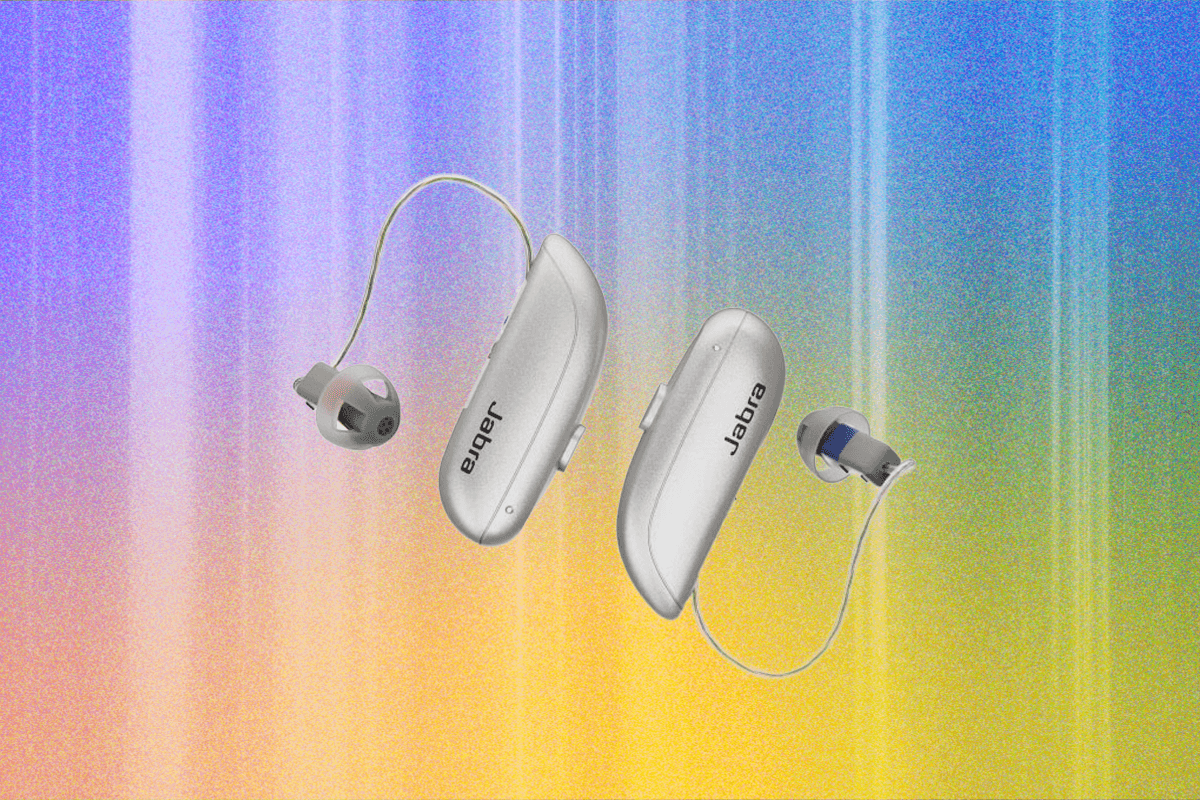
The Jabra Enhance Select 300 (9/10, WIRED Recommends) tops our list of best overall hearing aids for seniors. Frankly, this behind-the-ear (BTE) model is the best over-the-counter hearing aid available—period—if you can afford it. At around $1,695 a pair, the Enhance Select 300 is on the expensive end of the OTC market, though it’s more affordable than many prescription options. The sound quality alone makes it worth it, offering crisp, clear audio in various environments.
The devices are comfortable, even after hours of use, and easier than many aids to get into place, thanks to a pinging noise called “Smart Start” which helps you fit the devices properly into your ear canal with minimal fumbling. Jabra’s smartphone app is easy to use, with intuitive volume control capabilities and four environmental programs that simplify customizing the experience. Batteries can last almost 30 hours on a single charge, and the case itself, while not small, carries approximately 72 hours of additional juice—so you can likely take a weeklong getaway without ever needing to plug in the case to recharge. If you can spare the extra cash, consider the Enhance Select 500 (9/10, WIRED Recommends), which are smaller and lighter.
-
Absolute Best Sound Quality
Starkey is a longtime player in the hearing aid industry, with a history that dates back to 1967. In many circles, it is considered the gold standard of prescription hearing aids. In 2025, Starkey released its Edge AI RIC RT (8/10, WIRED Recommends) hearing aids—RIC stands for receiver in canal, and RT means rechargeable with telecoil—as part of what it says is the first aids powered by a neural processing unit (NPU). In other words, the devices use artificial intelligence to process audio and improve sound quality for the user.
They’re behind-the-ear prescription hearing aids, so unlike most of the products I recommend, you’ll have to visit a licensed audiologist to be fitted with a pair, though that can include not only audiology testing but also the creation of custom molds that fit into your ear canal like the in-ear studio monitors that professional musicians use. The results speak for themselves: Starkey’s audio quality is second to none, and while that is largely attributable to its decades of experience with sound processing, its AI algorithm, which can tune audio on the fly based on your environment, certainly didn’t hurt. The bottom line, however, is that the products are already so good that this AI tuning feature is just icing on the cake.
Starkey doesn’t set prices, so you’ll have to consult a doctor to see what a pair will run you. Figure $3,500 as a minimum; $4,000 as an average. If that’s too much to ask, the over-the-counter options on this list are much more affordable and offer nearly as good performance. Nearly.
-
Best Budget Hearing Aids
A few years ago, getting excellent “budget” hearing aids meant spending about $1,000, give or take, and hoping for the best. Apple changed all that in late 2024 when it introduced hearing aid features to its ubiquitous AirPods Pro 2 Bluetooth earbuds, letting the devices do double duty as both high-grade headphones and solid hearing aids for times when you aren’t streaming audio.
If you have AirPods Pro 2 (8/10, WIRED Recommends) earbuds already, you have hearing aids, whether you know it or not. These features were rolled out in software and firmware, and all you need to do to start using them as hearing aids is take the hearing test built into the iOS operating system (meaning you need an iPhone). The AirPods are not nearly as full-featured or high-fidelity as the traditional, single-function hearing aids on this list, but for most users, they work remarkably well, and they’re simple to master once you get past the brief onboarding process. Best of all, they are readily available for under $200 on sale, making them the absolute no-brainer choice for a set of “starter” hearing aids for any senior, whether they are cash-strapped or not.
They have the unique benefit of not looking like hearing aids, in case you’re worried about appearances, though folks may find it rude if you’re talking to them with these in your ears.
-
Best Invisible-Style Hearing Aids for Seniors
Seniors are not immune to vanity concerns, and many understandably do not want to be immediately noticed as hearing-aid wearers, a common complaint among those who wear traditional BTE aids, with their snaking wires and external hardware.
Sony’s CRE-C20 (8/10, WIRED Recommends) hearing aids are some of the smallest on the market, fitting entirely in the ear and almost impossible to see unless you’re up close and personal. The latest version of the CRE-C series also corrected what was the only major flaw preventing its predecessor from earning my recommendation. With the C20, Sony has ditched the replaceable battery with a rechargeable system, which I consider a nonnegotiable for almost any hearing aid user and especially for seniors, as fumbling with tiny hearing aid batteries is difficult even with perfect dexterity. There are smaller hearing aids than the 1.5-gram C20s, but you won’t find any that match the level of quality that these minuscule devices can provide.
Avoid These Hearing Aids
We test a lot of hearing aids, and some aren’t worth your time and money. Here are a few you should skip.
Audien Atom One
Photograph: Audien Hearing; GETTY IMAGES
MDHearing’s Neo line may seem attractive with its sub-$400 pricing. However, they look extremely industrial, are uncomfortable, and offer terrible performance in my testing. Similarly, the Audien Atom One, highly promoted due to its $98 price tag, doesn’t do enough to improve your hearing, and it’s minimally tunable.
Seniors should also carefully consider all prescription aids, as pricing is often short of transparent and can quickly skyrocket into the near-five-figures. There’s rarely any reason to spend this kind of money on hearing aids in today’s environment unless you have severe hearing loss. Many hearing aid providers carry the same products, so it can pay to shop around for a prescription product.
Hearing aids aren’t one-size-fits-all. Most seniors will gravitate to behind-the-ear (BTE) devices, as many are likely to find in-the-ear (ITE) aids difficult to work with. Here’s a look at both categories.
Behind-the-ear (BTE) aids have the traditional design you probably think of when you envision hearing aids. As the name implies, they sit behind the ear. Most of today’s BTE hearing aids are technically known as receiver-in-the-ear (RITE), due to a small component that sits in the ear canal instead of the case. Though smaller than predecessors from even a half-decade ago, they remain visible to observers. Still, what they lack in style they make up for in audio quality. Note that BTE devices can often be challenging to position just right in the ear canal—especially if you wear glasses.
In-the-ear (ITE) hearing aids, also called in-the-canal (ITC) aids, often look like wireless earbuds and can be even smaller, disappearing nearly entirely into the ear canal. If you don’t want a noticeable hearing aid, these are much more discreet than BTE devices, and they can be easier to work with too, since they lack the wire that wraps around your ear. If you pop your hearing aids in and out frequently during the day, ITE aids will save you a mountain of time. One drawback to these devices is that their small size usually means less battery power (and the need to charge more frequently). Due to their smaller size, they can be challenging to manipulate if you have dexterity issues.
How Do You Buy and Get Started With Hearing Aids?
If you’ve seen signs advertising hearing aid shops while driving around town, you might be lulled into thinking these specialized storefronts are the only way to buy them. Not so. In 2022, the US Food and Drug Administration paved the way for hearing aids to be sold over the counter, which means consumers now have a wide variety of outlets from which they can purchase these devices.
If you do choose to visit a retail audiology center—whether it’s a small storefront in a strip mall or a more official medical office—you’ll begin the process with a medical examination wherein the audiology will physically check your ears and then test your hearing in a specialized room. This hearing test takes about 15 minutes and involves listening to pings played at different frequencies and volumes. Once complete, the audiologist uses this to create a map of your hearing called an audiogram, which in turn is used to program the prescription hearing aids that, ostensibly, the audiologist will subsequently sell to you. The audiologist can later adjust the hearing aids’ settings over time if you need additional support.
If you choose to forgo this process and purchase high-end hearing aids from a retail channel, you’ll miss out on the physical exam, but you will likely still have access to a hearing test, delivered either online or through an app. With these tests, you first purchase your selected hearing aids. Once you have them fitted in your ears, you run through a similar kind of testing to program them, with the pings delivered through the aids you’ve just bought. The resulting audiogram is often surprisingly accurate in comparison to one created by an audiologist. And like prescription aids, hearing aid companies often have an audiologist on staff who can tweak settings over time remotely.
Many less expensive hearing aids—under the $300 price level—usually do not include hearing test technology like this, or if they do, it can exist in a more limited fashion. The user is left to their own devices to program them to their liking.
Rechargeable vs. Replaceable Battery
All hearing aids have a battery, but some can be recharged—like Bluetooth earbuds—while some require you to buy standalone batteries that are replaced as they expire.
Rechargeable hearing aids offer the user the convenience of being able to simply drop the aids into a special case which tops up the battery whenever the aids are not in use. A typical rechargeable aid will get anywhere from 8 to 30 hours of operational time from a single charge. The hearing aids’ case will also usually carry a charge of its own that will provide another 3 to 5 additional charges. With a fully charged case, most users should be able to go for up to a week before having to recharge the case, though it’s easier if the case is simply left plugged in and always topped up.
Hearing aids with a replaceable battery represent older technology, though it’s not a technology without some advantages. Foremost, replaceable hearing aid batteries last a lot longer than rechargeable batteries, up to eight times the lifespan in some cases. With a replaceable battery-powered hearing aid, a user may be able to use their aids for a full week without having to change the battery. That may be more convenient for some users who don’t want to have to carry a charging case with them. (Some recharging cases can be quite large.) The catch is that eventually the battery will die and it will need to be replaced. This isn’t always the easiest process, as these batteries are quite tiny and prone to being easily dropped and lost, particularly if you have dexterity challenges. Also, if you have pets or grandchildren around the house, swallowed batteries pose a huge health risk. While you won’t need to carry a case with you, you will need to carry spare batteries for when you run out of juice.
Which is best? Categorically, I no longer recommend any model hearing aids with replaceable batteries, but since the market is headed full-bore toward rechargeable hearing aids, you probably won’t have a choice for long anyway.
Power up with unlimited access to WIRED. Get best-in-class reporting and exclusive subscriber content that’s too important to ignore. Subscribe Today.
