

10 lessons from the James Webb telescope that could shape European tech
The scientific world is reeling. New discoveries from the James Webb Space Telescope — a joint project by the European Space Agency(ESA), NASA, and the Canadian Space Agency (CSA) — aren’t just surprising, they’re contradicting our deepest assumptions about how the universe works.
Fundamentally, it seems the universe may not be playing by the rules we mostly thought we understood.
So, what could it all mean for space exploration, space technology, and future deep tech? And what should space tech businesses, inventors, investors, and VC funds in Europe be considering as a result of the latest discoveries?
At Beyond Earth Ventures, we’re all about startups building rockets, AIs for satellites, space biotech, and fusion breakthroughs.
But as space fanatics, we also like to look deeper, beyond cap tables and pitch decks, into the places where theory breaks and mystery begins.
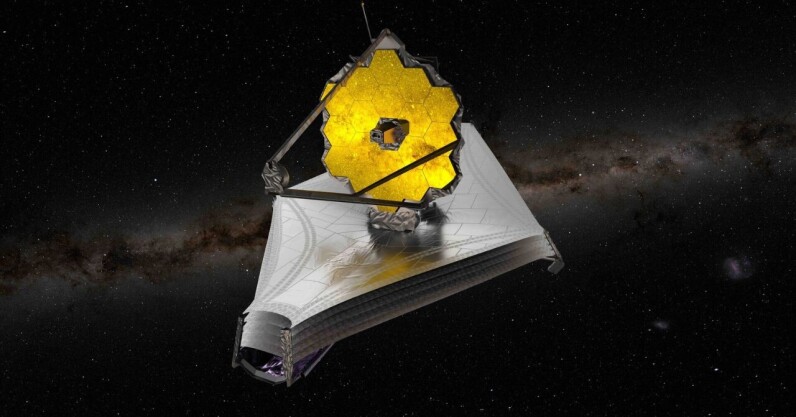
Enter the $10bn Webb telescope, sent into orbit from Europe’s spaceport in French Guiana, to look at the oldest light in the universe. Launched in 2021, the machine has been fully operational since July 2022.
Webb isn’t just an upgrade from Hubble. It’s a time machine, an infrared sentinel, and — maybe most importantly — a destroyer of comfortable scientific assumptions.
Thanks to its findings, it’s becoming clear that we’re on the cusp of a major shift in theoretical physics and cosmology. Over the next few years, expect a wave of bold new theories, revisions to textbooks, and a renewed debate about everything from gravity to the origin of galaxies.
Before we consider the implications, let’s zoom out and consider the big discoveries from Webb that punch holes in what we thought we knew about the universe. Some of these are already triggering theoretical crises. Others might trigger entirely new fields of inquiry and invention.
The biggest revolutions start when theory no longer matches data. That’s what happened with quantum mechanics. With general relativity. With DNA. And maybe, with the Webb Telescope.
Here are 10 of its discoveries challenging our theories about the universe:
1. The universe is expanding faster than it should
We knew about the “Hubble Tension,” but Webb just confirmed it with more precision. According to the maths, the universe is expanding at 70–76 kilometres per second per megaparsec (km/s/Mpc) — much faster than the 67 km/s/Mpc predicted by models based on the early universe (the cosmic microwave background). Translation? Something in our physics is wrong, or at least incomplete. A tweak to dark energy? A new force? A misunderstood early universe? The door is open.
2. Galaxies grew up too fast
Webb spotted fully-grown, massive galaxies just 500–700 million years after the Big Bang. These things are as large as the Milky Way, but their early appearance defies established science. According to the standard cosmological models, they simply shouldn’t exist yet. Theories say galaxies grow slowly. Reality says: they bulked up fast. Either we’re missing a trick — or the early universe was a lot more efficient than we thought.
3. Dark matter may be wrong — MOND was right?
This one’s controversial: Webb’s findings align more with Modified Newtonian Dynamics (MOND) than the prevailing dark matter theory. MOND has long been the underdog of gravity theories. But if early galaxies are brighter and bigger than expected — just as MOND predicted — we may need to reconsider which invisible hand is shaping the cosmos.
4. Black holes were way too ambitious
How do you get a 9-million-solar-mass black hole only 570 million years after the Big Bang? That’s what Webb found. This is astonishing because, according to current models, there simply wasn’t enough time or material in the early universe to grow such colossal black holes so quickly — suggesting either unknown physics or entirely new formation pathways. The black holes in some early galaxies are 1,000x more massive (relative to the galaxy) than those in today’s universe. Either black holes formed via some exotic mechanism — or they started as something much bigger than stars.
5. Complex chemistry? This early?
The galaxy JADES-GS-z14-0 is just 300 million years old, but it’s already rich in elements like nitrogen, which usually takes billions of years and several generations of stars to build up. How did those elements get there? Either the first stars formed and died much faster than we thought — or the Big Bang left us more “pre-built” than expected.
6. Stars formed at warp speed
Webb shows early galaxies as intense, explosive star factories — a surprise to scientists. Models expected slow, gradual star formation. Instead, it’s “giant balls of star formation.” Something — perhaps a lack of dust, or different physics — accelerated the timeline. And, again, the models can’t keep up.
7. Planetary disks last longer than we thought
Planet-forming disks around stars were assumed to vanish quickly. But Webb sees them lasting 20–30 million years. That’s great news for exoplanet formation — and potentially for life. If planetary systems have more time to develop, life-friendly environments may be more common than we ever dared to hope.
8. Galaxies were weirdly shaped
Half of early galaxies look like pool noodles or surfboards, not the small round blobs we expected. The standard model says structure comes later. But Webb’s showing us that galaxies got organised early — and in shapes we weren’t expecting. Something about angular momentum and matter dynamics in the early universe needs rethinking.
9. Exoplanet atmosphere models are all wrong
Webb’s ultra-precise spectroscopy revealed that our models of exoplanet atmospheres can’t reliably distinguish between different kinds. This shakes up everything from habitability estimates to the search for biosignatures. Basically, our “spectral fingerprints” are smudged — and it’s back to the drawing board.
10. The cosmic web was already there
Webb found a 3-million-light-year-long filament — part of the cosmic web — just 830 million years after the Big Bang. This structure was supposed to take billions of years to form. So either the early universe built things quickly, or we’ve fundamentally misunderstood the timeline.
So what does this mean for the tech ecosystem? For founders and VCs in deep tech, these findings aren’t just scientific trivia; they’re early signals.
Europe’s ideas in focus
In our view, Europe is uniquely positioned to lead the next wave of innovation sparked by James Webb’s discoveries. The data streaming in is already catalysing new research efforts at leading centres like Germany’s Max Planck Institutes, the University of Cambridge in the UK, and ETH Zurich in Switzerland.
In the private sector, a new generation of European deep tech startups is rising to the challenge.
Space Forge (UK) is developing reusable satellites to enable in-space manufacturing of advanced materials — such as semiconductors — that could drastically reduce energy consumption and carbon emissions, with major implications for the climate crisis.
BioOrbit (UK) is advancing microgravity-enabled production of anti-cancer biologics, with the potential to shift some therapies from hospital IV drips to self-administered injections at home, radically improving patient access and comfort.
AIrmo (Germany) is deploying a fleet of LIDAR-equipped satellites and drones to precisely monitor greenhouse gas emissions in real time — supporting industries in meeting increasingly stringent EU regulations to report GHG emissions.
European deep tech companies are increasingly supported by Horizon Europe, the EU’s flagship research and innovation programme (2021–2027) with a total budget of €95.5 billion. Horizon Europe backs high-risk, high-reward projects across climate, digital, and deep tech domains, serving as a critical bridge between frontier scientific discoveries — like those revealed by JWST — and breakthrough commercial applications.
Gaps in our understanding of the universe could open unexpected opportunities for European deep tech. Just as CERN put Europe at the forefront of high-energy physics, Webb could become a launchpad for the continent’s space tech industry.
Webb’s discoveries could spark a new era of innovation by overturning everything we thought we knew about the universe. If the early universe is nothing like we expected, then what else might we be wrong about?
Could the laws of physics themselves evolve? Are we missing hidden variables in space-time? Is dark matter an illusion, and if so, what’s really shaping galaxies? Could life have started earlier and more often than we imagine?
Every one of these questions could unlock a new wave of fundamental physics, new technologies, or even entirely new startup categories. From quantum gravity models to exotic materials to AI-designed cosmological simulations, there’s room here for founders to build at the edge of mystery.
What next? Potentially a new generation of inventions, investors, and eye-opening discoveries. Europe is poised to take advantage.
By investing in deep tech, the continent can turn Webb’s revelations into commercial successes, shaping the future of science and society alike.
