

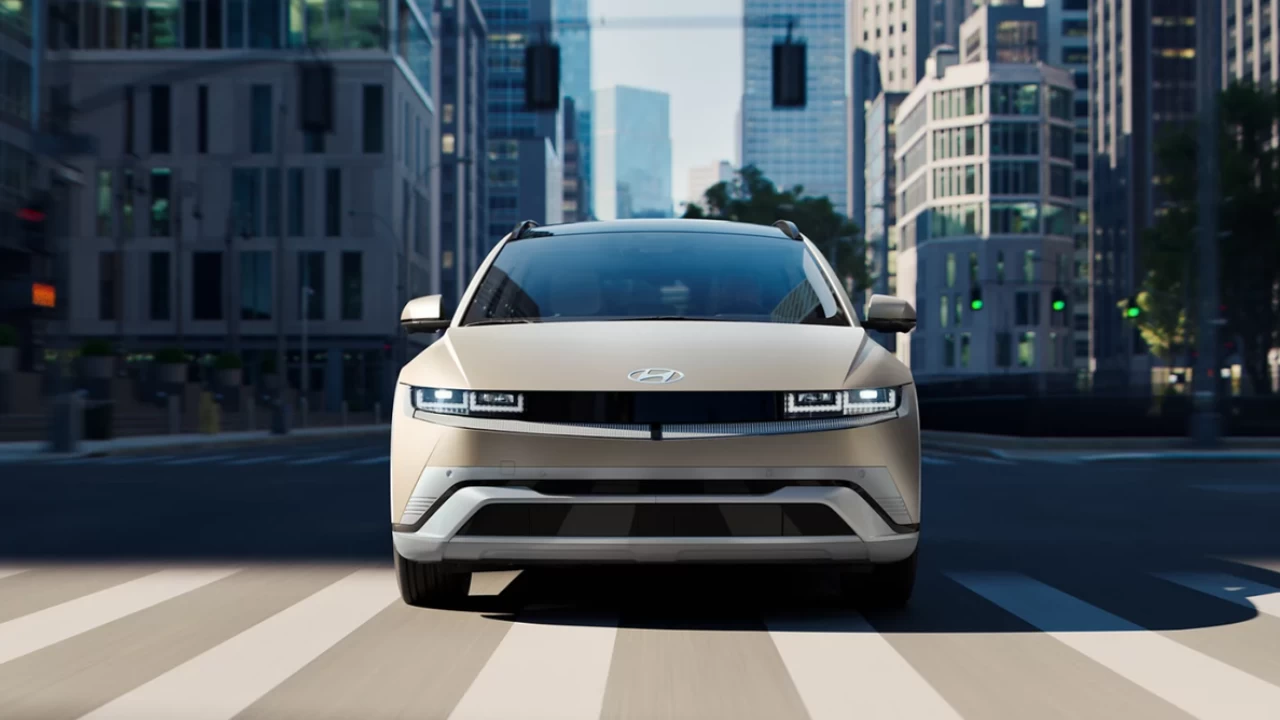
Hyundai wants loniq 5 customers to pay for cybersecurity patch in baffling move
Usama Jawad
Neowin
@UsamaJawad96 ·
· Hot!
Over the past few years, technology has been integrated into the automotive market in major ways, not just in the manufacturing process, but also in terms of the consumer experience. A recent example is Samsung and Tesla collaborating on developing high-end technologies. Now, Hyundai has made the rather baffling decision to charge customers for a cybersecurity patch.
In recent years, there have been reported instances of Game Boy-like handheld devices being used by thieves to hack into the locking mechanisms of several electric vehicle models. In the UK, Kia, Hyundai, and Genesis EVs have been targeted with this sophisticated hardware which apparently cracks wireless protocols used in the Hyundai Ioniq 5, Kia EV6, and Genesis GV60.
The Verge now reports that Hyundai is offering a security patch for this issue through software and hardware upgrades to Ioniq 5 customers. This fix is being offered as “optional” for £49 ($65) on the company’s website in the UK, although a similar offer does not seem to be available in the U.S.
This decision is a bit baffling because Hyundai is seemingly asking customers to pay for its own lapse in security. It’s also frustrating because the car isn’t that old, it’s an EV after all, built according to modern global standards.
And this is what seems to be Hyundai’s defense for charging customers too. It says that the Ioniq 5 was developed and certified through all regulatory standards, complying with cybersecurity requirements too. However, since this threat has been classified as a recently “evolving” problem, Hyundai thinks that it is fair to charge its customers a “subsidized” upgrade.
Hyundai Ioniq 5 owners can visit the portal here to find out if their vehicle is eligible for the paid, optional upgrade. Simply enter your VIN found in your documents or on the inside of your car, and then decide if the upgrade is worth the money if your vehicle is affected. Keep in mind that the car-stealing device reportedly costs around $20,000, so the likelihood of it being in the ownership of a thief isn’t extremely high.
