

Who can get a COVID vaccine—and how? It’s complicated.
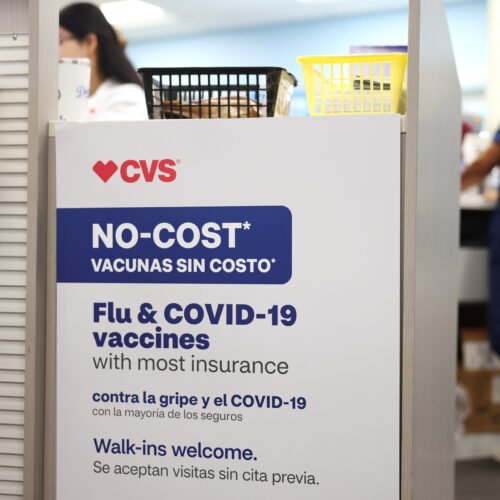
As fall approaches and COVID cases tick up, you might be thinking about getting this season’s COVID-19 vaccine. The annually updated shots have previously been easily accessible to anyone over 6 months of age. Most people could get them at no cost by simply walking into their neighborhood pharmacy—and that’s what most people did.
However, the situation is much different this year with an ardent anti-vaccine activist, Robert F. Kennedy Jr., as the country’s top health official. Since taking the role, Kennedy has worked diligently to dismantle the country’s premier vaccination infrastructure, as well as directly hinder access to lifesaving shots. That includes restricting access to COVID-19 vaccines—something he’s done by brazenly flouting all standard federal processes while providing no evidence-based reasoning for the changes.
How we got here
In late May, Kennedy unilaterally decided that all healthy children and pregnant people should no longer have access to the shots. He announced the unprecedented change not through official federal channels, but via a video posted on Elon Musk’s X platform. Top vaccine and infectious disease officials at the Centers for Disease Control and Prevention—which sets federal vaccination recommendations—said they also learned of the change via X.
Medical experts—particularly the American Academy of Pediatrics (AAP) and the American College of Obstetricians and Gynecologists (ACOG)—immediately slammed the change, noting that data continues to indicate pregnant women and children under age 2 are particularly vulnerable to severe COVID-19. Both medical groups have since released their own vaccination guidance documents that uphold COVID-19 vaccine recommendations for those patient groups. (AAP here, ACOG here)
Nevertheless, in line with Kennedy, officials at the Food and Drug Administration signaled that they would take the unprecedented, unilateral step of changing the labels on the vaccines to limit who could get them—in this case, people 65 and over, and children and adults with health conditions that put them at risk of severe COVID-19. Kennedy’s FDA underlings—FDA Commissioner Martin Makary and top vaccine regulator, Vinay Prasad—laid out the plans alongside a lengthy list of health conditions in a commentary piece published in the New England Journal of Medicine. The list includes pregnancy—which is evidence-based, but odd, since it conflicts with Kennedy.
What was supposed to happen
When there isn’t a zealous anti-vaccine activist personally directing federal vaccine policy, US health agencies have a thorough, transparent protocol for approving and recommending vaccinations. Generally, it starts with the FDA, which has both its own scientists and a panel of outside expert advisors to review safety and efficacy data submitted by a vaccine’s maker. The FDA’s advisory committee—the Vaccines and Related Biological Products Advisory Committee (VRBPAC)—then holds a completely public meeting to review, analyze, and discuss the data. They make a recommendation on a potential approval and then the FDA commissioner can decide to sign off, typically in accordance with internal experts.
Resulting FDA approvals or authorizations are usually broad, basically covering people who could safely get the vaccine. The specifics of who should get the vaccine fall to the CDC.
Once the FDA approves or authorizes a vaccine, the CDC has a similar evaluation process. Internal experts review all the data for the vaccine, plus the epidemiological and public health data to assess things like disease burden, populations at risk, resource access, etc. A committee of outsides expert advisors do the same—again in a totally transparent public meeting that is livestreamed with all documents and presentations available on the CDC’s website.
That committee, the Advisory Committee on Immunization Practices (ACIP), then makes recommendations to the CDC about how the shots should be used. These recommendations can provide nuanced clinical guidance on exactly who should receive a vaccine, when, in what scenarios, and in what time series, etc. The recommendations may also be firm or soft—e.g., some people should get a vaccine, while others may get the vaccine.
The CDC director then decides whether to adopt ACIP’s recommendations (the director usually does) and updates the federal immunization schedules accordingly. Those schedules set clinical standards for immunizations, including routine childhood vaccinations, nationwide. Once a vaccine recommendation makes it to the ACIP-guided federal immunization schedules, private health insurance companies are required to cover those recommended vaccinations at no cost to members. And—a key catch for this year—19 states tie ACIP vaccine recommendations to pharmacists’ ability to independently administer vaccines.
What actually happened
Days after Kennedy’s X announcement of COVID-19 vaccine restrictions in late May, the CDC changed the federal immunization schedules. The recommendation for a COVID-19 shot during pregnancy was removed. But, for healthy children 6 months to 17 years, the CDC diverged from Kennedy slightly. The updated schedule doesn’t revoke access outright; instead, it now says that healthy children can get the shots if there is shared decision-making with the child’s doctor, that is, if the parent/child wants to get the vaccine and the doctor approves. ACIP was not involved in any of these changes.
On August 27, the FDA followed through with its plans to change the labels on COVID-19 vaccines, limiting access to people who are 65 and older and people who have an underlying condition that puts them at high risk of severe COVID-19.
FDA’s advisory committee, VRBPAC, met in late May, just a few days after FDA officials announced their plans to restrict COVID-19 vaccine access. The committee was not allowed to discuss the proposed changes. Instead, it was limited to discussing the SARS-CoV-2 strain selection for the season, and questions about the changes were called “off topic” by an FDA official.
ACIP, meanwhile, has not met to discuss the use of the updated COVID-19 vaccines for the 2025–2026 season. Last year, ACIP met and set the 2024–2025 COVID-19 shot recommendations in June. But, instead, in June of this year, Kennedy fired all 17 members of ACIP, falsely claiming members were rife with conflicts of interest. He quickly repopulated ACIP with anti-vaccine allies who are largely unqualified and some of whom have been paid witnesses in lawsuits against vaccine makers, a clear conflict of interest. While Kennedy is reportedly working to pack more anti-vaccine activists onto ACIP, the committee is scheduled to meet and discuss the COVID-19 vaccine on September 18 and 19. The committee will also discuss other vaccines.
Outside medical and public health experts view ACIP as critically compromised and expect it will further restrict access to vaccines.
With this set of events, COVID-19 vaccine access is in disarray. Here’s what we do and don’t know about access.
Getting a vaccine
FDA vaccine criteria
Prior to Kennedy, COVID-19 vaccines were available to all people ages 6 months and up. But that is no longer the case. The current FDA approvals are as follows:
Pfizer’s mRNA COVID-19 vaccine (COMIRNATY) is only available to people:
- 65 years of age and older, or
- 5 years through 64 years of age with at least one underlying condition that puts them at high risk for severe outcomes from COVID-19.
Moderna’s mRNA COVID-10 vaccine (SPIKEVAX) is only available to people:
- 65 years of age and older, or
- 6 months through 64 years of age with at least one underlying condition that puts them at high risk for severe outcomes from COVID-19.
Novavax’s protein subunit COVID-19 vaccine NUVAXOVID is only available to people:
- 65 years of age and older, or
- 12 years through 64 years of age with at least one underlying condition that puts them at high risk for severe outcomes from COVID-19.
Who can get a COVID-19 vaccine and where now depends on a person’s age, underlying conditions, and the state they reside in.
States-based restrictions
The fact that ACIP has not set recommendations for the use of 2025–2026 COVID-19 vaccines means vaccine access is a messy patchwork across the country. As mentioned above, 19 states link pharmacists’ ability to independently provide COVID-19 vaccines to ACIP recommendations. Without those recommendations, pharmacies in those states may not be able to administer the vaccines at all, or only provide them with a doctor’s prescription—even for people who fit into the FDA’s criteria.
Last week, The New York Times reported that CVS and Walgreens, the country’s largest pharmacy chains, were either not providing vaccines or requiring prescriptions in 16 states. And the list of 16 states where CVS had those restrictions was slightly different than where Walgreens had them, likely due to ambiguities in state-specific regulations.
The National Alliance of State Pharmacy Associations (NASPA) and the American Pharmacists Association (APhA) have a state-by-state overview of pharmacist vaccination authority regulations here.
For people meeting the FDA criteria
In the 31 states that allow for broader pharmacist vaccination authority, people meeting FDA’s criteria (65 years and older, and people with underlying conditions), should be able to get the vaccine at a pharmacy like usual. And once ACIP sets recommendations later this month—assuming the committee doesn’t restrict access further—people in those groups should be able to get them at pharmacies in the remaining states, too.
Proving underlying conditions
People under 65 with underlying health conditions who want to get their COVID-19 shot at a pharmacy will likely have to do something to confirm their eligibility.
Brigid Groves, APhA’s vice president of professional affairs and the organization’s expert on vaccine policy, told Ars that the most likely scenario is that people will have to fill out forms prior to vaccination, indicating the conditions they have that make them eligible, a process known as self-attestation. This is not unusual, Groves noted. Other vaccinations require such self-attestation of conditions, and for years, this has been sufficient for pharmacists to administer vaccines and for insurance policies to cover those vaccinations, she said.
“APhA is a strong supporter of that patient self-attestation, recognizing that patients have a very good grasp of their medical conditions,” Groves said.
For people who don’t meet the FDA criteria
There are a lot of reasons why healthy children and adults outside the FDA’s criteria may still want to get vaccinated: Maybe they are under the age of 2, an age that is, in fact, still at high risk of severe COVID-19; maybe they live or work with vulnerable people, such as cancer patients, the elderly, or immunocompromised; or maybe they just want to avoid a crummy respiratory illness that they could potentially pass on to someone else.
For these people, regardless of what state they are in, getting the vaccine would mean a pharmacist or doctor would have to go “off-label” to provide it.
“It’s very gray on how a pharmacist may proceed in that scenario,” Groves told Ars. Going off-label could open pharmacists up to liability concerns, she said. And even if a patient can obtain a prescription for an off-label vaccine, that still may not be enough to allow a pharmacist to administer the vaccine.
“Pharmacists have something called ‘corresponding responsibility,’ Groves explained. “So even if a physician, or a nurse practitioner, or whomever may send a prescription over for that vaccine, that pharmacist still has that responsibility to ensure this is the right medication, for the right patient, at the right time, and that they’re indicated for it,” she said. So, it would still be going outside what they’re technically authorized to do.
Doctors, on the other hand, can administer vaccines off-label, which they might do if they choose to follow guidance from medical organizations like AAP and ACOG, or if they think it’s best for their patient. They can do this without any heightened professional liability, contrary to some suggestions Kennedy has made (doctors prescribe things off-label all the time). But, people may have to schedule an appointment with their doctor and convince them to provide the shot—a situation far less convenient than strolling into a local pharmacy. Also, since pharmacies have provided the vast majority of COVID-19 vaccines so far, some doctors’ offices may not have them on hand.
Pregnancy
It’s unclear if pregnancy still falls under the FDA’s criteria for a high-risk condition. It was included in the list that FDA officials published in May. However, the agency did not make that list official when it changed the vaccine labels last month. Some experts have suggested that, in this case, the qualifying high-risk conditions default to the CDC’s existing list of high-risk conditions, which includes pregnancy. But it’s not entirely clear.
In addition, with Kennedy’s previous unilateral change to the CDC’s immunization schedule—which dropped the COVID-19 vaccine recommendation during pregnancy—pregnant people could still face barriers to getting the vaccine in the 19 states that link pharmacist authorization to ACIP recommendations. That could change if ACIP reverses Kennedy’s restriction when the committee meets later this month, but that may be unlikely.
Insurance coverage
It’s expected that insurance companies will continue to cover the full costs of COVID-19 vaccines for people who meet the FDA criteria. For off-label use, it remains unclear.
Groves noted that in June, AHIP, the trade organization for health insurance providers, put out a statement suggesting that it would continue to cover vaccines at previous levels.
“We are committed to ongoing coverage of vaccines to ensure access and affordability for this respiratory virus season. We encourage all Americans to talk to their health care provider about vaccines,” the statement reads.
However, Groves was cautious about how to interpret that. “At the end of the day, on the claims side, we’ll see how that pans out,” she said.
Rapidly evolving access
While the outcome of the ACIP meeting on September 18 and 19 could alter things, a potentially bigger source of change could be actions by states. Already, there have been rapid responses with states changing their policies to ensure pharmacists can provide vaccines, and states making alliances with other states to provide vaccine recommendations and vaccines themselves.
Beth is Ars Technica’s Senior Health Reporter. Beth has a Ph.D. in microbiology from the University of North Carolina at Chapel Hill and attended the Science Communication program at the University of California, Santa Cruz. She specializes in covering infectious diseases, public health, and microbes.
