Close Menu

    Subscribe to Updates

    Get the latest creative news from FooBar about art, design and business.

    What's Hot

    Samsung Galaxy Unpacked 2026: Launch Date Revealed for Rumored S26 Lineup

    Metal Gear Solid 4 Gets Its First Remaster Nearly Two Decades After It Came Out

    Waymo Begins Fully Autonomous Operations With 6th-Generation Tech

    Facebook X (Twitter) Instagram
    • Artificial Intelligence
    • Business Technology
    • Cryptocurrency
    • Gadgets
    • Gaming
    • Health
    • Software and Apps
    • Technology
    Facebook X (Twitter) Instagram Pinterest Vimeo
    Tech AI Verse
    • Home
    • Artificial Intelligence

      Read the extended transcript: President Donald Trump interviewed by ‘NBC Nightly News’ anchor Tom Llamas

      February 6, 2026

      Stocks and bitcoin sink as investors dump software company shares

      February 4, 2026

      AI, crypto and Trump super PACs stash millions to spend on the midterms

      February 2, 2026

      To avoid accusations of AI cheating, college students are turning to AI

      January 29, 2026

      ChatGPT can embrace authoritarian ideas after just one prompt, researchers say

      January 24, 2026
    • Business

      The HDD brand that brought you the 1.8-inch, 2.5-inch, and 3.5-inch hard drives is now back with a $19 pocket-sized personal cloud for your smartphones

      February 12, 2026

      New VoidLink malware framework targets Linux cloud servers

      January 14, 2026

      Nvidia Rubin’s rack-scale encryption signals a turning point for enterprise AI security

      January 13, 2026

      How KPMG is redefining the future of SAP consulting on a global scale

      January 10, 2026

      Top 10 cloud computing stories of 2025

      December 22, 2025
    • Crypto

      How Polymarket Is Turning Bitcoin Volatility Into a Five-Minute Betting Market

      February 13, 2026

      Israel Indicts Two Over Secret Bets on Military Operations via Polymarket

      February 13, 2026

      Binance’s October 10 Defense at Consensus Hong Kong Falls Flat

      February 13, 2026

      Argentina Congress Strips Workers’ Right to Choose Digital Wallet Deposits

      February 13, 2026

      Monero Price Breakdown Begins? Dip Buyers Now Fight XMR’s Drop to $135

      February 13, 2026
    • Technology

      Samsung Galaxy Unpacked 2026: Launch Date Revealed for Rumored S26 Lineup

      February 13, 2026

      Metal Gear Solid 4 Gets Its First Remaster Nearly Two Decades After It Came Out

      February 13, 2026

      Waymo Begins Fully Autonomous Operations With 6th-Generation Tech

      February 13, 2026

      YouTube Music Adds AI-Generated Playlists

      February 13, 2026

      Best Wireless Earbuds of 2026

      February 13, 2026
    • Others
      • Gadgets
      • Gaming
      • Health
      • Software and Apps
    Check BMI
    Tech AI Verse
    You are at:Home»Technology»This retina implant lets people with vision loss do a crossword puzzle
    Technology

    This retina implant lets people with vision loss do a crossword puzzle

    TechAiVerseBy TechAiVerseOctober 21, 2025No Comments6 Mins Read3 Views
    Facebook Twitter Pinterest Telegram LinkedIn Tumblr Email Reddit
    This retina implant lets people with vision loss do a crossword puzzle
    Share
    Facebook Twitter LinkedIn Pinterest WhatsApp Email

    This retina implant lets people with vision loss do a crossword puzzle

    Science Corporation—a competitor to Neuralink founded by the former president of Elon Musk’s brain-interface venture—has leapfrogged its rival after acquiring, at a fire-sale price, a vision implant that’s in advanced testing,.

    The implant produces a form of “artificial vision” that lets some patients read text and do crosswords, according to a report published in the New England Journal of Medicine today.

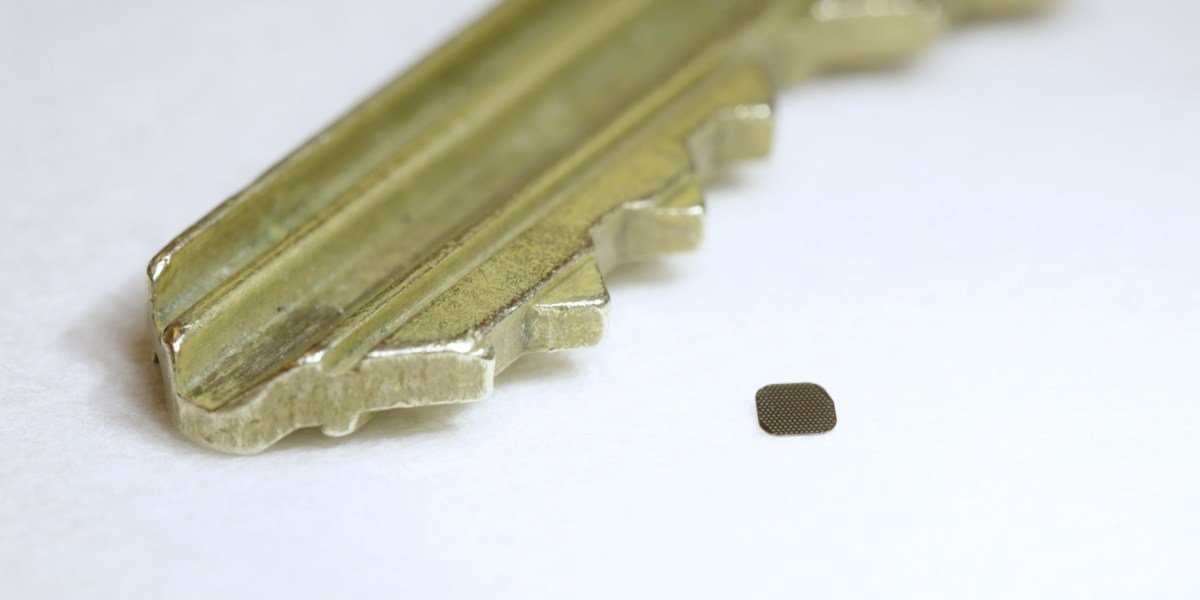
    The implant is a microelectronic chip placed under the retina. Using signals from a camera mounted on a pair of glasses, the chip emits bursts of electricity in order to bypass photoreceptor cells damaged by macular degeneration, the leading cause of vision loss in elderly people.

    “The magnitude of the effect is what’s notable,” says José-Alain Sahel, a University of Pittsburgh vision scientist who led testing of the system, which is called PRIMA. “There’s a patient in the UK and she is reading the pages of a regular book, which is unprecedented.”  

    Until last year, the device was being developed by Pixium Vision, a French startup cofounded by Sahel, which faced bankruptcy after it couldn’t raise more cash.  

    That’s when Science Corporation swept in to purchase the company’s assets for about €4 million ($4.7 million), according to court filings.

    “Science was able to buy it for very cheap just when the study was coming out, so it was good timing for them,” says Sahel. “They could quickly access very advanced technology that’s closer to the market, which is good for a company to have.”

    Science was founded in 2021 by Max Hodak, the first president of Neuralink, after his sudden departure from that company. Since its founding, Science has raised around $290 million, according to the venture capital database Pitchbook, and used the money to launch broad-ranging exploratory research on brain interfaces and new types of vision treatments.

    “The ambition here is to build a big, standalone medical technology company that would fit in with an Apple, Samsung, or an Alphabet,” Hodak said in an interview at Science’s labs in Alameda, California in September. “The goal is to change the world in important ways … but we need to make money in order to invest in these programs.”

    By acquiring the PRIMA implant program, Science effectively vaulted past years of development and testing. The company has requested approval to sell the eye chip in Europe and is in discussions with regulators in the US.

    Unlike Neuralink’s implant, which records brain signals so paralyzed recipients can use their thoughts to move a computer mouse, the retina chip sends information into the brain to produce vision. Because the retina is an outgrowth of the brain, the chip qualifies as a type of brain-computer interface.

    Artificial vision systems have been studied for years and one, called the Argus II, even reached the market and was installed in the eyes of about 400 people. But that product was later withdrawn after it proved to be a money-loser, according to Cortigent, the company that now owns that technology.

    Thirty-eight patients in Europe received a PRIMA implant in one eye. On average, the study found, they were able to read five additional lines on a vision chart—the kind with rows of letters, each smaller than the last. Some of that improvement was due to what Sahel calls “various tricks” like using a zoom function, which allows patients to zero in on text they want to read.

    The type of vision loss being treated with the new implant is called geographic atrophy, in which patients have peripheral vision but can’t make out objects directly in front of them, like words or faces. According to Prevent Blindness, an advocacy organization, this type of central vision loss affects around one in 10 people over 80.  

    The implant was originally designed starting 20 years ago by Daniel Palanker, a laser expert and now a professor at Stanford University, who says his breakthrough was realizing that light beams could supply both energy and information to a chip placed under the retina. Other implants, like Argus II, use a wire, which adds complexity.

    “The chip has no brains at all. It just turns light into electrical current that flows into the tissue,” says Palanker. “Patients describe the color they see as yellowish blue or sun color.”

    The system works using a wearable camera that records a scene and then blasts bright infrared light into the eye, using a wavelength humans can’t see. That light hits the chip, which is covered by “what are basically tiny solar panels,” says Palanker. “We just try to replace the photoreceptors with a photo-array.”

    A diagram of how a visual scene could be represented by a retinal implant.

    COURTESY SCIENCE CORPORATION

    The current system produces about 400 spots of vision, which lets users make out the outlines of words and objects. Palanaker says a next-generation device will have five times as many “pixels” and should let people see more: “What we discovered in the trial is that even though you stimulate individual pixels, patients perceive it as continuous. The patient says ‘I see a line,’ “I see a letter.’”

    Palanker says it will be important to keep improving the system because “the market size depends on the quality of the vision produced.”

    When Pixium teetered on insolvency, Palanker says, he helped search for a buyer, meeting with Hodak. “It was a fire sale, not a celebration,” he says. “But for me it’s a very lucky outcome, because it means the product is going forward. And the purchase price doesn’t really matter, because there’s a big investment needed to bring it to market. It’s going to cost money.”  

    The PRIMA artificial vision system has a battery pack/controller and an eye-mounted camera.

    COURTESY SCIENCE CORPORATION

    During a visit to Science’s headquarters, Hodak described the company’s effort to redesign the system into something sleeker and more user-friendly. In the original design, in addition to the wearable camera, the patient has to carry around a bulky controller containing a battery and laser, as well as buttons to zoom in and out. 

    But Science has already prototyped a version in which those electronics are squeezed into what look like an extra-large pair of sunglasses.

    “The implant is great, but we’ll have new glasses on patients fairly shortly,” Hodak says. “This will substantially improve their ability to have it with them all day.” 

    Other companies also want to treat blindness with brain-computer interfaces, but some think it might be better to send signals directly into the brain. This year, Neuralink has been touting plans for “Blindsight,” a project to send electrical signals directly into the brain’s visual cortex, bypassing the retina entirely. It has yet to test the approach in a person.

    Share. Facebook Twitter Pinterest LinkedIn Reddit WhatsApp Telegram Email
    Previous ArticleFlowers of the future
    Next Article The Download: a promising retina implant, and how climate change affects flowers
    TechAiVerse
    • Website

    Jonathan is a tech enthusiast and the mind behind Tech AI Verse. With a passion for artificial intelligence, consumer tech, and emerging innovations, he deliver clear, insightful content to keep readers informed. From cutting-edge gadgets to AI advancements and cryptocurrency trends, Jonathan breaks down complex topics to make technology accessible to all.

    Related Posts

    Samsung Galaxy Unpacked 2026: Launch Date Revealed for Rumored S26 Lineup

    February 13, 2026

    Metal Gear Solid 4 Gets Its First Remaster Nearly Two Decades After It Came Out

    February 13, 2026

    Waymo Begins Fully Autonomous Operations With 6th-Generation Tech

    February 13, 2026
    Leave A Reply Cancel Reply

    Top Posts

    Ping, You’ve Got Whale: AI detection system alerts ships of whales in their path

    April 22, 2025668 Views

    Lumo vs. Duck AI: Which AI is Better for Your Privacy?

    July 31, 2025256 Views

    6.7 Cummins Lifter Failure: What Years Are Affected (And Possible Fixes)

    April 14, 2025153 Views

    6 Best MagSafe Phone Grips (2025), Tested and Reviewed

    April 6, 2025111 Views
    Don't Miss
    Technology February 13, 2026

    Samsung Galaxy Unpacked 2026: Launch Date Revealed for Rumored S26 Lineup

    Samsung Galaxy Unpacked 2026: Launch Date Revealed for Rumored S26 Lineup Samsung Unpacked will be…

    Metal Gear Solid 4 Gets Its First Remaster Nearly Two Decades After It Came Out

    Waymo Begins Fully Autonomous Operations With 6th-Generation Tech

    YouTube Music Adds AI-Generated Playlists

    Stay In Touch
    • Facebook
    • Twitter
    • Pinterest
    • Instagram
    • YouTube
    • Vimeo

    Subscribe to Updates

    Get the latest creative news from SmartMag about art & design.

    About Us
    About Us

    Welcome to Tech AI Verse, your go-to destination for everything technology! We bring you the latest news, trends, and insights from the ever-evolving world of tech. Our coverage spans across global technology industry updates, artificial intelligence advancements, machine learning ethics, and automation innovations. Stay connected with us as we explore the limitless possibilities of technology!

    Facebook X (Twitter) Pinterest YouTube WhatsApp
    Our Picks

    Samsung Galaxy Unpacked 2026: Launch Date Revealed for Rumored S26 Lineup

    February 13, 20262 Views

    Metal Gear Solid 4 Gets Its First Remaster Nearly Two Decades After It Came Out

    February 13, 20262 Views

    Waymo Begins Fully Autonomous Operations With 6th-Generation Tech

    February 13, 20262 Views
    Most Popular

    7 Best Kids Bikes (2025): Mountain, Balance, Pedal, Coaster

    March 13, 20250 Views

    VTOMAN FlashSpeed 1500: Plenty Of Power For All Your Gear

    March 13, 20250 Views

    This new Roomba finally solves the big problem I have with robot vacuums

    March 13, 20250 Views
    © 2026 TechAiVerse. Designed by Divya Tech.
    • Home
    • About Us
    • Contact Us
    • Privacy Policy
    • Terms & Conditions

    Type above and press Enter to search. Press Esc to cancel.