Close Menu

    Subscribe to Updates

    Get the latest creative news from FooBar about art, design and business.

    What's Hot

    Stop talking to AI, let them talk to each other: The A2A protocol

    Swedish pet insurtech Lassie raises $75M Series C after hitting $100M ARR

    Understanding the valuation of intangible assets in tech deals

    Facebook X (Twitter) Instagram
    • Artificial Intelligence
    • Business Technology
    • Cryptocurrency
    • Gadgets
    • Gaming
    • Health
    • Software and Apps
    • Technology
    Facebook X (Twitter) Instagram Pinterest Vimeo
    Tech AI Verse
    • Home
    • Artificial Intelligence

      Read the extended transcript: President Donald Trump interviewed by ‘NBC Nightly News’ anchor Tom Llamas

      February 6, 2026

      Stocks and bitcoin sink as investors dump software company shares

      February 4, 2026

      AI, crypto and Trump super PACs stash millions to spend on the midterms

      February 2, 2026

      To avoid accusations of AI cheating, college students are turning to AI

      January 29, 2026

      ChatGPT can embrace authoritarian ideas after just one prompt, researchers say

      January 24, 2026
    • Business

      The HDD brand that brought you the 1.8-inch, 2.5-inch, and 3.5-inch hard drives is now back with a $19 pocket-sized personal cloud for your smartphones

      February 12, 2026

      New VoidLink malware framework targets Linux cloud servers

      January 14, 2026

      Nvidia Rubin’s rack-scale encryption signals a turning point for enterprise AI security

      January 13, 2026

      How KPMG is redefining the future of SAP consulting on a global scale

      January 10, 2026

      Top 10 cloud computing stories of 2025

      December 22, 2025
    • Crypto

      Berachain Jumps 150% as Strategic Pivot Lifts BERA

      February 12, 2026

      Tom Lee’s BitMine (BMNR) Stock Faces Cost-Basis Risk — Price Breakdown at 10%?

      February 12, 2026

      Why the US Jobs Data Makes a Worrying Case for Bitcoin

      February 12, 2026

      MYX Falls Below $5 as Short Sellers Take Control — 42% Decline Risk Emerges

      February 12, 2026

      Solana Pins Its $75 Support on Short-Term Buyers — Can Price Survive This Risky Setup?

      February 12, 2026
    • Technology

      Stop talking to AI, let them talk to each other: The A2A protocol

      February 13, 2026

      Swedish pet insurtech Lassie raises $75M Series C after hitting $100M ARR

      February 13, 2026

      Understanding the valuation of intangible assets in tech deals

      February 13, 2026

      The Asus Zenbook S 16 Is $500 Off and Has Never Been This Cheap

      February 13, 2026

      ‘Uncanny Valley’: ICE’s Secret Expansion Plans, Palantir Workers’ Ethical Concerns, and AI Assistants

      February 13, 2026
    • Others
      • Gadgets
      • Gaming
      • Health
      • Software and Apps
    Check BMI
    Tech AI Verse
    You are at:Home»Technology»AI could predict who will have a heart attack
    Technology

    AI could predict who will have a heart attack

    TechAiVerseBy TechAiVerseOctober 21, 2025No Comments5 Mins Read3 Views
    Facebook Twitter Pinterest Telegram LinkedIn Tumblr Email Reddit
    AI could predict who will have a heart attack
    Share
    Facebook Twitter LinkedIn Pinterest WhatsApp Email

    AI could predict who will have a heart attack

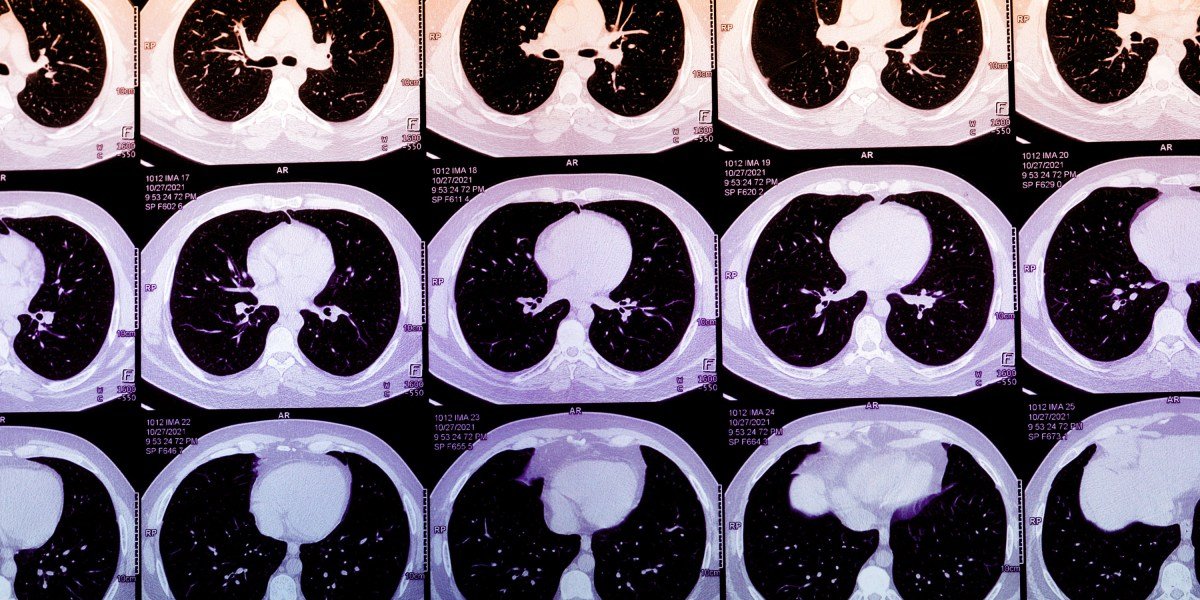
    For all the modern marvels of cardiology, we struggle to predict who will have a heart attack. Many people never get screened at all. Now, startups like Bunkerhill Health, Nanox.AI, and HeartLung Technologies are applying AI algorithms to screen millions of CT scans for early signs of heart disease. This technology could be a breakthrough for public health, applying an old tool to uncover patients whose high risk for a heart attack is hiding in plain sight. But it remains unproven at scale while raising thorny questions about implementation and even how we define disease. 

    Last year, an estimated 20 million Americans had chest CT scans done, after an event like a car accident or to screen for lung cancer. Frequently, they show evidence of coronary artery calcium (CAC), a marker for heart attack risk, that is buried or not mentioned in a radiology report focusing on ruling out bony injuries, life-threatening internal trauma, or cancer.

    Dedicated testing for CAC remains an underutilized method of predicting heart attack risk. Over decades, plaque in heart arteries moves through its own life cycle, hardening from lipid-rich residue into calcium. Heart attacks themselves typically occur when younger, lipid-rich plaque unpredictably ruptures, kicking off a clotting cascade of inflammation that ultimately blocks the heart’s blood supply. Calcified plaque is generally stable, but finding CAC suggests that younger, more rupture-prone plaque is likely present too. 

    Coronary artery calcium can often be spotted on chest CTs, and its concentration can be subjectively described. Normally, quantifying a person’s CAC score involves obtaining a heart-specific CT scan. Algorithms that calculate CAC scores from routine chest CTs, however, could massively expand access to this metric. In practice, these algorithms could then be deployed to alert patients and their doctors about abnormally high scores, encouraging them to seek further care. Today, the footprint of the startups offering AI-derived CAC scores is not large, but it is growing quickly. As their use grows, these algorithms may identify high-risk patients who are traditionally missed or who are on the margins of care. 

    Historically, CAC scans were believed to have marginal benefit and were marketed to the worried well. Even today, most insurers won’t cover them. Attitudes, though, may be shifting. More expert groups are endorsing CAC scores as a way to refine cardiovascular risk estimates and persuade skeptical patients to start taking statins. 

    The promise of AI-derived CAC scores is part of a broader trend toward mining troves of medical data to spot otherwise undetected disease. But while it seems promising, the practice raises plenty of questions. For example, CAC scores ­haven’t proved useful as a blunt instrument for universal screening. A 2022 Danish study evaluating a population-based program, for example, showed no benefit in mortality rates for patients who had undergone CAC screening tests. If AI delivered this information automatically, would the calculus really shift? 

    And with widespread adoption, abnormal CAC scores will become common. Who follows up on these findings? “Many health systems aren’t yet set up to act on incidental calcium findings at scale,” says Nishith Khandwala, the cofounder of Bunkerhill Health. Without a standard procedure for doing so, he says, “you risk creating more work than value.” 

    There’s also the question of whether these AI-generated scores would actually improve patient care. For a symptomatic patient, a CAC score of zero may offer false reassurance. For the asymptomatic patient with a high CAC score, the next steps remain uncertain. Beyond statins, it isn’t clear if these patients would benefit from starting costly cholesterol-lowering drugs such as Repatha or other PCSK9-inhibitors. It may encourage some to pursue unnecessary but costly downstream procedures that could even end up doing harm. Currently, AI-derived CAC scoring is not reimbursed as a separate service by Medicare or most insurers. The business case for this technology today, effectively, lies in these potentially perverse incentives. 

    At a fundamental level, this approach could actually change how we define disease. Adam Rodman, a hospitalist and AI expert at Beth Israel Deaconess Medical Center in Boston, has observed that AI-derived CAC scores share similarities with the “incidentaloma,” a term coined in the 1980s to describe unexpected findings on CT scans. In both cases, the normal pattern of diagnosis—in which doctors and patients deliberately embark on testing to figure out what’s causing a specific problem—were fundamentally disrupted. But, as Rodman notes, incidentalomas were still found by humans reviewing the scans. 

    Now, he says, we are entering an era of “machine-based nosology,” where algorithms define diseases on their own terms. As machines make more diagnoses, they may catch things we miss. But Rodman and I began to wonder if a two-tiered diagnostic future may emerge, where “haves” pay for brand-name algorithms while “have-nots” settle for lesser alternatives. 

    For patients who have no risk factors or are detached from regular medical care, an AI-derived CAC score could potentially catch problems earlier and rewrite the script. But how these scores reach people, what is done about them, and whether they can ultimately improve patient outcomes at scale remain open questions. For now—holding the pen as they toggle between patients and algorithmic outputs—clinicians still matter. 

    Vishal Khetpal is a fellow in cardiovascular disease. The views expressed in this article do not represent those of his employers. 

    Share. Facebook Twitter Pinterest LinkedIn Reddit WhatsApp Telegram Email
    Previous ArticleGenius DIYers Are Turning Old Yellow School Buses Into Their Dream Homes
    Next Article Flowers of the future
    TechAiVerse
    • Website

    Jonathan is a tech enthusiast and the mind behind Tech AI Verse. With a passion for artificial intelligence, consumer tech, and emerging innovations, he deliver clear, insightful content to keep readers informed. From cutting-edge gadgets to AI advancements and cryptocurrency trends, Jonathan breaks down complex topics to make technology accessible to all.

    Related Posts

    Stop talking to AI, let them talk to each other: The A2A protocol

    February 13, 2026

    Swedish pet insurtech Lassie raises $75M Series C after hitting $100M ARR

    February 13, 2026

    Understanding the valuation of intangible assets in tech deals

    February 13, 2026
    Leave A Reply Cancel Reply

    Top Posts

    Ping, You’ve Got Whale: AI detection system alerts ships of whales in their path

    April 22, 2025668 Views

    Lumo vs. Duck AI: Which AI is Better for Your Privacy?

    July 31, 2025256 Views

    6.7 Cummins Lifter Failure: What Years Are Affected (And Possible Fixes)

    April 14, 2025153 Views

    6 Best MagSafe Phone Grips (2025), Tested and Reviewed

    April 6, 2025111 Views
    Don't Miss
    Technology February 13, 2026

    Stop talking to AI, let them talk to each other: The A2A protocol

    Stop talking to AI, let them talk to each other: The A2A protocol Have you…

    Swedish pet insurtech Lassie raises $75M Series C after hitting $100M ARR

    Understanding the valuation of intangible assets in tech deals

    The Asus Zenbook S 16 Is $500 Off and Has Never Been This Cheap

    Stay In Touch
    • Facebook
    • Twitter
    • Pinterest
    • Instagram
    • YouTube
    • Vimeo

    Subscribe to Updates

    Get the latest creative news from SmartMag about art & design.

    About Us
    About Us

    Welcome to Tech AI Verse, your go-to destination for everything technology! We bring you the latest news, trends, and insights from the ever-evolving world of tech. Our coverage spans across global technology industry updates, artificial intelligence advancements, machine learning ethics, and automation innovations. Stay connected with us as we explore the limitless possibilities of technology!

    Facebook X (Twitter) Pinterest YouTube WhatsApp
    Our Picks

    Stop talking to AI, let them talk to each other: The A2A protocol

    February 13, 20262 Views

    Swedish pet insurtech Lassie raises $75M Series C after hitting $100M ARR

    February 13, 20262 Views

    Understanding the valuation of intangible assets in tech deals

    February 13, 20262 Views
    Most Popular

    7 Best Kids Bikes (2025): Mountain, Balance, Pedal, Coaster

    March 13, 20250 Views

    VTOMAN FlashSpeed 1500: Plenty Of Power For All Your Gear

    March 13, 20250 Views

    This new Roomba finally solves the big problem I have with robot vacuums

    March 13, 20250 Views
    © 2026 TechAiVerse. Designed by Divya Tech.
    • Home
    • About Us
    • Contact Us
    • Privacy Policy
    • Terms & Conditions

    Type above and press Enter to search. Press Esc to cancel.