

Joy is the radical tool games need to turn eco-anxiety into agency | Opinion
Climate doom is overwhelming a generation of players. But a new wave of games is building the belief that change is possible
Volha Kapitonava – the managing director of Positive Impact Games, developer of The Regreening – lays out the case for how video games can turn around attitudes towards climate change.
In the past five years, we’ve seen increased industry attention to climate and biodiversity themes, with titles like Terra Nil, Alba: A Wildlife Adventure, Beyond Blue, the upcoming All Will Rise, and our own game, The Regreening. European funds now encourage eco-topics and increasingly support climate-related works; studio founders are pushing these themes due to value alignment; and players themselves are signalling a growing appetite for stories that don’t treat nature as a commodity. What used to be a niche topic starts to look like a trend.
Part of the reason these games resonate is timing.
We live in an age when eco-anxiety is no longer just a concern, but a mainstream emotional reality. A global study published by The Lancet revealed that 45% of young people say climate change affects their daily functioning, and more than half believe humanity is “doomed” if nothing changes. That’s a pretty gloomy picture: being stuck between a planetary-scale crisis and institutions that clearly don’t do enough to prevent it.
Most climate communication compounds the problem. It leans heavily on catastrophe and presents a rolling sequence of losses, tipping points, and irreversibilities. Accurate, yes – but the constant drumbeat of “the world is ending” pushes people to feel powerless, leading in turn towards paralysis and withdrawal. They mute notifications, avoid articles, and scroll past anything with a photo of a burning landscape. That reaction is often misread as apathy; however, the opposite is true. Half or more of gamers say they feel sad, afraid, disgusted, angry, or outraged when thinking about global warming. People aren’t overwhelmed because they don’t care; they’re overwhelmed because they care too much.
That is the psychological landscape we’re working with. But how can video games – an industry not exactly known for carbon neutrality – help the situation?
Joy as a radical counterforce
Clearly, games cannot replace political action, institutional responsibility, or the structural change the planet urgently needs. Their impact is indirect: they shape perception, motivation, and the willingness to act. Games don’t deliver solutions themselves, but supply something the climate conversation is chronically short of: experiences where actions have visible consequences, and the possibility of improvement still exists.
Games as a medium are good at engaging because they allow players to make meaningful decisions, not just watch their screens passively. When you take an action in a game, the world responds: a city survives, a system stabilises, a villain gets punished. That cause-and-effect loop helps people feel capable and curious: even when the stakes are high, you can always reload if you fail.
A recent scientific report shows that participants who play environmental games report higher self‑efficacy and a greater likelihood of engaging in real‑world pro‑environmental behaviours. That means by giving players agency in a virtual ecosystem (letting them restore forests, clean polluted waters, or reinstate ecological balance), games can empower the belief that people can make a difference.
The key ingredient that makes this possible, in my opinion, is joy. Especially the structured, feedback-driven, and rewarding joy found in games that offer players the opportunity to take a much-needed psychological break, providing a way to confront the dread of reality in a safe, controlled environment.
In a culture that profits from fear, exhaustion, and hopelessness, joy is radical. It is not escapism, but a refusal to be numbed or defeated in the face of climate paralysis. People know the crisis is real. They just don’t believe they can influence it. And when a game asks a player to replant a forest instead of conquering a kingdom, or to clean an oil spill instead of defeating a villain, it offers a vision of the world that is possible without rewarding speed, extraction, and competition.
This is where wholesome games are often misunderstood. The label makes people think of gentleness, softness, and pastel colours – and yes, some have that aesthetic. But the design philosophy behind them isn’t “cute,” but rather “hope.” These games centre on cooperation, empathy, patience, and regeneration. And crucially, this kind of regenerative play converts anxiety into agency. People don’t unlock motivation through fear; they unlock it when they feel supported enough to try. That emotional shift is the first step towards real-world action.
What games can and cannot do
Games cannot solve the climate crisis. They are not replacements for activism, legislation change, or systemic reform. Their power lies elsewhere: in how they shape perception, emotion, and motivation.
They can:
- Normalize hope and regeneration as cultural narratives;
- Provide emotional relief from the “we’re doomed” cycle;
- Offer safe experimentation;
- Make environmental action feel achievable through simulation and feedback;
- Encourage long-term curiosity;
- Strengthen a sense of collective responsibility and possibility;
- Engage people in real-life eco projects (with organisational help from the developers).
This is a good time to mention that in 2020, Space Ape Games raised over $120,000 in donations for wildlife and humanitarian charities fighting the Australian wildfires. Similarly, in 2022, Fortnite raised $144 million for humanitarian relief efforts for people affected by the war in Ukraine. Projects that drive player eco-action, such as funding tree-planting, protecting wildlife habitats, cleaning up local environments, and more, are annually recognised by Playing for the Planet Awards (more inspirational projects are mentioned in the Playing for the Planet 2025 winners list.) Such initiatives are available to any developer, big or small.
However, games also have clear limitations. Not everyone plays them, and access is shaped by socio-economic, geographic, and technological barriers. They cannot enforce systemic change, shift corporate behaviour, or prevent species loss. Even when players experience agency in a game, that feeling doesn’t automatically translate into real-world action: meaningful change requires opportunities, guidance, and structures that allow motivation to carry beyond the screen.
The point is not that games replace real-world action – it is that they deliver joy and create the conditions for action to emerge. By turning anxiety into engagement, by rewarding persistence and showing the impact of care, games offer a rehearsal space for hope.
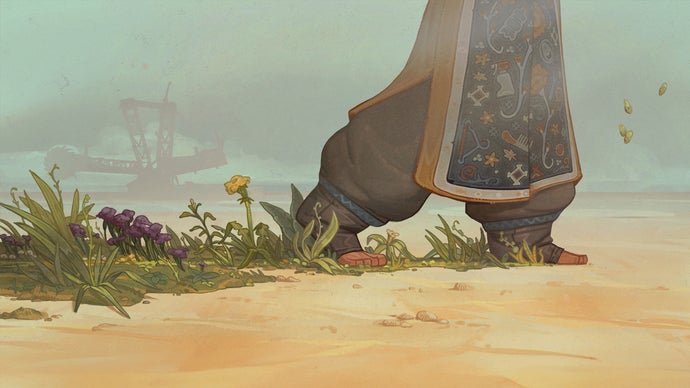
This is the work Positive Impact Games is doing: we make wholesome and cosy games that uplift, connect, and inspire change. This is the mission that drives our upcoming project, The Regreening, where you grow plants to create living ecosystems, become friends with ancient spirits, and make your own upcycling hub. We are not trying to offer an escape from reality, but to build a bridge back to it, fortified with hope. Our goal is for players to feel inspired to continue regreening, contributing, and acting on the core belief that their choices can, and do, make a difference.
