

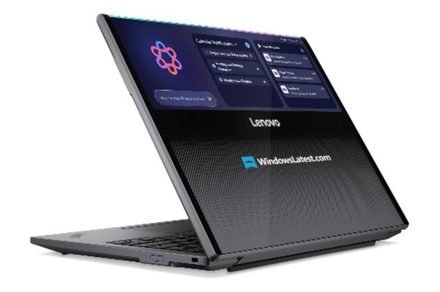
Lenovo leaks show an unnecessarily cool laptop with a hidden display under a see-through lid
Lenovo’s latest ThinkPad concept imagines a future where displays aren’t fixed, information lives in layers, and laptops feel more like adaptive tools than static machines.
Ahead of the CES 2026, leaks about a new Lenovo ThinkPad Rollable XD Concept laptop have surfaced on the internet, but this isn’t like your usual power-packed notebooks. This one is about the potential successor to the ThinkBook Plus Gen 6 Rollable AI PC, one which could feature a “vertically expanding display.”
As reported by Windows Latest, the Lenovo ThinkPad Rollable XD Concept should transform a traditional 13.3-inch laptop into one with a 16-inch upright display. However, that’s the least interesting part about the device, as it is also said to feature a transparent lid that shows the screen when it is rolled inside the chassis.
A transparent lid that turns into a second, world-facing display
So, when you aren’t using the upright display, the additional screen estate (folded inside the lid) would show up through the transparent lid, an implementation that the company is calling a “world-facing display.”
Imagine working on a traditional Lenovo laptop, but instead of the plastic or the metal back cover (the one that points away from you), there’s another screen; that’s precisely what the ThinkPad Rollable XD Concept should look like.
The see-through lid uses Corning’s Gorilla Glass Victus 2, which we’ve seen protecting the gorgeous flagship displays on Android smartphones. Its transparent nature lets users see the flexible OLED display getting rolled back behind the transparent glass.
Other than that, the other side of the lid can also display information from the main screen, including the Lenovo AI chatbot, Calendar notifications, and what appears to be Microsoft Teams.
Although it is not immediately clear, the ThinkPad Rollable XD Concept could feature swipe and touch gestures for the backward-facing display, along with voice controls that might help users access Lenovo AI (including multimodal interactions) and switch modes.
While there’s no official pricing for the Lenovo ThinkPad Rollable XD Concept, the current-generation ThinkBook Plus Gen 6 Rollable retails for around $3,299.00. If I were to speculate, the new rollable concept would command an ever-higher price point.
For more than five years, Shikhar has consistently simplified developments in the field of consumer tech and presented them…
Brits are now trauma-dumping on AI, government confirms
A full third of UK citizens have turned to artificial intelligence for emotional support, companionship, or social interaction, according to a new report from the government’s AI Security Institute (AISI).
The data shows that nearly one in 10 people are using systems like chatbots for emotional purposes on a weekly basis, with 4% engaging with them every single day.
I tested ChatGPT apps and I love these 5 heavy-hitters to ease the daily grind
“Create a playlist of songs inspired by Hurt sung by Johnny Cash in Apple Music and name it ‘Terra’. Thanks!”
In October, OpenAI outlined plans for turning ChatGPT into a platform for apps. So far, the AI chatbot has answered your queries, done research on your behalf, made images, and even done a bit of autonomous work in the web browser. Now, it’s turning into a hub of apps that you push on a daily basis.
A few days ago, the ChatGPT app store finally went live, and the company has already invited developers to submit their apps. The whole idea behind the initiative is that instead of opening apps on your phone, you can simply turn to ChatGPT and instruct it to get the work done.
Your next prebuilt PC might arrive with memory loss
Paradox Customs adds ‘no RAM’ option as memory shortages hit PC builders
Paradox Customs has introduced a rather radical option to its prebuilt PC configurator: the ability to order a system with no RAM installed. The boutique builder says the move is a direct answer to the massive memory shortage and sky-high DRAM prices currently rocking the industry, which have made it nearly impossible for system builders to keep kits in stock at a predictable price. For buyers who have a spare set of sticks at home or want to find a deal elsewhere, it’s a way to dodge the “RAM tax” that has been driving up prebuilt costs.
A pragmatic response to a volatile market
