Close Menu

    Subscribe to Updates

    Get the latest creative news from FooBar about art, design and business.

    What's Hot

    No playbook, just pressure: Publishers eye the rise of agentic browsers

    CD Projekt RED sells GOG platform to co-founder for $25 million

    LG announces new line of xboom speakers ahead of CES

    Facebook X (Twitter) Instagram
    • Artificial Intelligence
    • Business Technology
    • Cryptocurrency
    • Gadgets
    • Gaming
    • Health
    • Software and Apps
    • Technology
    Facebook X (Twitter) Instagram Pinterest Vimeo
    Tech AI Verse
    • Home
    • Artificial Intelligence

      AI has become the norm for students. Teachers are playing catch-up.

      December 23, 2025

      Trump signs executive order seeking to ban states from regulating AI companies

      December 13, 2025

      Apple’s AI chief abruptly steps down

      December 3, 2025

      The issue that’s scrambling both parties: From the Politics Desk

      December 3, 2025

      More of Silicon Valley is building on free Chinese AI

      December 1, 2025
    • Business

      Top 10 cloud computing stories of 2025

      December 22, 2025

      Saudia Arabia’s STC commits to five-year network upgrade programme with Ericsson

      December 18, 2025

      Zeroday Cloud hacking event awards $320,0000 for 11 zero days

      December 18, 2025

      Amazon: Ongoing cryptomining campaign uses hacked AWS accounts

      December 18, 2025

      Want to back up your iPhone securely without paying the Apple tax? There’s a hack for that, but it isn’t for everyone… yet

      December 16, 2025
    • Crypto

      FOMC Signals No Rush to Cut Rates Until March 2026, Crypto Faces Test

      December 31, 2025

      Pi Coin Price Prediction: What to Expect In 2026?

      December 31, 2025

      Hedera’s 800% Fee Hike in 2026: Will It Bear Impact on HBAR’s Price?

      December 31, 2025

      Coinbase Lists Lighter’s LIT Token as Price Nears $3

      December 31, 2025

      Monad Price Prepares for a 64% Surge— But a $50 Million Long Squeeze Looms Below

      December 31, 2025
    • Technology

      No playbook, just pressure: Publishers eye the rise of agentic browsers

      December 31, 2025

      LG announces new line of xboom speakers ahead of CES

      December 31, 2025

      The OneXSugar Wallet is an upcoming retro handheld with a 4:3 foldable screen

      December 31, 2025

      IDC warns of major PC market downturn due to memory crunch

      December 31, 2025

      How to watch the Hisense CES 2026 presentation live

      December 31, 2025
    • Others
      • Gadgets
      • Gaming
      • Health
      • Software and Apps
    Check BMI
    Tech AI Verse
    You are at:Home»Technology»Lawsuit over Trump rejecting medical research grants is settled
    Technology

    Lawsuit over Trump rejecting medical research grants is settled

    TechAiVerseBy TechAiVerseDecember 30, 2025No Comments5 Mins Read0 Views
    Facebook Twitter Pinterest Telegram LinkedIn Tumblr Email Reddit
    Lawsuit over Trump rejecting medical research grants is settled
    Share
    Facebook Twitter LinkedIn Pinterest WhatsApp Email

    Lawsuit over Trump rejecting medical research grants is settled


    Skip to content

    Settlement forces NIH to review grants previously rejected on ideological grounds.

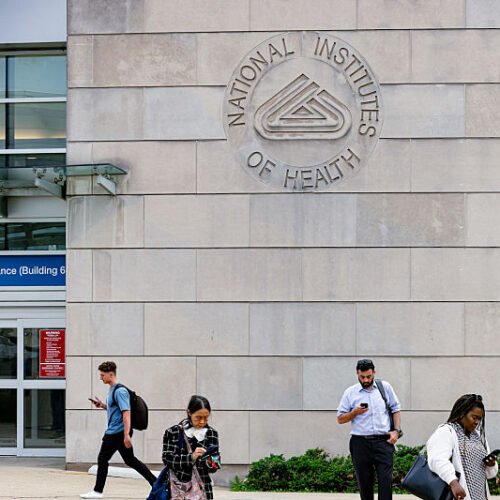
    On Monday, the ACLU announced that it and other organizations representing medical researchers had reached a settlement in their suit against the federal government over grant applications that had been rejected under a policy that has since been voided by the court. The agreement, which still has to be approved by the judge overseeing the case, would see the National Institutes of Health restart reviews of grants that had been blocked on ideological grounds. It doesn’t guarantee those grants will ultimately be funded, but it does mean they will go through the standard peer review process.

    The grants had previously been rejected without review because their content was ideologically opposed by the Trump administration. That policy has since been declared arbitrary and capricious, and thus in violation of the Administrative Procedure Act, a decision that was upheld by the Supreme Court.

    How’d we get here?

    Immediately after taking office, the Trump Administration identified a number of categories of research, some of them extremely vague, that it would not be supporting: climate change, DEI, pandemic preparedness, gender ideology, and more. Shortly thereafter, federal agencies started cancelling grants that they deemed to contain elements of these disfavored topics, and blocking consideration of grant applications for the same reasons. As a result, grants were cancelled that funded everything from research into antiviral drugs to the incidence of prostate cancer in African Americans.

    Researchers whose funding was affected, along with organizations that represented them, sued. The suit ended up split into two partly overlapping cases: one for the people who already had funding and saw it cancelled, another for researchers who had submitted grants and had them pulled from consideration.

    The case regarding cancelled grants moved relatively quickly. By June, a District Court judge declared that the federal policy “represents racial discrimination” and issued a preliminary order that would have seen all the cancelled grants restored. In his written opinion, Judge William Young noted that the government had issued its directives blocking DEI support without even bothering to define what DEI is, making the entire policy arbitrary and capricious, and thus in violation of the Administrative Procedure Act. He voided the policy, and ordered the funding restored.

    His decision eventually ended up before the Supreme Court, which issued a ruling in which a fragmented majority agreed on only a single issue: Judge Young’s District Court was the wrong venue to hash out issues of government-provided money. Thus, restoring the money from the cancelled grants would have to be handled via a separate case filed in a different court.

    Critically, however, this left the other portion of the decision intact. Young’s determination that the government’s anti-DEI, anti-climate, anti-etc. policy was illegal and thus void was upheld.

    Restoring reviews

    That has considerable consequences for the second part of the initial suit, involving grants that were not yet funded and blocked from any consideration by the Trump Administration policy. With that policy voided, there was no justification for the National Institutes of Health (NIH) failing to have considered the grants when they were submitted. But, in the meantime, deadlines had expired, pools of money had been spent, and in some cases the people who submitted the grants had aged out of the “new investigator” category they were applying under.

    The proposed settlement essentially resets the clock on all of this; the blocked grants will be evaluated for funding as if it were still early 2025. “Defendants stipulate and agree that the end of Federal Fiscal Year 2025 does not prevent Defendants from considering and/or awarding any of the Applications,” it states. Even if the Notice of Funding Opportunity has since been withdrawn, the grant applications will be sent off for peer review.

    Everything will happen on a rapid timeline. Formalities like automatic renewals or extensions of existing grants will be handled as soon as the settlement is approved (the deadline for that is listed as December 29, the day the settlement was filed with the court). Those that have already been through peer review will have funding decisions made by January 12, and those needing a full peer review process will be handled by mid-April.

    The government agrees to evaluate each of the grants “in good faith,” while the researchers accept that “Nothing in this stipulation commits NIH to ultimately award any specific Application.” That leaves the door open for future legal disputes regarding how well the NIH upheld its good faith. And there are two other counts in the original suit that are not resolved by this agreement. Both of these also involve violations of the Administrative Procedure Act (the researchers won under the arbitrary and capricious standard, but also allege the government’s actions weren’t in accordance with additional statutes governing the NIH).

    The parties did agree, however, that this settlement doesn’t constitute a “final agency action,” language that means it’s not subject to further evaluation under the Administrative Procedures Act.

    Given that the policy it relied on to block review of these grants had been voided in a case that had already been considered by the Supreme Court, it’s understandable that the government is agreeing to this settlement. It does, however, put a lot of pressure on the NIH to organize the peer review of these proposals on a tight schedule, especially given that the grants at issue are likely to involve a lot of unrelated topics, and thus can’t be handled by a single panel of experts. Getting that done while maintaining an “in good faith” standard may prove a significant challenge.

    John is Ars Technica’s science editor. He has a Bachelor of Arts in Biochemistry from Columbia University, and a Ph.D. in Molecular and Cell Biology from the University of California, Berkeley. When physically separated from his keyboard, he tends to seek out a bicycle, or a scenic location for communing with his hiking boots.


    15 Comments

    Share. Facebook Twitter Pinterest LinkedIn Reddit WhatsApp Telegram Email
    Previous ArticleDOGE did not find $2T in fraud, but that doesn’t matter, Musk allies say
    Next Article The science of how (and when) we decide to speak out—or self-censor
    TechAiVerse
    • Website

    Jonathan is a tech enthusiast and the mind behind Tech AI Verse. With a passion for artificial intelligence, consumer tech, and emerging innovations, he deliver clear, insightful content to keep readers informed. From cutting-edge gadgets to AI advancements and cryptocurrency trends, Jonathan breaks down complex topics to make technology accessible to all.

    Related Posts

    No playbook, just pressure: Publishers eye the rise of agentic browsers

    December 31, 2025

    LG announces new line of xboom speakers ahead of CES

    December 31, 2025

    The OneXSugar Wallet is an upcoming retro handheld with a 4:3 foldable screen

    December 31, 2025
    Leave A Reply Cancel Reply

    Top Posts

    Ping, You’ve Got Whale: AI detection system alerts ships of whales in their path

    April 22, 2025563 Views

    Lumo vs. Duck AI: Which AI is Better for Your Privacy?

    July 31, 2025208 Views

    6.7 Cummins Lifter Failure: What Years Are Affected (And Possible Fixes)

    April 14, 2025112 Views

    6 Best MagSafe Phone Grips (2025), Tested and Reviewed

    April 6, 202594 Views
    Don't Miss
    Technology December 31, 2025

    No playbook, just pressure: Publishers eye the rise of agentic browsers

    No playbook, just pressure: Publishers eye the rise of agentic browsersNow, publishers are watching agentic…

    CD Projekt RED sells GOG platform to co-founder for $25 million

    LG announces new line of xboom speakers ahead of CES

    The OneXSugar Wallet is an upcoming retro handheld with a 4:3 foldable screen

    Stay In Touch
    • Facebook
    • Twitter
    • Pinterest
    • Instagram
    • YouTube
    • Vimeo

    Subscribe to Updates

    Get the latest creative news from SmartMag about art & design.

    About Us
    About Us

    Welcome to Tech AI Verse, your go-to destination for everything technology! We bring you the latest news, trends, and insights from the ever-evolving world of tech. Our coverage spans across global technology industry updates, artificial intelligence advancements, machine learning ethics, and automation innovations. Stay connected with us as we explore the limitless possibilities of technology!

    Facebook X (Twitter) Pinterest YouTube WhatsApp
    Our Picks

    No playbook, just pressure: Publishers eye the rise of agentic browsers

    December 31, 20252 Views

    CD Projekt RED sells GOG platform to co-founder for $25 million

    December 31, 20253 Views

    LG announces new line of xboom speakers ahead of CES

    December 31, 20253 Views
    Most Popular

    What to Know and Where to Find Apple Intelligence Summaries on iPhone

    March 12, 20250 Views

    A Team of Female Founders Is Launching Cloud Security Tech That Could Overhaul AI Protection

    March 12, 20250 Views

    Senua’s Saga: Hellblade 2 leads BAFTA Game Awards 2025 nominations

    March 12, 20250 Views
    © 2025 TechAiVerse. Designed by Divya Tech.
    • Home
    • About Us
    • Contact Us
    • Privacy Policy
    • Terms & Conditions

    Type above and press Enter to search. Press Esc to cancel.