

Florida is building a highway that might just charge your EV while you drive
A $540M expressway in Florida is bringing wireless dynamic charging for electric vehicles from sci-fi to reality.
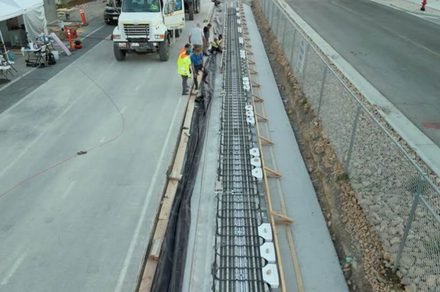
The Central Florida Expressway Authority (CFX) has confirmed it is working on a 4.4-mile highway (connecting Lake and Orange counties) that will feature a section capable of wirelessly charging EVs, not just when they’re parked above a charging pad, but while they’re on the go (via ENRX).
Backed by more than $540 million, the project will not only connect the rapidly growing regions but also serve as a testing ground for dynamic wireless EV charging. Over the 4.4-mile section, the walk will include a 0.75-mile stretch with inductive coils underneath the concrete pavement.
Why commercial fleets stand to gain the most
The charging coils will generate a powerful magnetic field, delivering up to 200 kW of wireless charging power, comparable to modern DC fast chargers. However, not every EV will benefit from the advanced infrastructure.
In fact, most EVs on sale in the United States lack the required hardware to charge while driving through the designated charging section on the electrified expressway at high speeds. This is one of the primary reasons why we might view the project as a ground for experimentation and testing for the future of wireless EV charging technology.
On the other hand, the primary target of the electrified highway isn’t private passenger EVs. Instead, it is commercial fleets, including long-haul trucks, delivery vans, and service vehicles, that could benefit more from less downtime.
The development might not be of immediate importance to you, but it signals that state authorities are working to make wireless EV charging more accessible, a technology that could surely boost EV adoption rates, not just in the United States but across the globe.
While construction on State Road 516 is already underway, they’ll begin with the electric segment in June 2026, with overall completion expected by 2029. The initial pilot will focus on proving the concept in real-world conditions and improving compatibility across vehicle types.
If successful, future highways could see wider stretches of electrified roads, paving the way for lighter EV batteries.
For more than five years, Shikhar has consistently simplified developments in the field of consumer tech and presented them…
Ford will make affordable EVs with Renault, but you won’t get your hands on them
A Europe-only EV partnership between Ford and Renault aims to deliver cheaper, more practical electric cars in a market increasingly pressured by rising competition.
Ford and Renault are officially teaming up. They’ve signed a new strategic partnership that requires Renault to build two new Ford electric cars in Europe, using the former’s Ampere EV platform. The production will take place at Renault’s ElectriCity hub in northern France. Meanwhile, Ford will handle the design, tuning, and overall feel of the vehicles.
Both automakers have also signed a Letter of Intent to explore developing electric vans and commercial vehicles for sale in Europe. The first Ford-branded EV from this collaboration could arrive in early 2028. The partnership is a classic example of how legacy automakers are tackling rising pressure from EVs, especially from fast-growing Chinese brands.
CES 2026 is almost here, as a veteran of the show here’s what you need to know
From new TVs, auto tech, and computing announcements, to AI, drones and robots
Are you ready to kick off the new year with a tsunami of new technology? I hope so, because CES 2026 will opens its doors on January 6, where some of the biggest names in the consumer tech and automotive worlds will grace the myriad of convention halls spread across Las Vegas.
CES (Consumer Electronics Show) is the world’s biggest consumer technology show, and you can expect to see all manner of tech on display, from TVs, speakers and smart home appliances, to phones, tablets and wearables, all the way through to drones, robots, cars and more.
How Nissan took a shortcut to a good plug-in hybrid SUV
The Nissan Leaf was one of the first modern electric vehicles to go on sale, but Nissan has been slower to adopt plug-in hybrids. It’s only just now getting one in its lineup, and only by borrowing from another automaker.
At first glance, the 2026 Nissan Rogue Plug-In Hybrid seems like a straightforward addition to the Rogue’s resume. Many competitors have already checked that box, giving customers who aren’t ready to make the leap to an EV many of the benefits of electric power — as long as they regularly plug in these plug-in hybrids, that is.
