

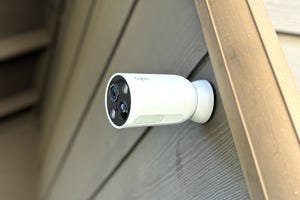
2025’s Best Home Security Cameras That Don’t Require Subscriptions
This past year, I’ve tested many excellent security cameras, including those equipped with the latest AI, tracking and automation settings. But new shoppers run into a problem with this flashy tech: It often costs extra to use, with subscriptions rising as high as $20 just to enable features for a few cameras.
OUTDOOR SECURITY CAMERA DEALS OF THE WEEK
Deals are selected by the CNET Group commerce team, and may be unrelated to this article.
Not everyone is interested in paying extra, not even a few dollars. That’s why I always keep my eyes open for brands and cam models that offer welcome features (even AI capabilities) without charging extra fees for them. These are the models I’ve found that offer video storage, object recognition and motion alerts with just the upfront cost.
What’s the best subscription-free home security camera?
This Tapo cam can fit nearly anywhere and includes local storage options.
TP-Link/AmazonAfter our testing, we chose the Tapo C120 Indoor/Outdoor Cam as our top choice for a one-time purchase thanks to its higher resolution and immense versatility, combined with an affordable price.
Our list also includes pan/tilt cameras, floodlight cams, models with extra-high resolution and other important features. None of them requires the $3 to $10 monthly subscriptions to enable important features like AI object recognition or video storage. You may have to buy a microSD card, but you’ll never have to worry about ongoing fees and get extra data security as a bonus
After you’re done, consider checking out our lists of the best cheap home security cameras and best wireless cams, too.
Lorex is a popular choice for buyers who want to stay off the cloud and away from subscriptions.
Lorex/AmazonBest home security cameras without subscriptions
Pros
- 2K resolution
- Frequently found below $30
- Indoor and outdoor support
- Motion zone setting
- Color night vision
- Google and Alexa compatibility
Cons
- A wired plug-in cam like this isn’t the best option for outdoor use, although it is possible
- You’ll have to pay for a sizable microSD card, too
Why I like it:
I’ve chosen the versatile C120 indoor/outdoor cam as the best pick for buyers who want a little of everything — with a fairly low initial cost, too. Tapo’s blend of subscription-free features (there is a Tapo plan, but it’s far from necessary) offers person recognition and onboard video storage with the purchase of a microSD card.
Another advantage of the C120 is its 2K resolution — higher than many of TP-Link’s budget models — and its magnetic base, which makes placement easy whether you’re using it indoors or out. Just keep in mind you’ll still need a safe outlet nearby. It also comes with color night vision and compatibility with both Alexa and Google Home/Assistant. TP-Link’s app also allows for a couple of neat tricks, including digital boundary lines that act as motion zones and customizable siren/light alarms.
Who is this for?
Buyers who want a highly versatile camera that doesn’t require fees to enable important features.
Who shouldn’t buy it:
Those who want a more compact design or a simpler app to use.
Pros
- Affordable
- Lightweight
- Indoor/outdoor capabilities with IP65 rating
- Free object recognition including packages
Cons
- Wired only which can make outside placement tricky
- Design is a little fragile when it comes to falls or windstorms
Why I like it:
I’m starting to give Wyze cameras a new chance now that it’s been a couple of years since Wyze has had any security incidents. This 2.5K-resolution, fourth-gen version of its flagship camera, while a bit delicate, offers a versatile indoor/outdoor design that you can mount (with included adhesive stickers) nearly anywhere you want, as long as there’s a suitable wired connection nearby.
For under $40, Wyze’s cam offers an impressive lineup of free features, including detection of vehicles, people, pets and packages (which I’ve tested) and settings to adjust the sensitivity of the camera in multiple ways. If you’re looking for an especially good budget choice, this Wyze cam closely rivals my top Tapo pick.
Finally, the camera has a microSD slot to support local video storage too, rounding off its free features.
Who is this for?
Buyers looking for a budget camera, people who want very good object recognition without paying for it,and people who want a camera that can function indoors or outside.
Who shouldn’t buy it:
People who need a wireless camera those focused on a durable, outdoor-dedicated camera.
Pros
- 2K resolution with pan/tilt capabilities
- Great free object and sound recognition
- Swift setup
- Broad compatibility with Google, Alexa, and Apple HomeKit
Cons
- No included microSD card
- Many features won’t get used without adding more senors
Why I like it:
I found Aqara’s hub to offer smooth performance, a very clear app view of its 2K camera (1080p continuous recording), and pan/tilt functions to cover an entire room. You also get person detection and noise detection for free, and video storage via the microSD slot. Setup proved very straightforward, too, and there’s even some Apple Home compatibility along with Google and Alexa (hopefully more as the Matter standard embraces security cameras more fully).
This camera also has a hidden benefit with its “hub” status. It can connect to other Aqara security sensors to transform into a mini security system if you want, without needing any additional hubs, allowing for better whole-room protection and interesting home routines. That makes features like its customizable siren even more useful.
Who is this for?
Those looking for a crystal clear indoor pan/tilt camera that doesn’t demand fees for extras like object recognition, plus the opportunity to expand into other security sensors in the future.
Who shouldn’t buy it:
People who don’t care about other home security compatibility, or who don’t need a lot of AI identification features.
Pros
- 4K resolution
- Built-in solar panel
- Pan/tilt/zoom
- People/pet detection and tracking
- Includes hub for local storage
Cons
- Eufy’s app is a bit janky
- The cameras are typically only available in a two to four pack, which makes buying just one very difficult
Why I like it:
Eufy has long been a reliable brand for getting important AI features like person and animal detection without the need for a subscription. Its latest 4K, pan/tilt outdoor two-pack goes another step and adds the HomeBase 3, which you can use for video storage (up to 16GB) without the need to buy a separate hub.
This cam comes not only with two-way audio for talking or sounding a siren, but also a built-in solar panel. Solar panel add-ons are common for wireless cams, but Eufy has included its panel as part of the design. Find a reasonably sunny place, and the camera will be able to keep its battery charged during much of the year, saving you a step.
The included HomeBase also comes with another benefit, enabling support for Google, Amazon Alexa and Apple (Apple HomeKit/Siri support is harder to find), which makes this cam a good choice for Apple fans who want some outdoor protection.
Who is this for?
Those looking for an extra-high-resolution pan/tilt outdoor camera that doesn’t require fees to enable AI and storage, and manages its own battery life in ideal conditions.
Who shouldn’t buy it:
People who won’t want a solar cam, users who can’t stand clunky apps or additional hubs to manage.
Pros
- Customizable floodlights
- 2K resolution with HDR
- Color night vision
- Lorex includes a storage card with purchase
Cons
- Expensive at around $250
- Lorex’s included microSD cards may be too small for active cams
Why I like it:
If you’re looking to invest in a higher-end outdoor cam and don’t mind spending extra for a full suite of features when you know no subscriptions will be coming your way, Lorex has an excellent floodlight camera for looking over a large outdoor space. It offers 2K resolution, color night vision, two-way audio and an included 32GB microSD card. That’s a fairly complete package, even without the free person, vehicle and animal protection that’s also included — or the support for Alexa and Google Assistant.
But the biggest feature of this cam is the two LED floodlights. I like Lorex’s floodlight approach more than most: You can adjust the angles and set specific brightness and color temperature levels, as well as how easily they are activated. That’s a level of customization that is comparatively rare in home security lighting.
Who is this for?
People who want a customizable floodlight camera that doesn’t come with monthly subscription requirements, buyers who don’t want to buy an extra microSD card — but don’t mind paying more for a powerful camera.
Who shouldn’t buy it:
People who want to save money, or who already have plenty of outdoor lighting.
Pros
- Compact and wireless
- Great app controls
- Long battery life rated for two years
- Subscription is optional with a purchased hub
- Upgraded 2K resolution
Cons
- Requires a hub and flash drive for no-fee video storage
- No person detection without a subscription
Why I like it:
Blink does offer a subscription plan with video recording and storage, but I’m adding it as an effective option because of the Sync Module 2 — this compact, square hub connects to the Blink Outdoor 2K Plus and allows you to plug in a USB flash drive and use it for local storage. That largely removes the need for any subscription. You still get Blink’s motion-activated alerts and incredibly easy-to-use app, so subscription fees become very optional.
Note that the Outdoor 2K Plus comes with a free hub, but it doesn’t have video storage, which is why you’ll need to upgrade to the Sync Module 2.
Otherwise, the Blink Outdoor 2K Plus follows the Outdoor 4 as one of my favorite models for battery life with lithium AAs that can last up to two years. The upgraded 2K resolution is also very welcome, and the Blink app is one of my favorite security apps for easy management, too.
Who is this for?
People who want an all-purpose wireless outdoor camera with batteries that last for years, preferably with a spare USB drive handy for storage.
Who shouldn’t buy it:
Those who can’t stand managing extra hubs, or are looking for indoor cams.
Best home security cameras without subscriptions compared
| Best security cams without subscriptions | TP-Link Tapo C120 Indoor/Outdoor Cam | Wyze Cam v4 | Eufy SoloCam E42 2-Pack | Aqara Indoor Camera Hub G3 | Lorex 2K Wi-Fi Floodlight Security Camera | Blink Outdoor 2K+ with Sync Module 2 |
|---|---|---|---|---|---|---|
| Price | $40 | $36 | $340 | $85.00 | $250 | $100 |
| Resolution | 2K | 2.5K | 4K | 2K | 2K | 2K |
| Field of view | 120 degrees | 120 degrees | 360 degrees with pan/tilt | 360-degree pan | 122 degrees | 135 degrees |
| Power source | Wired | Wired | Battery with solar power | Wired | Wired | Battery |
| Motion detection | Motion, people, pet vehicle | Motion, people, packages, vehicles, animals | Motion, people, pets | Yes with person, noise, gesture and (paid) face detection | Motion, people, vehicle, animal | Motion only with no subscription |
| Night Vision | Color night vision | Color night vision | 32-foot night vision | Yes | Color night vision | Yes |
| Audio | Two-way audio | Two-way audio | Two-way audio and siren | Two-way audio | Two-way audio | Two-way audio |
| Storage options | Local via microSD card or cloud storage with subscription | Local with microSD card | HomeBase included for 15GB of local storage | Local microSD storage (card not included) or paid cloud subscription | Local via microSD card (included) | Local via Sync Module 2 Hub |
| Voice assistant | Amazon Alexa, Google Home | Amazon Alexa, Google Home | Amazon Alexa, Google, Apple HomeKit/Siri | Alexa, Google Home, Apple Siri (for some features) | Amazon Alexa, Google Home | Amazon Alexa |
| Review score | N/A | 8/10 | N/A | 8/10 | N/A | 8/10 |
TP-Link Tapo C210: This is one of our favorite affordable cameras at the moment, but we prefer cameras with slightly better specs that also come with local storage, including more advanced Tapo models.
Blink Mini 2: The Blink Mini 2 has a surprising amount of features for its small size and affordable price (plus outdoor compatibility), but it’s a little too short range and the required Sync Module 2 for local storage greatly increases the price.
Blink Outdoor 4: This model is quite good, but eclipsed by the newer, better Outdoor 2K Plus model. It’s still an option for those who want to pay less for similar benefits.
Google Nest Indoor/Outdoor cam: Nest doesn’t have any local storage options, and the 3 hours of video storage means you need to act quickly, so it’s a complicated compromise for those who want to avoid subscriptions altogether. We went with simpler, local storage approaches for this list, but still recommend this camera for Nest fans. If you don’t mind a wired cam, the 3rd-gen Nest cams bump up the free cloud storage limit to 6 hours.
Google Nest Doorbell: The Nest Doorbell is an excellent device that greatly benefits from Google AI and Nest’s high-quality construction. However, it doesn’t have any local storage, so you’ll have to stick to that 3-hour limit.
Lorex 2K Indoor Pan/Tilt Camera: This Lorex cam is an excellent local storage alternative, but ultimately we chose the floodlight model for its great outdoor usability.
TP-Link Tapo C310(Update: Temporarily out of stock): The C310 makes a fine outdoor camera ready for a microSD card, but we found Tapo’s indoor/outdoor camera a little more useful for the average person.
Ring’s battery cam is on the higher-end but offers a versatile, weather resistance option to watch kids wherever they are.
CNET/Tyler LacomaVideo quality and view
We always pay attention to resolution and field of view for home security cameras. Checking detail, up close and at a distance, is very important for live views and the quality of recorded video. It’s important to pay attention not only to resolution numbers and how wide the field of view is, but also whether a brand locks higher resolutions behind a subscription (some do).
Video storage
Video storage refers to how easily video can be recorded and shared, typically either in the cloud or locally through an attached hub/hard drive. Cloud storage is almost always locked behind a subscription, except in rare cases like Google Nest and some others. Local storage is generally a better way to avoid subscriptions and still get this important quality-of-life feature.
Smart home integration
Smart home support for voice assistants (Siri, Alexa, Google Assistant) or platforms like Google Home or Apple Home isn’t often locked behind subscriptions: What you see in the specs is what you get. That can be limited to a single platform (Amazon likes to keep its devices focused on Alexa for now) or spread out between several platforms. If you already use a voice assistant or a full smart home security system, look for a camera that’s compatible with it.
Object detection accuracy
Object detection, like recognizing packages or human-shaped beings approaching, is another feature often locked behind a subscription. Some cameras offer free object detection. Eufy uses human detection for many of its cams, TP-Link Tapo cams offer some free detection and several Lorex cams provide package and people detection.
Eufy’s cam settings, once found, provide many different ways to customize the camera.
Screenshot by Tyler Lacoma/CNETApp usability
High-quality secure cams come with apps that are intuitive with settings that are easy to manage. It’s also a big bonus if they don’t have constant pop-ups telling you to sign up for a subscription.
Night vision
We always take a close look at night vision and its distance to make sure that it’s working properly and offers plenty of utility for capturing images on the other side of your yard or room.
Two-way audio
Two-way audio features help scare away intruders, talk to strangers or tell the kids to get inside for dinner. They’re always free, but we take a close look at their quality and range, too.
Installation requirements
Security cameras typically have wall and/or shelf mounts, depending on how you’d like to place them. Sometimes you have to order a wall or shelf mount separately, so have a good idea of how you want to place the camera first. Many wall mounts require you to drill the mount in, but some do come with adhesive mounts, which need to be placed on a smooth, clean surface, or they will fail. A drill and screwdriver are usually all you need for a screw-in mount.
Weather resistance
If your camera is going to be outdoors at all, you should look for a cam that has IP ratings, preferably IP65 or higher. That indicates dust and water resistance that is sufficient for outdoor use in most cases. If it gets very hot or very cold where you live, check the operating temperature range too, before you buy.
Aqara’s camera provides a highly customizable, expandable indoors security option.
Tyler Lacoma/CNETOur experts follow a complete testing process that examines how all the features on a home security camera function. We walk through these features with a number of visual and audio experiments to see how cams match their claims — and the capability of comparative models. There’s a lot that goes into this process, and you can catch plenty more details over at our guide on how we test.
Setup and installation
While we have a lot experience setting up cameras, we still pay close attention at this stage and consider if the average users would have trouble setting up the cam, connecting it, mounting it on a wall and similar steps. We look for clear instructions, multiple mounting options and designs that are easy to understand and manually adjust. This is also a great time to insert our own microSD cards and check out local storage management, since we won’t be using cloud storage with these no-subscription cameras.
Image quality
Our tests include live view and recording examinations of image quality compared to the stated resolution and similar resolutions from other cameras. This is also where we examine the lens and field of view, any pan/tilt features and how well the night vision functions work in dark rooms or yards, usually out to about 30 feet or more.
Tapo’s app showing the ability to disable notifications.
Screenshot by Tyler Lacoma/CNETSensor and AI testing
Today’s cameras come with motion and sound detection and object recognition for a variety of things, usually people and animals. We run scenarios that test out these sensors to see what alerts we get, how accurate they are and if there’s any frustrating latency or delays.
App UI and settings
As we use the apps and adjust settings for the features I mentioned above, we also look for an intuitive app design that’s easy to learn and gets you where you want quickly with snappy menus. Cluttered apps, confusing menus and apps with lots of advertisements get lower scores.
Security cameras benefit from adjustable lights.
LorexLights, cams and action
Most security cameras have two-way audio, and many have spotlights or floodlights. We test these features in real time, adjust brightness and volume, and see how they perform. That’s especially important when testing audio in outdoor weather, for example.
Solar panels are a minor installation that can save a lot of camera hassle.
CNET/Tyler LacomaPlacing a home security camera is one of the hardest decisions today’s DIY cameras require. Every home is different, so you’ll need to customize the location to get the best angle to capture a room or yard. Sometimes central locations are best for pan/tilt cameras or a high shelf for an overview. For installation, we like the stability of a screw-in mount or the versatility of a horizontal surface. For more, take a look at our guide on the best spots to install home security cameras.
The holiday season is a popular time to invest in home security equipment. If you’re planning to travel around the holidays and want to keep an eye on their home virtually while you’re away, a smart security camera can help.
Many people also have an increase in package deliveries due to shopping for gifts online or buying from holiday sales. With a recent CNET survey finding that one in seven US adults surveyed have experienced porch piracy, it’s a good idea to amp up your home security to make sure that your packages aren’t snatched off your doorstep.
The security camera industry is also seeing some fresh trends and innovations right now. IFA 2025 pointed to on-device artificial intelligence being the dominant trend in the security camera industry. Manufacturers like Reolink demonstrated natural-language video search and perimeter protection powered by on-camera AI. Other trends include multiple lenses to cover blind spots, higher resolution sensors and enhanced low-light performance with full-color night vision. Additionally, many cameras are now offering fully wireless connectivity, too.
That can vary from subscription to subscription. Companies like Ring, Arlo and others lock their cloud video storage features in subscriptions, and while there are sometimes local workarounds, they’re rarely convenient or cheap. Advanced object detection is frequently accessed only through subscriptions, as are “rich” notifications and alerts that provide more detail about what’s happening. Certain video features, like extended live views, snapshot timelapses or home/away modes, can also be trapped in subscriptions.
More advanced subscriptions typically expand the plan for multiple devices and may add professional home monitoring and AI detection with better alerts. Arlo, for example, unlocks customized objection detection and AI video searches at higher tiers.
They’re getting more affordable all the time. You can find a 256GB (a massive amount of storage for a home security camera) microSD card for under $20 these days. Smaller cards will cost significantly less, around $10 or less, but you may have to delete videos more often with them.
If you like keeping and accessing your video in the cloud, you’ll probably have to pay a subscription. Free cloud storage does exist, but it’s hard to find. Google’s Nest cams offer free video storage for 3 hours, but you’ll need to act within that timeframe to save the video, so you’ll need to check alerts fast. Currently, we don’t know of any other cameras that have free video storage like this, but most will offer a monthly trial of their cloud services so you can see how they work.
That depends on how often and long it records. A 32GB card like the one Lorex provides in some cams can record for a few hours at 1080p, much less at higher resolutions. Upgrading to a larger card means you don’t have to worry about deleting videos as often.
Keep in mind, cameras record video only on activation, usually by motion detection, so you can manage activation by adjusting your motion sensitivity if you want to cut down on the number of videos that get uploaded.
NAS stands for network-attached storage and is often used in conjunction with NVR, or network video recorder. An NVR is similar to a DVR, except it records footage from your cams. NAS storage like this is typically used for large security systems with an array of cams that record a lot of footage and need a central database to store and view it.
An NVR isn’t necessary for the average home security system with local storage. Some may consider it for off-the-grid security or security systems that never need to connect to the internet.
Look at our recommendations to see picks from brands known for nonsubscription cameras. Top brands include Tapo, Reolink, Lorex and Eufy, which all focus on on-board storage options (although many do have cloud subscriptions if you change your mind).
Cloud storage loads videos onto servers managed by security companies. That generally makes it easier to manage and sort videos, take advantage of AI video searches and upload as many clips as you want without worrying about storage limits. It also makes it easier to download and share videos as needed. But you have to pay a monthly fee, usually $3 to $10.
Local storage is more private and doesn’t require fees, but you need to buy a separate hub or microSD card, and you’ll have to occasionally delete videos or arrange settings so videos auto-delete after a certain time.
Yes. Nonsubscription cameras still connect to Wi-Fi and enable remote control without a subscription. It’s very rare for any brand to lock live views and basic alerts behind a subscription.
That varies, but they usually do and all our picks have basic AI detection like this. However, it’s not usually as comprehensive or accurate as the type of detection that you get with a subscription service. Some detection, like facial recognition, is always locked behind a paywall.
Depending on the model of the security camera, you can typically expect either built-in storage, a local microSD card slot, a free cloud storage tier, or a combination of options. Some models from Reolink record directly to a microSD card while Eufy models have built-in 16GB of storage which is further expandable to as much as 16TB.
