

Are Interstate Batteries At Costco The Same Quality As Ones Sold By Others
mailcaroline/Shutterstock
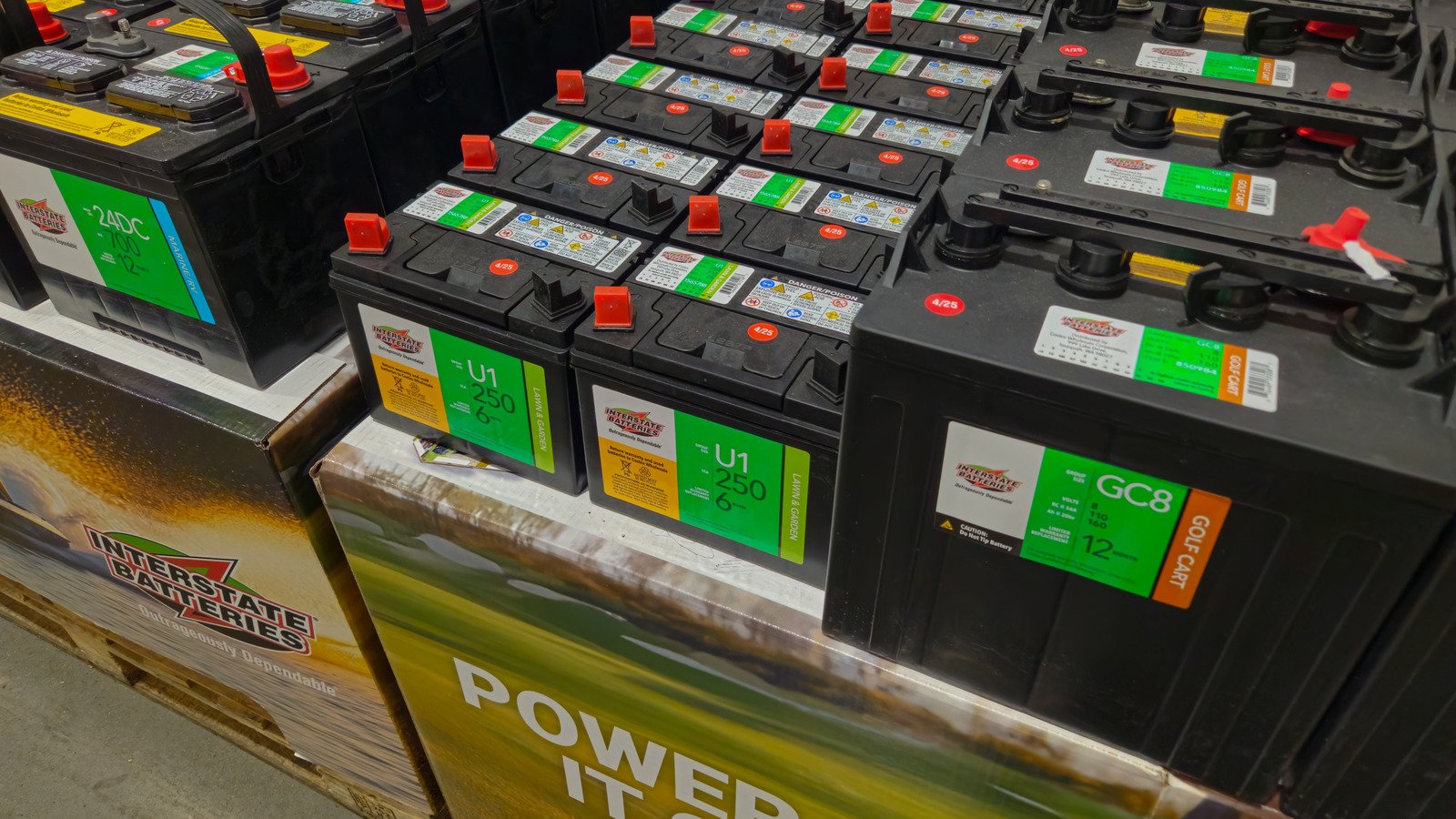
One of the most underrated parts of Costco is the automotive department. It’s usually hidden back by customer service, secluded away from the rest of the store, filled with stuff you’ll miss if you’re not intentionally setting out to browse the aisles after you’ve already checked out on the warehouse side. You can get all kinds of stuff in there at a pretty generous Costco-sized discount, including major car battery brands like Interstate. Unfortunately, the ones sold at Costco aren’t the same quality as the ones sold through other Interstate retailers.
Sure, they’re made by the same brand and designed to fit the same vehicles, but they’re not identical products. In fact, they differ in a few measurable ways that affect performance, warranty coverage, and price. For example, take the battery for my vehicle (a now-discontinued Ford Fusion). At my local Costco, the right Interstate battery for Group Size 90 (T5) is priced at $124.99, excluding a refundable core charge. It’s a standard flooded battery that carries a 36-month limited warranty and is rated at 600 cold cranking amps (CCA) with 750 cranking amps and 56 amp hours.
In comparison, a compatible Interstate MTP-90/T5 battery from a different authorized Interstate retailer would cost me $224.95. It’s also a flooded battery, but it’s rated at 650 CCA instead of 600. That gives it a higher cold-start performance than the Costco version. The length and width of the two are identical, but the non-Costco version is 1/8 inch taller.
Interstate’s warranty is different at Costco
PJ McDonnell/Shutterstock
Another big distinction between these two is warranty coverage. Costco’s Interstate battery warranty is a 36-month limited one, and it operates on a prorated refund basis. If the battery has a defect in materials or workmanship during the warranty period, Costco will refund a prorated portion of the purchase price and sales tax. There’s no free replacement, but the warranty explicitly limits remedies to refunds only. Coverage ends either when the warranty period expires or when the battery is no longer in the original vehicle (whichever comes first).
Interstate’s warranty is structured differently. For one, it’s a lot more layered. Continuing on with my MTP-90/T5 battery example, my purchase would include a free replacement period followed by a discount period that can extend total performance coverage for several years after. If the battery fails due to a defect during the free replacement period, it gets replaced by Interstate at no cost to me. But if it fails during the discount period, I’d have to purchase a replacement at a reduced price based on Interstate’s suggested retail price at the time of return. And while taxes, fees, and labor aren’t covered, the structure still offers more long-term flexibility than Costco’s car battery warranty.
