

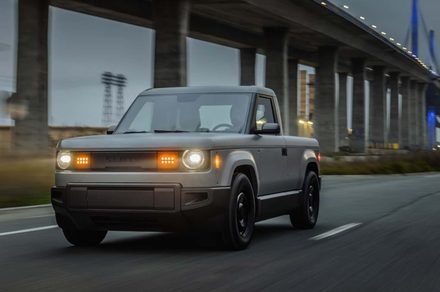
Slate wants to build more than just a cheap truck
The EV startup behind the affordable Slate pickup teases future models as demand surges.
Slate
Electric vehicle startup Slate Auto may have grabbed headlines with its ultra-affordable electric pickup, but it doesn’t intend to stop there. In a recent interview with InsideEVs, CEO Chris Barman said that while the company’s first model, a stripped-down EV truck designed to cost in the “mid-$20,000” range, still needs a final price and production ramp-up, Slate aspires to build additional electric vehicles beyond its debut model.
The first Slate truck, a compact rear-motor, two-door electric pickup with an optional extended range battery, has quickly become one of the EVs to look forward to, which is expected to start production toward the end of 2026 at a Midwestern U.S. plant. Slate claimed more than 150,000 refundable reservations late last year, roughly matching the company’s targeted maximum annual output once production peaks in 2027.
Ambitious roadmap beyond the pickup
Although the actual price tag is still being finalized, Barman told reporters that building tools to deliver the lowest possible MSRP remains a high priority. Even without final pricing, the Slate truck’s design philosophy is clear: less complexity and more customer-driven customization. Buyers can start with a bare-bones “Blank Slate” and add accessories like wraps, wheels, or even a kit to turn the truck into a five-seat SUV by paying extra.
That modular, customer-driven mindset may also inform the models Slate plans to explore next. Barman said Slate isn’t limiting its ambitions to just one electric vehicle: as the company learns from production, sales, and customer feedback, it hopes to expand its lineup. That could include other body styles or vehicle segments that maintain the startup’s focus on affordability and simplicity, although details and timelines remain unconfirmed.
Slate’s approach contrasts sharply with most mainstream EV makers, which often launch high-end models before trickling features down to cheaper trims. Slate flipped that script by launching a basic, minimal-feature truck first: a move that earned both attention and skepticism. If it succeeds, the startup could carve out a niche among buyers who prioritize price and practicality over luxury extras. Whether Slate will deliver on a broader vehicle lineup depends on production scale, supplier relationships, and demand consistency through the next few years. But the CEO’s public comments clearly signal that the company wants to be a platform for practical, low-cost electric mobility across multiple vehicle types.
Varun is an experienced technology journalist and editor with over eight years in consumer tech media. His work spans…
Volkswagen should be a bigger EV player — and maybe it can be
Affordable EVs are on a lot of people’s minds these days, but one name is missing from the conversation. Volkswagen launched its ID family of EVs seven years ago with the promise of electric mobility for “the millions, not millionaires,” but in the United States at least, the promise remains just that.
The VW Group has lavished resources on its luxury brands Audi and Porsche, and even created the new Scout brand to challenge Rivian, but it’s let its namesake brand stagnate. VW only sells the aging ID.4 crossover in the U.S. It’s an unfortunate situation for what was one of the most promising efforts by an established automaker to bring EVs to the masses. But VW may have already figured a way out.
Uber will soon have you riding in style in a driverless Mercedes-Benz S-Class
Nvidia, Mercedes-Benz, and Uber have announced a partnership to bring S-Class robotaxis to several major cities.
Uber, Nvidia and Mercedes-Benz have joined hands to develop a fleet of luxurious robotaxis based on the German carmaker’s S-Class platform. The companies recently confirmed the collaboration as part of a broader effort to build a global robotaxi ecosystem that combines Mercedes’ luxury sedan with Nvidia’s autonomous driving technology and Uber’s ride-hailing network.
The partnership builds on Uber’s ongoing work with Nvidia announced in October last year, in which Nvidia’s DRIVE AV software and DRIVE Hyperion architecture are being used to make vehicles “level 4 ready.” This means the vehicles will be capable of operating without human intervention in predefined conditions.
Volvo says it will continue to offer CarPlay as rivals shift away
Your iPhone will still work seamlessly in upcoming Volvo cars
In a car market that feels increasingly hostile to user choice, Volvo has just stepped up as the voice of reason we desperately needed. While some major competitors – looking at you, General Motors – are busy tearing out Apple CarPlay and Android Auto in favor of their own proprietary systems, Volvo has drawn a line in the sand. In a recent conversation with The Drive, Volvo’s chief engineering and technology officer, Anders Bell, made it crystal clear: the Swedish automaker will “absolutely” keep supporting these third-party platforms across their lineup, including their new electric vehicles.
This is a massive relief for anyone who has ever sat in a rental car, stared at a confusing, sluggish infotainment screen, and wished they could just use Google Maps from their phone. Volvo’s stance is refreshingly simple: they believe in fitting into your digital life, not forcing you to upend it just because you bought their car. Bell’s comments highlight a philosophy that seems to be vanishing in the tech world – respecting the customer’s habits. If you live in the Apple ecosystem, your car should extend that, not fight against it.
