Close Menu

    Subscribe to Updates

    Get the latest creative news from FooBar about art, design and business.

    What's Hot

    How to replace your AirTag battery

    NVIDIA is still planning to make a ‘huge’ investment in OpenAI, CEO says

    Ayaneo’s Pocket S Mini has the perfect aspect ratio for revisiting classic console games

    Facebook X (Twitter) Instagram
    • Artificial Intelligence
    • Business Technology
    • Cryptocurrency
    • Gadgets
    • Gaming
    • Health
    • Software and Apps
    • Technology
    Facebook X (Twitter) Instagram Pinterest Vimeo
    Tech AI Verse
    • Home
    • Artificial Intelligence

      To avoid accusations of AI cheating, college students are turning to AI

      January 29, 2026

      ChatGPT can embrace authoritarian ideas after just one prompt, researchers say

      January 24, 2026

      Ashley St. Clair, the mother of one of Elon Musk’s children, sues xAI over Grok sexual images

      January 17, 2026

      Anthropic joins OpenAI’s push into health care with new Claude tools

      January 12, 2026

      The mother of one of Elon Musk’s children says his AI bot won’t stop creating sexualized images of her

      January 7, 2026
    • Business

      New VoidLink malware framework targets Linux cloud servers

      January 14, 2026

      Nvidia Rubin’s rack-scale encryption signals a turning point for enterprise AI security

      January 13, 2026

      How KPMG is redefining the future of SAP consulting on a global scale

      January 10, 2026

      Top 10 cloud computing stories of 2025

      December 22, 2025

      Saudia Arabia’s STC commits to five-year network upgrade programme with Ericsson

      December 18, 2025
    • Crypto

      Gold and Silver Erased $7 Trillion From Global Markets, Will Bitcoin Follow?

      February 1, 2026

      Nearly $3 Billion Ethereum Selling Could Drive a 16% Crash

      February 1, 2026

      World Liberty Financial Crashes 30% Amid Trump’s Canada Tariff Threats

      February 1, 2026

      Bitcoin Price Hits 9-Month Low Amid $2.6 Billion Liquidation: What’s Next?

      February 1, 2026

      BitMine Bleeds $6 Billion: Has Tom Lee’s Ethereum Supercycle Bet Turned Fatal?

      February 1, 2026
    • Technology

      How to replace your AirTag battery

      February 1, 2026

      NVIDIA is still planning to make a ‘huge’ investment in OpenAI, CEO says

      February 1, 2026

      Ayaneo’s Pocket S Mini has the perfect aspect ratio for revisiting classic console games

      February 1, 2026

      OnlyFans is reportedly in talks to sell a 60 percent stake to a San Francisco investment firm

      February 1, 2026

      SpaceX wants to launch a constellation of a million satellites to power AI needs

      February 1, 2026
    • Others
      • Gadgets
      • Gaming
      • Health
      • Software and Apps
    Check BMI
    Tech AI Verse
    You are at:Home»Technology»Why your next smartglasses might finally have crisp visuals
    Technology

    Why your next smartglasses might finally have crisp visuals

    TechAiVerseBy TechAiVerseFebruary 1, 2026No Comments5 Mins Read4 Views
    Facebook Twitter Pinterest Telegram LinkedIn Tumblr Email Reddit
    Why your next smartglasses might finally have crisp visuals
    Share
    Facebook Twitter LinkedIn Pinterest WhatsApp Email

    Why your next smartglasses might finally have crisp visuals

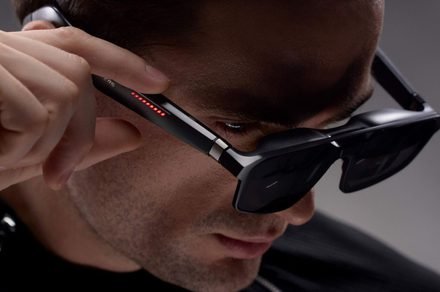
    A micro-LED revolution could bring near-life-like resolution to AR and VR headsets.


    ROG

    A long-standing obstacle for augmented reality (AR) and mixed-reality smartglasses may finally be on the brink of being solved. A team of researchers led by Professor Sanghyeon Kim at the School of Electrical Engineering, in collaboration with Inha University and industry partners, has developed a micro-LED display technology capable of ultra-high resolution on the order of ~1,700 pixels per inch (PPI). That’s roughly three to four times sharper than most flagship smartphone screens today, with a level of detail that could make immersive wearable visuals far more convincing.

    Nature Electronics

    For context, Micro-LEDs are a form of self-emissive display technology that holds key advantages over OLEDs, including higher brightness, longer lifespan, and improved power efficiency, all critical for compact, battery-constrained wearables like smartglasses. Until now, engineering ultra-high-resolution micro-LED displays in such small form factors has been a major technical challenge, especially when it comes to creating tiny red pixels that work efficiently without consuming excessive power.

    Micro-LED breakthroughs bring near-reality visuals closer

    The researchers overcame one of the biggest hurdles by designing red micro-LED elements that are both energy-efficient and capable of extremely fine pixel packing. In prototype demonstrations, these micro-LED displays achieved a remarkable ~1,700 PPI figure. It’s a density that supports crisp, detailed visuals even at very close viewing distances, such as those inside AR glasses or VR headsets. This level of clarity could help eliminate the “screen door” effect that currently makes many near-eye displays look pixelated or low-resolution.

    Nadeem Sarwar / Digital Trends

    Beyond smartglasses, such high-resolution, low-power micro-LED displays could have a significant impact across wearables and extended reality (XR) devices, where brightness, durability, and efficiency are all crucial. As the broader micro-LED display market continues to grow, innovations like this one could play a central role in helping AR and VR products become more practical, affordable, and mainstream, rather than niche or novelty gadgets. That said, there’s still work before this reaches consumer devices, but the breakthrough brings lighter, sharper smartglasses that look more like real life a step closer.

    Varun is an experienced technology journalist and editor with over eight years in consumer tech media. His work spans…

    Your phone might stay cool thanks to this new battery breakthrough

    Researchers develop a “thermal diode” that could control heat flow and extend battery life.

    Phones, electric vehicles, and other devices that run hot might soon have a powerful new tool keeping them cool. Engineers at the University of Houston have developed a novel thermal management technique that works like a “thermal diode,” allowing heat to flow in only one direction. This breakthrough, rooted in a concept called thermal rectification, has been developed by Bo Zhao, an award-winning and internationally recognized engineering professor at the Cullen College of Engineering, and his doctoral student, Sina Jafari Ghalekohneh. The new technology could, in theory, help electronics keep hot spots under control, potentially extending battery life and preventing overheating, as published in Physical Review Research.

    Current smartphones and portable electronics often struggle with heat because traditional materials let thermal energy travel freely in all directions. That means internal heat from batteries or processors can linger or even flow back into components, leading to excessive temperatures, reduced performance, and faster battery wear. The new thermal diode design changes that dynamic by pushing heat forward while blocking reverse heat flow, giving engineers a more precise way to regulate temperatures inside devices.


    Read more

    Super Bowl tactile device lets your hands follow the ball

    A OneCourt tablet will give some blind and low-vision fans a touch-first view of the game, with live audio in their headphones so the action stays synced.

    A small group of blind and low-vision fans will experience the Super Bowl with a Super Bowl tactile device that renders the ball’s location through touch. The tablet also delivers vibration cues for key moments, so big plays don’t blur into crowd noise.

    The NFL is teaming up with OneCourt and Ticketmaster to bring the setup to Levi’s Stadium in Santa Clara, California, when Seattle plays New England on Feb. 8. Around 10 attendees are expected to use the device in their seats, with a live Westwood One broadcast feed running through headphones.


    Read more

    A flexible AI chip thinner than hair promises smart wearables that work without a phone

    The chip that could free wearables from phones or cloud-based-computing

    Wearables are getting smarter every year, but most of them still lean heavily on a nearby smartphone to do the real thinking. That dependency may not last much longer.

    Researchers from Tsinghua University and Peking University have now developed a flexible AI chip that is slimmer than a human hair and can be folded thousands of times.


    Read more

    Share. Facebook Twitter Pinterest LinkedIn Reddit WhatsApp Telegram Email
    Previous ArticleYour phone might stay cool thanks to this new battery breakthrough
    Next Article Slate wants to build more than just a cheap truck
    TechAiVerse
    • Website

    Jonathan is a tech enthusiast and the mind behind Tech AI Verse. With a passion for artificial intelligence, consumer tech, and emerging innovations, he deliver clear, insightful content to keep readers informed. From cutting-edge gadgets to AI advancements and cryptocurrency trends, Jonathan breaks down complex topics to make technology accessible to all.

    Related Posts

    How to replace your AirTag battery

    February 1, 2026

    NVIDIA is still planning to make a ‘huge’ investment in OpenAI, CEO says

    February 1, 2026

    Ayaneo’s Pocket S Mini has the perfect aspect ratio for revisiting classic console games

    February 1, 2026
    Leave A Reply Cancel Reply

    Top Posts

    Ping, You’ve Got Whale: AI detection system alerts ships of whales in their path

    April 22, 2025648 Views

    Lumo vs. Duck AI: Which AI is Better for Your Privacy?

    July 31, 2025242 Views

    6.7 Cummins Lifter Failure: What Years Are Affected (And Possible Fixes)

    April 14, 2025143 Views

    6 Best MagSafe Phone Grips (2025), Tested and Reviewed

    April 6, 2025111 Views
    Don't Miss
    Technology February 1, 2026

    How to replace your AirTag battery

    How to replace your AirTag batteryApple’s AirTag is designed to run quietly in the background,…

    NVIDIA is still planning to make a ‘huge’ investment in OpenAI, CEO says

    Ayaneo’s Pocket S Mini has the perfect aspect ratio for revisiting classic console games

    OnlyFans is reportedly in talks to sell a 60 percent stake to a San Francisco investment firm

    Stay In Touch
    • Facebook
    • Twitter
    • Pinterest
    • Instagram
    • YouTube
    • Vimeo

    Subscribe to Updates

    Get the latest creative news from SmartMag about art & design.

    About Us
    About Us

    Welcome to Tech AI Verse, your go-to destination for everything technology! We bring you the latest news, trends, and insights from the ever-evolving world of tech. Our coverage spans across global technology industry updates, artificial intelligence advancements, machine learning ethics, and automation innovations. Stay connected with us as we explore the limitless possibilities of technology!

    Facebook X (Twitter) Pinterest YouTube WhatsApp
    Our Picks

    How to replace your AirTag battery

    February 1, 20260 Views

    NVIDIA is still planning to make a ‘huge’ investment in OpenAI, CEO says

    February 1, 20262 Views

    Ayaneo’s Pocket S Mini has the perfect aspect ratio for revisiting classic console games

    February 1, 20261 Views
    Most Popular

    A Team of Female Founders Is Launching Cloud Security Tech That Could Overhaul AI Protection

    March 12, 20250 Views

    7 Best Kids Bikes (2025): Mountain, Balance, Pedal, Coaster

    March 13, 20250 Views

    VTOMAN FlashSpeed 1500: Plenty Of Power For All Your Gear

    March 13, 20250 Views
    © 2026 TechAiVerse. Designed by Divya Tech.
    • Home
    • About Us
    • Contact Us
    • Privacy Policy
    • Terms & Conditions

    Type above and press Enter to search. Press Esc to cancel.