

NASA’s skywatching tips for February include a planetary parade and a moon mission
Do look up!
What’s Up: February 2026 Skywatching Tips from NASA
NASA has released its monthly skywatching update on what to look out for over the coming weeks, and you can probably guess which event tops the list.
That’s right: the Artemis II mission. NASA is about to launch a crew on a voyage around the moon in what will be the first human lunar mission in more than 50 years.
The space agency is currently targeting February 8 for the launch of the 10-day mission that will send three Americans and one Canadian on a fly-by of our nearest neighbor.
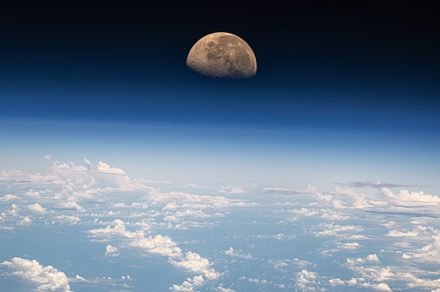
“This mission will pave the way for Artemis III, which will be the first time we’ve sent humans to the lunar surface since the final Apollo mission, Apollo 17, in 1972,” NASA says in the video (top). “So this month, look up to the moon shining bright in the night sky and there might be somebody looking back down at you.”
Of course, there’s a chance that technical issues or poor weather conditions will disrupt the schedule and perhaps push the launch to next month, so be sure to check Digital Trends for the latest updates.
This month also offers a great chance to view the Orion constellation, named after the hunter in Greek mythology.
Through the night, cast your gaze toward the southern sky and try to spot the hunter for yourself. And here’s a tip: The hunter’s right shoulder is Betelgeuse (or Alpha Orionis), one of the brightest stars in the night sky.
If you have trouble finding Betelgeuse or Orion, check one of the many astronomy apps available for both iOS and Android, with the best ones allowing you to point your camera toward the sky to identify the various stars and planets.
Finally, a planetary parade is also happening in February. It involves Saturn dropping down toward the horizon as Venus and Mercury climbing in the sky, with all three appearing to meet in the west to southwestern sky.
“Even Uranus, found in the southern sky, and Neptune, found nearby Saturn, will join the parade, though you’ll need binoculars or a telescope to spot these two far-off planets,” NASA says.
With clear skies, you’ll be able to see the planets after sunset throughout the month, and toward the end of the month they’ll appear in a line.
Not so many moons ago, Trevor moved from one tea-loving island nation that drives on the left (Britain) to another (Japan)…
SpaceX video shows off next-gen Starship booster ahead of 12th flight
Elon Musk’s spaceflight company is aiming to launch the Starship again next month.
SpaceX is aiming to fly its next-gen Super Heavy booster next month, according to a recent post on X by the company’s CEO, Elon Musk.
As part of the Starship rocket that also includes the upper-stage Ship spacecraft, the Super Heavy is the most powerful booster ever built and has so far flown 11 times, with varying degrees of success.
NASA animation shows exactly how its crewed moon mission will unfold
A NASA video (above) reveals in great detail how its upcoming Artemis II mission is expected to play out.
The space agency released the animation last year, but seeing that the Artemis II astronauts could be heading to the moon as early as February 6, it’s a great time to watch it again.
NASA’s moon astronauts are in quarantine — what does that really mean?
The crew could be heading toward the moon in a matter of days.
The buzz is building for NASA’s Artemis II mission that will send four astronauts on a 10-day voyage around the moon.
The highly anticipated endeavor will be the first crewed moon-bound flight since the final Apollo mission way back in 1972.
