

Samsung begins One UI 9 testing ahead of next foldable launch
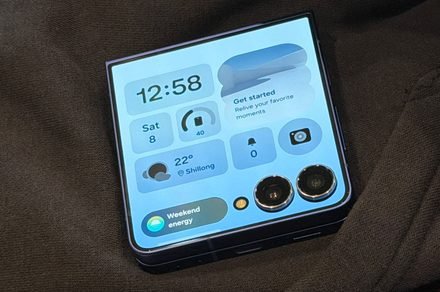
Early One UI 9 build spotted for upcoming Galaxy Z Flip 8
Nadeem Sarwar / Digital Trends
Samsung appears to be laying the groundwork for its next major software update well ahead of schedule, with early signs of One UI 9 development surfacing alongside next-generation foldable hardware testing. While the tech giant is still gearing up for the imminent launch of the Galaxy S26 series – expected to debut One UI 8.5 – sightings of internal One UI 9 builds for upcoming devices hint at a broader strategy to align new software with future hardware releases.
One UI 9 has already been spotted running on early test firmware tied to the Galaxy Z Flip 8 and Galaxy Z Fold 8, indicating that software preparations are actively underway. These early builds, identified by firmware tags such as F776USQU0AZB1 for the Flip and F976USQU0AZB1 for the Fold, suggest Samsung is pushing One UI 9 testing internally even as it finalises One UI 8.5 for next month’s flagship launch.
Rumours also point to additional foldable models – including a potential wide-screen Galaxy Z Fold variant – appearing within the One UI 9 ecosystem, revealing how closely Samsung may be integrating software and form-factor innovation.
The significance of this early development cannot be overstated
Software updates like One UI traditionally arrive alongside major hardware launches; by preparing One UI 9 now, Samsung is positioning itself to debut a unified platform with its foldable devices later this year. Foldables such as the Z Flip 8 and Z Fold 8 are key pillars of Samsung’s mobile strategy, forming a crucial edge against rivals in an increasingly competitive premium smartphone market. Early software readiness allows more time for optimisation, feature polishing, and compatibility testing – essential for complex devices with unique UI requirements.
For users, the early appearance of One UI 9 in testing signals both continuity and evolution. Samsung has consistently used One UI updates to introduce refined performance, enhanced AI features, and improved user interfaces that harness the capabilities of Google’s Android base – and One UI 9 is expected to follow suit when paired with Android 17. Although specific features have not yet been officially announced, build leaks hint at deeper Galaxy AI tools and interface improvements that could enhance everyday tasks and foldable multitasking experiences.
Why should consumers care
Understanding Samsung’s software direction helps set expectations for upcoming devices and their capabilities. Early software development means that foldables launching later in 2026 could debut with a more mature, feature-rich operating environment from day one. This approach contrasts with staggered updates seen in previous years, where flagship devices often waited months before receiving major OS overhauls.
Looking ahead, Samsung’s rollout timeline is likely to follow a familiar pattern: One UI 8.5 will emerge with the Galaxy S26 series, then progressively expand to eligible models. Later in the year, One UI 9 – potentially shipping first on new foldables – should become available to a broader device portfolio. As leaks and test builds continue to surface, more specific details about what One UI 9 will offer are expected to emerge, keeping fans and industry watchers engaged.
Moinak Pal is has been working in the technology sector covering both consumer centric tech and automotive technology for the…
This could be our first look at Samsung’s upcoming wide foldable phone
Firmware leaks reveal Samsung’s boldest foldable experiment yet, a wider cover screen, tablet-like interior, and a dramatic shift away from the tall Fold formula.
Folks over at Android Authority have pieced together an animation from an early build of One UI 9, Samsung’s version of Android 17, and it gives us the new form factor and the design of the purported Wide Fold.
The outlet has shared what appears to be an introductory device animation, depicting a swipe-up gesture on the cover screen that reveals a list-type content, then the handset unfolds, and the content expands on the main screen.
Chatbots rated more empathetic than humans in controlled tests
Turns out your chatbot might be more emotionally available than your ex
Recent research into artificial intelligence’s emotional capabilities indicates that AI chatbots – long dismissed as rule-based and mechanical – may be better at recognizing empathetic patterns in text-based communication than many humans. This shift is emerging as large language models (LLMs) such as ChatGPT, Gemini and other generative systems are increasingly used in everyday interactions, from customer service to mental-health support.
A study published in Nature Machine Intelligence found that AI models can evaluate the subtleties of empathic communication nearly as well as human experts and significantly better than non-expert people. Researchers analysed hundreds of real text conversations involving emotional support and discovered that AI could detect nuances of empathy consistently across a variety of contexts, suggesting these systems have ‘learned’ patterns of compassionate language that many humans struggle to apply reliably.
iPhone 18 Pro could bring a big boost to satellite connectivity
Apple’s next Pro iPhones could quietly eliminate dead zones by blending satellite and cellular networks, delivering seamless coverage without users ever toggling a setting.
Apple seems ready to kill the dreaded “No Service” label, as the purported iPhone 18 Pro models could take a major leap in satellite connectivity, not just for emergencies (as it has been the case so far), but also for everyday use cases.
Previously, iPhone users had to point the device at the sky (with a clear view of the horizon) to send an SOS signal to the emergency services. However, the upcoming iPhones (only the Pro models) could solve that problem for once and for all.
