

These Toyotas Were Built For America, But Now They’re Going To Japan
Toyota, being ranked the world’s largest automaker by volume, has a global vehicle lineup that can vary significantly from region to region. Nowhere is this more evident than in the United States. While Toyota still manufactures a large number of its ‘global’ vehicles in America, including the RAV4, Prius and Corolla, its North American lineup also includes many vehicles that, if not sold exclusively in America, were designed from the ground up with the American market in mind. And many of these vehicles are assembled in America as well.
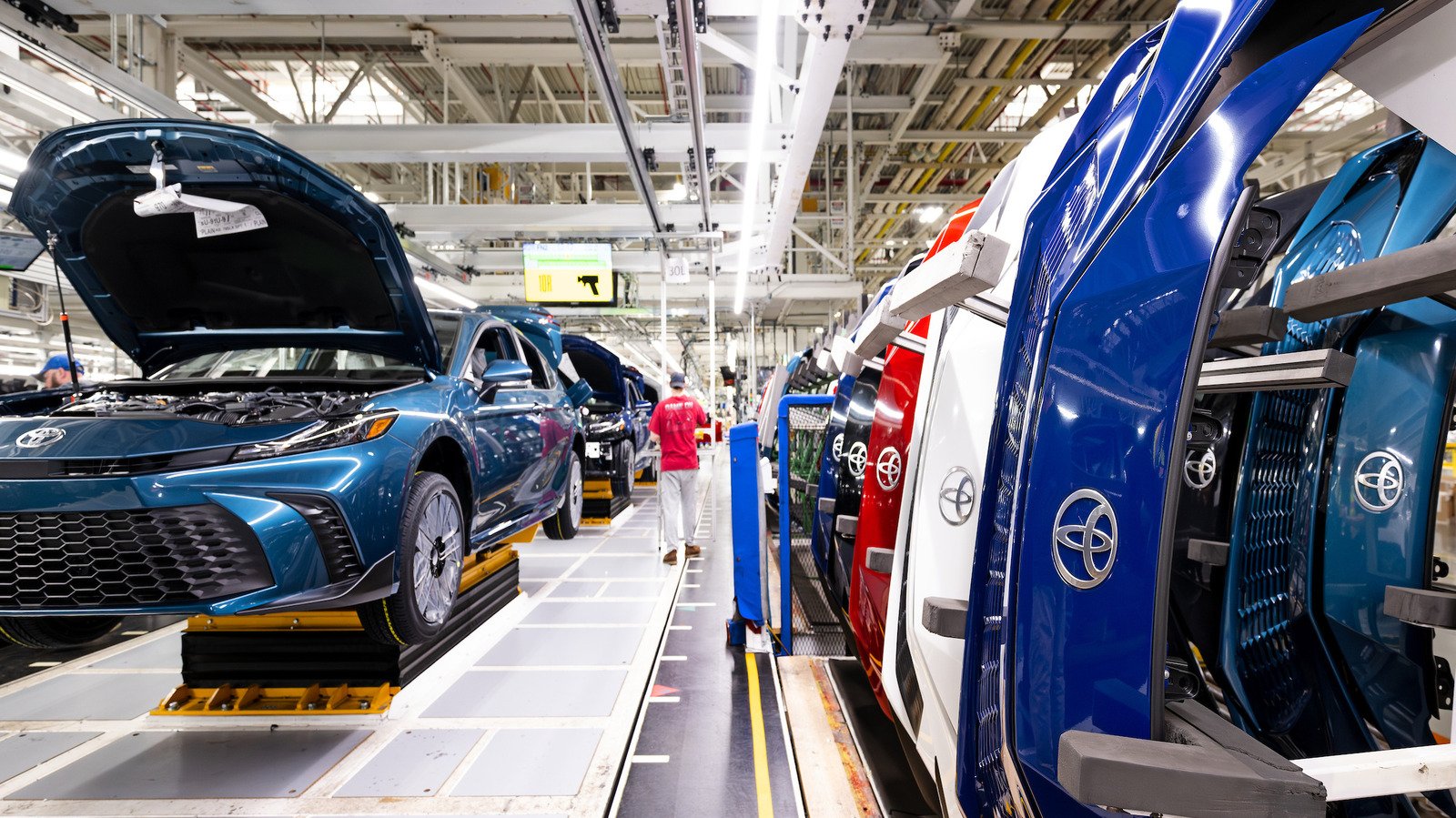
Toyota’s largest factory in the world? It’s not in Japan, but in Georgetown, Kentucky, where it pumps out Camrys and RAV4s in massive volume. What about pickup trucks? Some could argue that despite its Toyota badges, the Texas-built Toyota Tundra pickup, which was designed for the USA’s hyper-competitive half-ton truck market, is as American as any other truck on the road.
And now, in an interesting twist, Toyota is planning to export that all-American Tundra pickup, along with other American-made models, to its Japanese home market. The move comes as part of an effort to rebalance the US-Japan trade partnership in an era of increased tariffs and the Trump Administration’s hope of getting more American-made cars and trucks into international markets. And it actually won’t be the first time that American-built Toyotas have been sold in Japan.
From Texas to Tokyo
Just dance/Shutterstock
As it hopes to boost US manufacturing, the Trump Administration has made it clear that it would like to see more American-made trucks and cars sold in Japan, but that’s something that’s a lot easier said than done. Apart from any market concerns about price, large physical size, and fuel economy, American companies like GM and Ford simply don’t have the infrastructure and market familiarity in Japan to sell these vehicles to anything but an ultra-niche market. F-150s and Silverados packing the streets of Tokyo is unlikely.
Toyota, on the other hand, would simply be adding American-made models to its existing Japanese lineup and its vast and established sales and service network. While it’s safe to say that the fuel-thirsty, full-size Tundra pickup probably won’t be a massive seller in Japan with its notoriously narrow streets and pricey gasoline, the Tundra does have a cult following there, with a good amount of the trucks imported by third-party sellers.
Along with the Tundra, Toyota will also be bringing the Indiana-built Highlander SUV to Japan, as well as the Kentucky-built Camry sedan, which has been on hiatus from the Japanese home market since 2023, when Toyota ended Japanese sales of the domestically-built version. To help promote these moves and further boost the US-Japan relationship, Toyota has already supplied an American-built Highlander as an official state vehicle for the Japanese government. In the fall of 2025, Toyota also helped organize a NASCAR exhibition event for Japanese motorsport fans at Fuji Speedway.
Not the first experiment
While Toyota’s ‘reverse-importing’ of cars and pickup trucks from America back to the Japanese home market is a significant move, this won’t be the first time that Toyota and other Japanese car companies have sold American-made vehicles in the home market.
Back in the early 1990s, Toyota sold American-made Camry station wagons and coupes in the Japanese market as the Toyota Scepter. In the ’80s and ’90s, Honda also exported a number of Ohio-built Accords back to the home market. And from the list of Toyota’s most unusual vehicles was the short-lived JDM Toyota Cavalier, which was a GM-built Cavalier exported to Japan with Toyota badges instead of the Chevy Bowtie.
While it remains to be seen what sort of impact these export models will have on real-word trade balance, this seems like a smart move on Toyota’s part to leverage its vast international footprint to improve its public trade relations with the United States. And with the Japanese government now taking steps to lower regulatory barriers for imported American vehicles, we wouldn’t be surprised to see other Japanese car companies follow Toyota’s lead in introducing American-built vehicles to the home market. From Alabama-built Honda Passports to Indiana-built Subarus, there are a number of American-made, Japanese-branded models that could make sense for the home market.
