

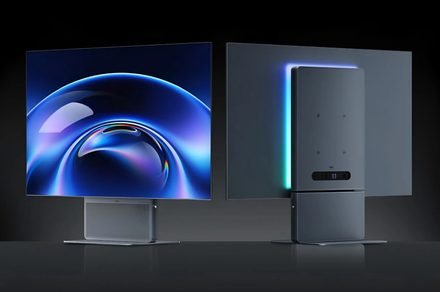
TCL’s new 4K OLED monitor is astonishingly sleek and 240Hz fast
The 32X3A gaming display can even switch to 480Hz for esports.
TCL
TCL has unveiled a striking new gaming monitor that combines premium OLED visuals with high speed. The TCL 32X3A is a 31.5-inch 4K OLED display designed for both gamers and creators, offering a native 240Hz refresh rate while maintaining a surprisingly elegant, ultra-thin design.
What immediately stands out is the monitor’s design. As reported by ITHome, TCL says the panel measures just 6.4mm at its thinnest point, making it one of the slimmest gaming monitors announced so far. The company wraps the display in a minimalist metal chassis and pairs it with a stand that houses Bang & Olufsen-tuned speakers, giving the monitor a cleaner desk presence than many RGB-heavy gaming displays.
Dual-mode gaming and OLED visuals
Performance is where the monitor really flexes its muscles. The panel runs at 4K resolution with a 240Hz refresh rate, a combination that remains rare even among premium gaming monitors. TCL also includes a dual-mode option that lets users switch to 1080p at up to 480Hz, targeting esports players who prioritize frame rate over resolution. Connectivity is also solid, with DisplayPort 2.1, dual HDMI 2.1, and USB-C with 90W power delivery, making it capable of driving high refresh rates while doubling as a laptop docking solution.
The OLED panel itself promises the typical benefits of the technology, such as deep blacks, near-instant response times, and extremely high contrast. TCL claims the display covers 99% of both the sRGB and DCI-P3 color gamuts, making it suitable not just for gaming but also for creative work like video editing or color-sensitive design. It also comes with TCL’s new “Matrix-Pure” RGB stripe subpixel layout, which the company says improves text clarity compared with some traditional OLED monitor designs that can cause color fringing around text.
The TCL 32X3A is launching first in China at 5,999 yuan (roughly $870), putting it in direct competition with other high-end 32-inch OLED monitors from brands like LG and ASUS. However, TCL hasn’t yet confirmed whether the 32X3A will launch globally or not.
Varun is an experienced technology journalist and editor with over eight years in consumer tech media. His work spans…
Sony may push ahead with PS6 despite rising component costs
New leaks suggest delaying the console would actually cost Sony more
Rumors about the PlayStation 6 being delayed due to rising component costs may have been exaggerated. According to well-known hardware insider Moore’s Law Is Dead, Sony is unlikely to push back the launch of its next-generation console, even as RAM prices climb across the industry.
The concern stems from what some analysts have dubbed a “RAMmageddon,” where demand for memory chips, driven heavily by AI infrastructure, is pushing prices higher across the tech industry. Some earlier reports suggested the situation could delay next-generation consoles until 2028 or even 2029. But Moore’s Law Is Dead argues that delaying the PS6 would actually cost Sony more than simply paying higher prices for memory components.
Sony may be testing dynamic pricing on the PlayStation Store
Reports point to an ongoing dynamic pricing experiment.
Sony appears to be experimenting with dynamic pricing on the PlayStation Store, a system that could show different prices for the same game depending on the user. Reports from pricing tracker PSPrices suggest the company has been running A/B tests affecting more than 150 games across 68 regions.
Interestingly, the tests reportedly started in late 2025 and have gradually expanded since then. Under the experiment, players may see slightly different discounts for the same title, sometimes by as much as 17%, depending on which group their account falls into.
Nintendo takes the U.S. government to court over tariffs
The lawsuit follows a ruling that Trump-era import duties may have been illegal
Nintendo has filed a lawsuit against the United States government seeking refunds for tariffs imposed during the Trump administration. The case, filed by Nintendo’s U.S. subsidiary in the U.S. Court of International Trade, argues that the company was forced to pay import duties that were later ruled unlawful.
The lawsuit comes after a major court decision earlier this year determined that the tariffs had been imposed using legal authority that did not actually permit such taxes. While the ruling invalidated the duties, it didn’t clearly explain how companies that had already paid them would get their money back. Nintendo is now asking the court to order a full refund, that too, with interest.
