

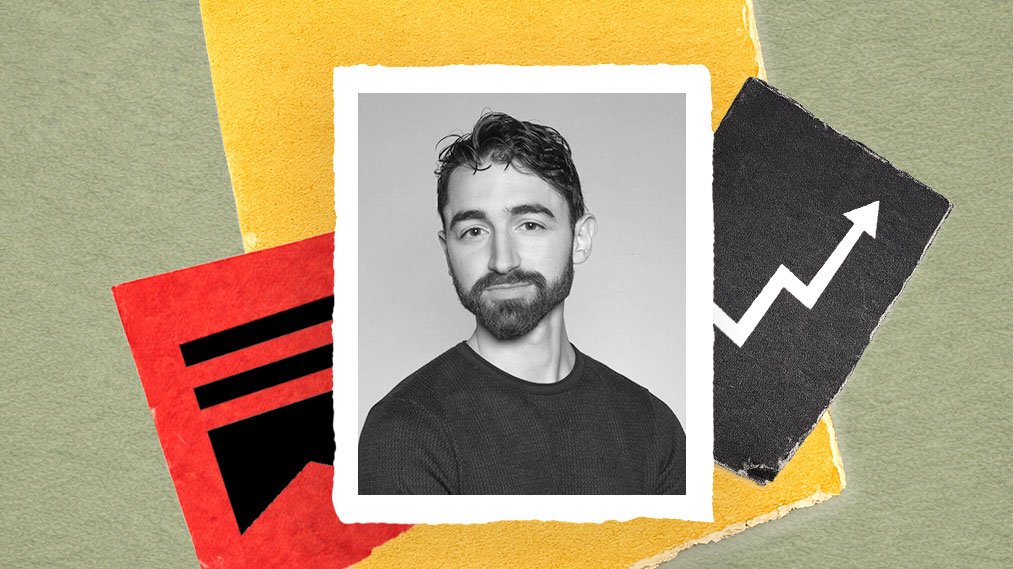
How medical creator Nick Norwitz grew his Substack paid subscribers from 900 to 5,200 within 8 months
By Alyssa Mercante • March 12, 2026 •
This article is part of an ongoing series examining successful creator business strategies. More from the series →
Nick Norwitz graduated from Harvard Medical School last May. By January, he had already grown his paying Substack subscribers nearly 500 percent, taking the total to 5,200, while registered readers jumped 362 percent to 42,000.
Last March, he was approached for representation by creator management company Underscore Talent, which signed him into their Shorthand Studios content services to strategize and build out a team to help make his Metabolic Health YouTube channel a “household name.” The financial terms of the agreement were not made available.
Norwitz’s content breaks down metabolic health, offering actionable steps viewers and readers can take to be healthier. “I wanted to position myself as someone who wouldn’t just be prescribing polls, but would be providing people empowerment to take control of their health directly,” Norwitz told Digiday, who is now working as a full-time creator.
Within a few months of working directly with Shorthand’s vp of creative strategy, Zack Evans, Norwitz began A/B testing thumbnails and video titles, and aimed to consistently upload two videos a week. They also reworked the metabolic health branding, and the combined results led to some major viewing boosts. Norwitz’s channel, which features mid-length videos usually between 15-20 minutes, has increased views 442% and watch time by 151%. His subscribers have gone from 170,000 to 870,000.
“I’m definitely unique as a content creator because of the nature of the content I produce,” Norwitz said. “The expertise Shorthand has brought in is fantastic, they’re melding with mine… and we’ve seen the results.”
The YouTube channel had proved the audience was there. The question was how to monetize it beyond ad revenue. The answer was Substack — and a strategy built around three researched medical letters a week published under the Stay Curious Metabolism Substack. In July 2025, Norwitz in partnership with Shorthand, added 382 paid subscribers. In August, 533. In the months before, he’d only cracked double digits twice since launching the Substack in June 2024. His YouTube channel spent five years building the funnel. It took one focused summer to turn it into a business.
Norwitz would not share how much he’s making on YouTube or Substack — or what exact revenue figures they have grown to.
The mechanism was straightforward: every YouTube video became a signpost, directing his 870,000 subscribers toward a Substack where the deeper analysis lived behind a paywall.
“Every category on Substack that isn’t politics is ripe for disruption,” said Shorthand’s head of paywall, Fadi Saleh. And because his content was rooted in science and health, he’d built trust within an audience — which in turn helped pull YouTube viewers onto Substack and convert them into subscribers.
Within eight months, the Stay Curious Metabolism Substack paid subscriber count jumped from 900 to 5,200, while free subscribers have increased from 9,100 to 42,000. It’s become the number three best-selling science publication on Substack, and 1-year subscriber retention has increased to 80%.
The Substack bump
Shorthand’s head of paywall, Fadi Saleh, knew the subject of his content (science) was poised to perform well on the platform and that the platform’s data would help them build a scalable strategy.
“Substack is one of the few platforms that gives you so much useful data, so it was my job to come in and to really unpack that data and unpack the patterns we were seeing around what was performing and what was not,” said Shorthand’s head of paywall, Fadi Saleh, told Digiday.
When it came time to strategize, Saleh focused on four big buckets: content strategy, marketing strategy, content optimization, and positioning.
“His non-generic knowledge and actionability works really well as a paid offering,” Saleh said.
They worked on increasing conversions from his social media accounts, closing gaps they identified in driving YouTube subscribers to Substack by suggesting phrases and places to mention the platform in his videos. Today, between 20 and 30 percent of his Substack conversions come from Norwitz’s other social media platforms. “A big chunk of that is from YouTube,” Saleh said, without revealing specifics.
Shorthand also audited his newsletter, and identified content that worked best (heart health, longevity, and brain health) and determined how to maximize conversion by positioning paywall breaks at optimal points, A/B testing titles, and even occasionally suggesting rewrites.
“Where we really helped Nick was making his positioning crystal clear. I think a lot of creators underrate this,” he explained. “In terms of paywall, you have to say the same thing over and over in terms of what the value proposition is and what subscribers are getting out of it — far too many are still in that ‘support me’ model.”
Shorthand reworked the Stay Curious Metabolism’s “about” section, onboarding emails, and the upsell before the paywall break. “We say the same thing in every one of his letters: Premium subscribers get full access to my deep dives into cutting-edge metabolic research for less than $1 a letter, three times per week. You’ll always walk away with at least one new insight about metabolic health,” Saleh said. “I can’t think of a way to make that more clear.”
With this strategy, Norwitz’s Substack has grown immensely in just eight months. “Whatever we’re doing is working,” he said.
The plan is to keep that growth going, while also looking to expand Norwitz’s reach.
“It isn’t just about building a YouTube channel, it’s about building a multimedia brand, which requires not just creating good videos, titles and thumbnails, but coordination across media ecosystems,” Norwitz said.
