

A decade of gaming hardware stagnation? That might not be a bad thing | Opinion
Component shortages and price hikes could nix the chances of major gaming hardware updates – but after years of diminishing returns, could a respite be welcome?
Five years ago, when the COVID-19 pandemic severely disrupted high-tech supply chains around the globe, gaming hardware was one of the sectors that felt the impact most directly. At exactly the moment when demand for games was soaring – what else are you going to do when your social life and normal activities are disrupted for months on end? – manufacturers found themselves unable to meet their existing production targets, let alone ramp up to meet that enhanced demand. PlayStation 5 was the poster child for these supply chain failures, and was almost universally sold out for the best part of a year after its launch.
It now seems that this whole episode, as disruptive and frustrating as it was, may only have been an early glimpse of what’s about to unfold in the digital hardware space over the next few years. The gigantic planned build-outs of data centres to enable generative AI systems – around a trillion dollars of planned capital expenditure thus far – have generated immense orders for components like GPUs, storage systems, and most notably RAM chips, which have been ordered in such volumes for data centres that some manufacturers have entirely shifted production away from consumer-grade RAM to try to meet the demand.
The results thus far have largely been seen in skyrocketing prices for anyone trying to build or buy a PC, with memory modules that would have cost under $100 only a few months ago now routinely being marked up to $500 or more. It’s a miserable situation for PC gamers (or for video editors, 3D modellers, developers, or anyone else who needs a high-spec system for their work), but not quite yet a crisis that impacts the industry at large.
It’s increasingly clear, however, that the PC component shortages and price hikes are merely the thin end of a wedge that’s now starting to make its broader impacts clear. A couple of weeks ago it became apparent that Valve’s planned new hardware launches, including the Steam Machine – which promised to be one of the most interesting disruptions to the game hardware space in many years – face delays, likely price rises, and potential shortages due to the component situation. This week, the rumour mill suggests rather credibly that Sony may have drawn up contingency plans to push its next generation launch back to 2028 or even 2029.
This isn’t just about RAM modules – though we shouldn’t remotely underestimate the impact of the shifts in the RAM market on essentially every kind of consumer electronics device. It’s also about storage devices, with solid-state and even disc-type storage systems also facing shortages and price spikes. It’s certainly about GPUs, where we see one of the clearest signals of what’s coming in Nvidia’s apparent decision to skip launching a new consumer GPU entirely this year in favour of focusing on data centre chips. That mirrors the decisions of other manufacturers in the supply chain to focus their efforts on data centre components, even at the expense of totally shuttering their consumer-facing businesses.
Major players like Sony, Nintendo, or the large smartphone firms have been insulated from the immediate effects of this situation by holding established supply contracts for their devices – but even those have time horizons and need to be renegotiated for new product lines. PC components were the canary in the coalmine; that canary has long since begun decomposing at the bottom of its cage, and the reports of major consumer device manufacturers planning delays and price hikes are exactly the crisis it signalled.
It’s worth noting that even the strong consensus that the AI industry is in a gigantic financial bubble and the high likelihood that a lot of these enormous data centre projects will never actually be built or switched on is not going to rescue us from feeling the sharp end of this crisis. A lot of the damage is front-loaded; data centre components are not the same as consumer-grade components, and switching factory production between them is neither cheap nor fast. Even if the financial musical chairs game currently sustaining the AI capital expenditure boom collapses overnight, the result will be warehouses full of unusable and rapidly depreciating data centre hardware components, not a flood of cheap new consumer hardware on the market.
Even if the AI capital expenditure boom collapses overnight, the result will be warehouses full of unusable data centre hardware, not a flood of cheap new consumer hardware.
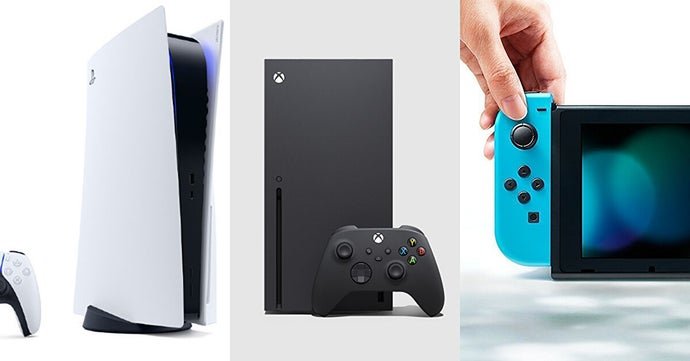
The bear case? I don’t think it’s entirely unrealistic to imagine that we essentially reach the end of this decade with mainstream gaming hardware – consoles, smart devices, and common PC systems – basically unchanged in terms of specifications since the beginning of the decade. Consoles which launched in 2020 are relatively likely to remain the dominant platforms by 2030 (Switch 2 being an exception, though it’s built around a modestly updated version of an Nvidia chipset from 2018). New smartphones will cost more and offer very limited upgrades in terms of scarce components like memory. PC specs will be frozen in time – but not in pricing, with high-end components costing more despite minimal, if any, actual performance improvements.
In one way, this is unprecedented territory. We’ve seen diminishing returns over the years as gaming hardware has advanced, certainly, which has been a major factor driving consoles to have increasingly long lifespans. We’ll never again see a generational leap like PS1 to PS2, let alone like the jump to 3D in the preceding era. Nonetheless, over the timeframe of a decade, there’s always been major progress in the technology base for games, which has helped to drive industry growth and uptake of new platforms and games.
An exogenously imposed pause on that cycle will be an upset to a lot of business models, but it’s also reasonable to wonder if consumers will actually care that much about hardware upgrades going on ice for a few years. Price hikes to existing hardware or to cosmetically updated new models are going to be a much more meaningful pain point for consumers, but they seem more or less satisfied with the current state of gaming hardware in performance terms. This isn’t to say that they won’t want updates eventually, but there’s little evidence that the market is finding current tech underpowered for the games they want to play.
Indeed, while nobody should be celebrating this looming supply chain crisis, it does offer an opportunity to take stock of where the industry actually stands in terms of the hardware on which its products rely.
Consumers are keenly aware of diminishing returns in hardware specs
It’s a fair moment, for example, to note that two of the big pushes of the past decade in terms of display technology – 4K for computer monitors, and 8K for televisions – have made remarkably little impact on consumers. Steam’s latest hardware survey stats suggest that under 5% of its players are using 4K displays on their PCs; meanwhile, 8K televisions have quietly been dropped by almost all of the major TV manufacturers as of this year. The price of these displays just seems to have been prohibitive for consumers who are still perfectly happy with the resolution of the previous generation.
That situation is not confined to display technology. Consumers are keenly aware of diminishing returns in hardware specs in general, and while they’re excited by genuine leaps that offer improvements to the experience (the last meaningful one arguably being the shift to SSD storage in gaming devices, which immensely improved start-up and load times as well as enabling more seamless large-scale worlds), it’s been increasingly hard to sell people on the value of regular spec bumps for hardware platforms.
The prospect of the PS5 having a ten-year lifecycle and the leading edge of PC gaming being frozen in place for a few years is arguably far less worrying now than it would have been in the past, in other words. The appeal of games has been divorced from the hardware upgrade cycle for quite a while now, and many consumers feel more annoyed than excited by the prospect of needing new hardware to play newer games. The industry still can’t afford to be complacent about what’s coming – the prospect of all of that existing hardware getting significantly price-hiked to keep up with component costs is a sobering one – but for consumers at least, a few years off from the upgrade cycle probably won’t upset as many people as you might think.
