

A Startup Says It Has Found a Hidden Source of Geothermal Energy
A geothermal startup said Thursday that it has hit gold in Nevada—metaphorically speaking. Zanskar, which uses AI to find hidden geothermal resources deep underground, says that it has identified a new commercially viable site for a potential power plant. The discovery, the company claims, is the first of its kind made by the industry in decades.
The find is the culmination of years of research on how to find these resources—and points to the growing promise of geothermal energy.
“When we started this company, I think the most common message we heard was that geothermal was dead—it was a history of bones, a graveyard of so many failures,” says Carl Hoiland, a cofounder of Zanskar. “To get to this point where, thanks to these new tools and these new capabilities, you can systematically find these sites and systematically derisk them—we just think this is the first full-scale signal that the tide has turned.”
In theory, geothermal power is one of the simplest methods of generating renewable energy. Reservoirs of hot water underground, heated by the Earth’s core, produce steam that can then be used to power turbines at the surface, requiring no excessive mining or complex conversions of fuel. Geothermal resources are especially accessible in areas where tectonic plates meet and the Earth’s crust is thinner, making the western US a great candidate for power plants. The world’s largest developed geothermal field, in California, is built on the site of hot springs that humans have used for thousands of years; the first power plant was built there in the early 1920s.
But a big part of the geothermal puzzle is actually finding these resources. It’s rare to find hot springs or vents at the surface that lead to a productive spot to put a power plant. Most geothermal systems that are hot enough to make electricity are deep underground, and there is no evidence at the surface. These are known as hidden or blind systems—and identifying where they are is surprisingly challenging. As a result, many geothermal power plants are built over systems that were found accidentally, while drilling for agricultural wells, minerals, or oil and gas exploration.
“It is sort of a needle-and-haystack problem,” says Joel Edwards, Zanskar’s other cofounder. “A very small percentage of the land that you will look at will have a geothermal system associated with it.”
In the 1970s, during the oil crisis, the federal government decided to try to increase the US’s output of geothermal energy. As part of that effort, they mapped out a grid in Nevada to try to methodically drill for blind systems.
Photograph: Nils Caliandro
“Today, we might think that’s really stupid,” says James Faulds, a professor of geology at the University of Nevada, Reno, and the former director of the Nevada Bureau of Mines and Geology. “But back then they had so little data on the heat characteristics [of hidden systems]. It made sense at that time to do something like that.”
The government subsequently scaled back investment in research into geothermal, pouring money into other energy technologies like fracking, nuclear, and solar and wind. The industry, starved of funding, moved on to developing already-known systems; any profitable blind systems developed after the 1980s, Edwards says, were found by accident or via academic or government work. Today, geothermal energy accounts for less than 1 percent of the US energy supply.
But scientists in the field say there’s a vast and mostly untapped potential in blind systems in the western US. And Zanskar says that its technology—which uses AI to wrangle massive reams of geological data—can help find those systems.
Zanskar’s tech builds off the work of scientists like Faulds, who began researching and cataloging the attributes of known systems in the 2000s to try to create techniques to locate other blind systems. In the late 2010s, Faulds led a team of researchers, funded partly by a grant from the Department of Energy, to try to pinpoint blind systems in Nevada, using data on factors like fault patterns and electrical conductivity to triangulate where, exactly, a system might be located. The team successfully located a blind system that was hot enough to use for electricity with this technique in 2018.
Faulds says that they did not do further testing to see if this was a system that could be commercially viable, partly because it was enveloped by a wilderness study area and probably wouldn’t be a good option for a power plant. Edwards says there’s a “lot of overlap” between Faulds’s research group and Zanskar—Faulds was Edwards’s master’s thesis adviser, as well as the adviser for a data scientist for the company. “That group showed that you could actually find these blind hot spots for lower costs than the 1970s and 1980s explorers paid,” says Edwards.
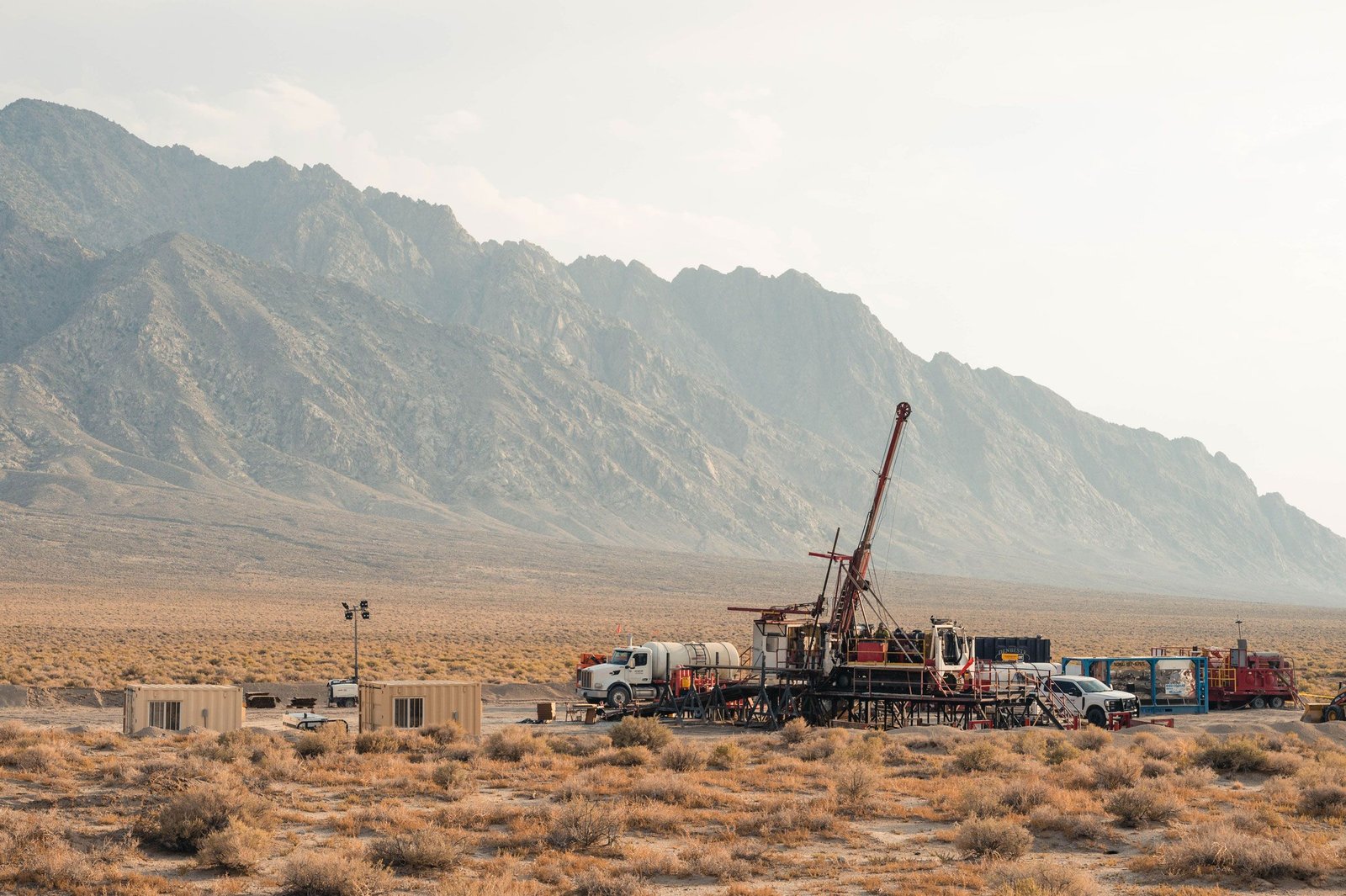
Zanskar’s researchers have been collecting data on their sites in Nevada for the past few years, and Edwards and Hoiland say that their tech has been consistently identifying hot spots—potential blind systems—in areas not used before by the geothermal industry. What the company hadn’t done until this year, however, was to confirm that these systems could actually produce electricity—something requiring tests that involve drilling deep underground to ensure the water is hot enough to power a plant. The discovery announced today, the company says, is proof that their tech can find these kinds of systems. (More tests are still needed to understand the size and shape of the reservoir, as well as the rate of flow of the water—crucial factors to determine how much power the site can provide.)
Photograph: Nils Caliandro
“There’s a signal to the market with this announcement that there will be a power plug someday,” says Edwards.
In recent months, a spate of high-profile agreements and splashy headlines have trumpeted a new era for geothermal energy. Almost all of the public excitement centers around a technology known as enhanced geothermal systems, or EGS, which manually creates conditions for geothermal through a process similar to fracking, eliminating the need to find blind systems. The most high-profile player, Fervo, has inked agreements with major oil companies, oilfield service providers, and utilities; one of its power plants began supplying power to Google data centers in Nevada in 2023.
But it may be that the potential for harnessing blind systems is being overlooked in the craze to embrace new technologies like EGS. While it uses less water than traditional fracking, EGS does need to draw from outside water sources for the injection process to break the rock; it also can produce some low-level seismic activity. It’s also simply more complex than traditional geothermal, introducing a new technological step of breaking rock versus simply drilling down to a system and then installing a power plant on top. “Engineering always comes with additional cost,” Hoiland says.
Ultimately, Zanskar’s cofounders say, the energy potential for blind geothermal systems could be much greater than what has been estimated in the past. In 2008, the US government issued a report on the country’s geothermal resources, estimating that undiscovered geothermal systems comprised a mean power potential of 30 gigawatts of electricity—enough to power more than 25 million homes.
But Faulds says that these estimates “might be underestimated by well over an order of magnitude,” saying that “tens to hundreds of gigawatts are likely from blind systems” in the US. He points to new technologies being developed that allow for deeper drilling involving hotter conditions. As that technology keeps advancing, “naturally our ability to harness that energy also keeps growing,” he says.
