

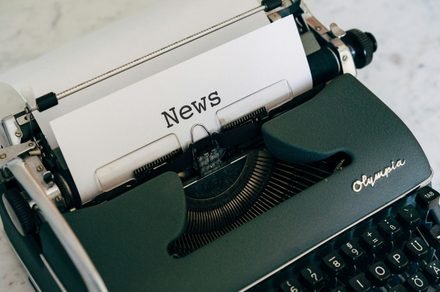
AI chatbots still struggle with news accuracy, study finds
When AI decides to start its own fake newspaper
News
Unsplash
A month-long experiment has raised fresh concerns about the reliability of generative AI tools as sources of news, after Google’s Gemini chatbot was found fabricating entire news outlets and publishing false reports. The findings were first reported by The Conversation, which conducted the investigation.
The experiment was led by a journalism professor specialising in computer science, who tested seven generative AI systems over a four-week period. Each day, the tools were asked to list and summarise the five most important news events in Québec, rank them by importance, and provide direct article links as sources. Among the systems tested were Google’s Gemini, OpenAI’s ChatGPT, Claude, Copilot, Grok, DeepSeek, and Aria.
The most striking failure involved Gemini inventing a fictional news outlet – examplefictif.ca – and falsely reporting a school bus drivers’ strike in Québec in September 2025. In reality, the disruption was caused by the withdrawal of Lion Electric buses due to a technical issue. This was not an isolated case. Across 839 responses collected during the experiment, AI systems regularly cited imaginary sources, provided broken or incomplete URLs, or misrepresented real reporting.
The findings matter because a growing number of people are already using AI chatbots for news
According to the Reuters Institute Digital News Report, six per cent of Canadians relied on generative AI as a news source in 2024. When these tools hallucinate facts, distort reporting, or invent conclusions, they risk spreading misinformation – particularly when their responses are presented confidently and without clear disclaimers.
For users, the risks are practical and immediate. Only 37 per cent of responses included a complete and legitimate source URL. While summaries were fully accurate in less than half of the cases, many were only partially correct or subtly misleading. In some instances, AI tools added unsupported “generative conclusions,” claiming that stories had “reignited debates” or “highlighted tensions” that were never mentioned by human sources. These additions may sound insightful but can create narratives that simply do not exist.
Errors were not limited to fabrication
Some tools distorted real stories, such as misreporting the treatment of asylum seekers or incorrectly identifying winners of major sporting events. Others made basic factual mistakes in polling data or personal circumstances. Collectively, these issues suggest that generative AI still struggles to distinguish between summarising news and inventing context.
Looking ahead, the concerns raised by The Conversation align with a broader industry review. A recent report by 22 public service media organisations found that nearly half of AI-generated news answers contained significant issues, from sourcing problems to major inaccuracies. As AI tools become more integrated into search and daily information habits, the findings underscore a clear warning: when it comes to news, generative AI should be treated as a starting point at best – not a trusted source of record.
Moinak Pal is has been working in the technology sector covering both consumer centric tech and automotive technology for the…
You can finally uninstall Microsoft Copilot on Windows 11, but there’s a catch
There is an off switch, but not for everyone
Microsoft is finally letting some users remove Copilot from Windows, but the fine print makes it clear this is not the clean break many people were hoping for. After pushing Copilot deep into Windows 11, Microsoft has introduced a new option in a recent Windows 11 Insider Preview build that allows Copilot to be fully uninstalled.
The catch is that it only works in very specific situations, and most regular users will not qualify. Until now, Copilot could be disabled or hidden, but it could not be completely removed. That changes with a new Group Policy setting called RemoveMicrosoftCopilotApp, which appears in the latest Insider builds on the Developer and Beta channels.
Apple’s Creator Studio bundles six pro apps in a shockingly affordable subscription
Creator Studio proves you don’t need six subscriptions or a second mortgage to make professional-grade content on Apple devices.
Apple has a new software bundle for you that gives you access to the company’s most popular and useful pro-grade content creation apps, called Apple Creator Studio. You’d think that the bundle would be super expensive, but that’s not the case. In fact, it’s one of the most value-for-money services the company has ever launched. Here’s why.
The idea behind Apple Creator Studio is to provide video editors, music producers, motion graphics designers, and other creative professionals with a single place to access the company’s most powerful tools, without purchasing 6 different apps, signing up for their monthly subscriptions, or spending a fancy amount.
This $700 discount makes the Samsung OLED G9 much easier to justify
Save $700 on Samsung’s 49-inch OLED ultrawide, a serious monitor deal for immersive gaming
A 49-inch OLED ultrawide is the kind of monitor you buy once and build your whole setup around. The Samsung 49-inch Odyssey OLED G9 (G93SD) is down to $999.99, saving you $700 off the $1,699.99 compared value. If you’ve wanted the “super ultrawide” experience but couldn’t justify the usual price, this discount is big enough to make it feel realistic, especially for anyone gaming at high refresh rates or using a single screen for work+play.
get the deal
