

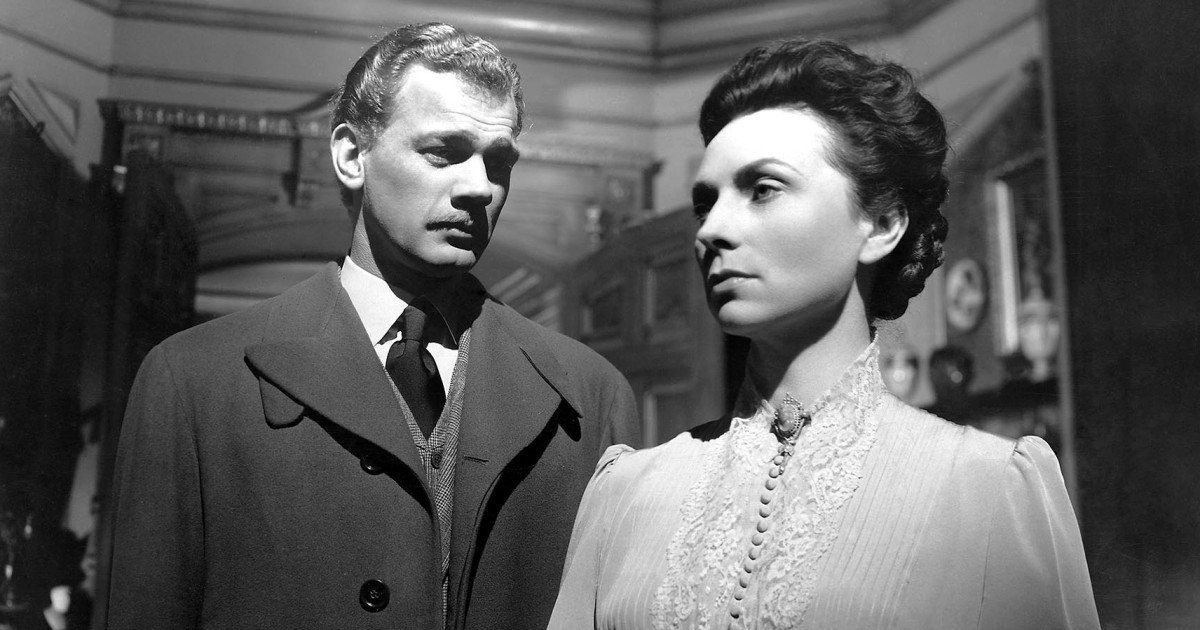
AI firm plans to reconstruct ‘lost’ footage from Orson Welles’ ‘The Magnificent Ambersons’
Showrunner, a technology platform that dubs itself the “Netflix of AI,” plans to use artificial intelligence to reconstruct 43 minutes of excised footage from Orson Welles’ “The Magnificent Ambersons,” a sweeping family drama that was famously butchered by studio executives.
Edward Saatchi, CEO of the Amazon-backed firm Showrunner, confirmed the plans in an interview with CNBC on Friday morning. Saatchi described “The Magnificent Ambersons” as a “ruined masterpiece,” adding that “using AI to reconstruct it” is a way to bring the film “back to life.”
The plans come as generative artificial intelligence tools threaten to dramatically upend the way films and television shows are typically made, sending waves of anxiety through Hollywood and other creative industries.
“Ambersons” would not be the first celluloid classic to get the AI treatment. In recent weeks, an AI-altered version of “The Wizard of Oz” on display at the orb-shaped Sphere venue in Las Vegas has stoked both curiosity and revulsion — especially from filmworld purists.
“I think that what’s coming is a world where we’re not the only creative species, and that we will enjoy entertainment created by AIs,” Saatchi told the hosts of CNBC’s “Squawk Box.” “We wanted to try our AI on the greatest storyteller of the last 200 years: Orson Welles.”
Welles’ estate sharply criticized Showrunner’s plans, saying in a statement that it was “not consulted about this project.”
“This kind of assembly based on scripts, storyboards and notes cannot possibly capture the unique innovation that embodied Welles’ work,” said David Reeder, the estate’s commercial agent. “For all that AI is, it cannot yet get inside the creative mind of a human being.”
“This is another step in a troubling trend of AI companies building their business on the back of work created by true artisans like Welles and using his name to generate publicity and interest without authorization or consent,” Reeder added.
“The Magnificent Ambersons” was released in July 1942 after a pitched battle between Welles and executives at RKO Pictures. Welles — who enjoyed “final cut” privilege on his previous project, the revolutionary “Citizen Kane” — got kicked out of the editing room during the post-production of “Ambersons.”
The studio snipped off an hour of footage, slapped on a more cheerful ending and released a slight 88-minute cut into theaters. “Ambersons” drew largely positive reviews and nabbed a best picture nomination at the Academy Awards, but Welles long insisted the theatrical edition did not fulfill his creative vision.
“They destroyed ‘Ambersons,’ and it destroyed me,” Welles was once quoted as saying. Welles’ original, more melancholy 132-minute cut took on mythic stature among cinephiles. The late director William Friedkin (“The Exorcist”), for example, referred to Welles’ intended version as the “Holy Grail of cinema.”
“Ambersons,” adapted from a Pulitzer Prize-winning novel of the same name by Booth Tarkington, coincidentally centers on another period of immense technological change in America. It chronicles the declining fortunes of an affluent Midwestern family amid the arrival of the country’s automotive boom.
Showrunner is working on the AI-enabled “Ambersons” with Brian Rose, a filmmaker who has spent half a decade digitally rebuilding sets based on some 30,000 missing frames from “Ambersons.”
“There was, for example, a four-minute-long, unbroken moving camera shot whose loss is a tragedy,” Rose said in a statement to The Hollywood Reporter. “The camera moves from one end of a ballroom and then back up the other end [while] you have about a dozen different characters walk in and out of frame, and crisscrossing subplots.”
“It was really ahead of its time,” Rose added. “Yet all but about the last 50 seconds of the shot was cut.”
In an email to NBC News, Saatchi said Showrunner’s edition of “Ambersons” is a “strictly academic noncommercial project” because the company does not hold the rights. The rights are held by the media conglomerate Warner Bros. Discovery, which controls the RKO library.
Welles, who died in 1985 at age 70, left behind a variety of unrealized or incomplete projects — including “The Other Side of the Wind,” an experimental Hollywood satire that was largely shot in the early 1970s and completed in the 2010s. Netflix distributed the restored film in 2018.
Austin Mullen
contributed
.
