Close Menu

    Subscribe to Updates

    Get the latest creative news from FooBar about art, design and business.

    What's Hot

    OpenAI fires employee for using confidential info on prediction markets

    Pentagon moves to designate Anthropic as a supply-chain risk

    Palladium Price Approaches a Critical Turning Point

    Facebook X (Twitter) Instagram
    • Artificial Intelligence
    • Business Technology
    • Cryptocurrency
    • Gadgets
    • Gaming
    • Health
    • Software and Apps
    • Technology
    Facebook X (Twitter) Instagram Pinterest Vimeo
    Tech AI Verse
    • Home
    • Artificial Intelligence

      What the polls say about how Americans are using AI

      February 27, 2026

      Tensions between the Pentagon and AI giant Anthropic reach a boiling point

      February 21, 2026

      Read the extended transcript: President Donald Trump interviewed by ‘NBC Nightly News’ anchor Tom Llamas

      February 6, 2026

      Stocks and bitcoin sink as investors dump software company shares

      February 4, 2026

      AI, crypto and Trump super PACs stash millions to spend on the midterms

      February 2, 2026
    • Business

      How Smarsh built an AI front door for regulated industries — and drove 59% self-service adoption

      February 24, 2026

      Where MENA CIOs draw the line on AI sovereignty

      February 24, 2026

      Ex-President’s shift away from Xbox consoles to cloud gaming reportedly caused friction

      February 24, 2026

      Gartner: Why neoclouds are the future of GPU-as-a-Service

      February 21, 2026

      The HDD brand that brought you the 1.8-inch, 2.5-inch, and 3.5-inch hard drives is now back with a $19 pocket-sized personal cloud for your smartphones

      February 12, 2026
    • Crypto

      Palladium Price Approaches a Critical Turning Point

      February 28, 2026

      Trump to Takeover Cuba, Iran War Tensions Rise, Bitcoin Crashes Again

      February 28, 2026

      A 40% XRP Crash Couldn’t Shake Its Strongest Holders — Is $1.70 Still Possible?

      February 28, 2026

      Why Is the US Stock Market Down Today?

      February 28, 2026

      SoFi Becomes First US Chartered Bank to Support Solana Deposits

      February 28, 2026
    • Technology

      OpenAI fires employee for using confidential info on prediction markets

      February 28, 2026

      Pentagon moves to designate Anthropic as a supply-chain risk

      February 28, 2026

      This Ryobi Carpet Cleaner Uses Modern Tech To Help You Wash & Dry With Ease

      February 28, 2026

      I was so sick of Windows 11, I panic-bought an M4 Mac mini ahead of the RAM crisis — and I’m totally converted

      February 28, 2026

      18 Best Wireless Chargers, All Tested and Reviewed (2026)

      February 28, 2026
    • Others
      • Gadgets
      • Gaming
      • Health
      • Software and Apps
    Check BMI
    Tech AI Verse
    You are at:Home»Technology»All About The 747 AAC: Boeing’s Flying Aircraft Carrier
    Technology

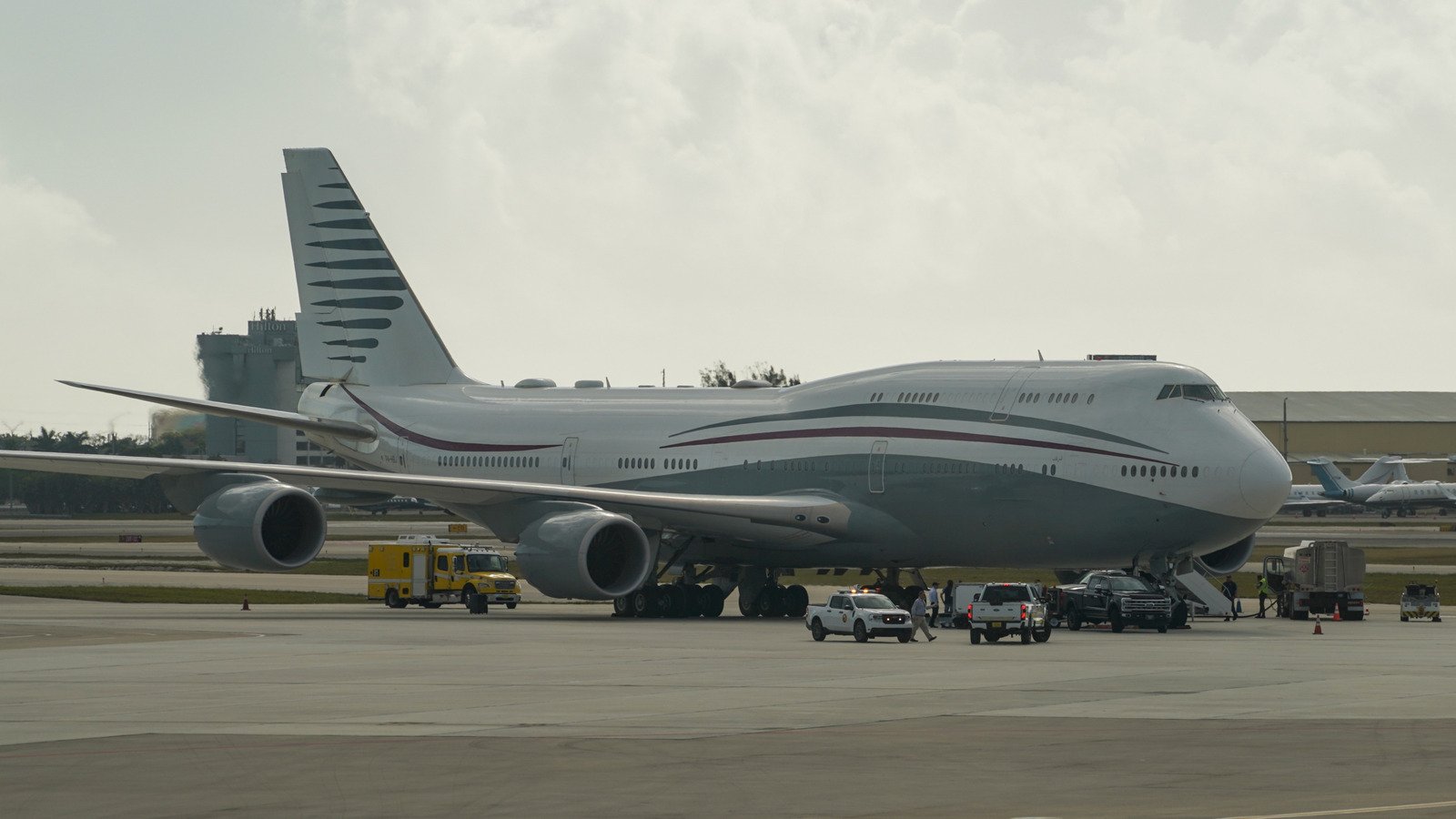
    All About The 747 AAC: Boeing’s Flying Aircraft Carrier

    TechAiVerseBy TechAiVerseAugust 24, 2025No Comments5 Mins Read4 Views
    Facebook Twitter Pinterest Telegram LinkedIn Tumblr Email Reddit
    All About The 747 AAC: Boeing’s Flying Aircraft Carrier
    Share
    Facebook Twitter LinkedIn Pinterest WhatsApp Email

    All About The 747 AAC: Boeing’s Flying Aircraft Carrier

    Leonard Zhukovsky/Shutterstock

    In the early 1970s, the U.S. Air Force, one of the largest air forces in the world, tasked Boeing with exploring an idea that sounded like pure science fiction: turning its brand-new 747 jumbo jet into a flying aircraft carrier. Officially known as the 747 Airborne Aircraft Carrier (AAC), this mobile airbase would carry, launch, refuel, and rearm a fleet of up to ten specially designed “microfighters” while in flight. This wasn’t the first time the military had pursued such a vision. Decades earlier, airborne carrier experiments had been attempted with massive rigid airships like the USS Akron and Macon, which deployed biplane scouts using a trapeze mechanism. Later, in the 1950s, the B-36 “FICON” program tested the idea of launching and recovering a jet fighter from a strategic bomber’s bomb bay.

    The U.S. saw this as a way to get combat aircraft deep into hostile territory far faster than traditional naval carriers or overseas airbases could manage. Once in position, the 747 AAC could release its fighters in around 15 minutes, provide them with multiple in-flight refuels, and retrieve them after their missions. This flying fortress would not just project power quickly but sustain it, thanks to the 747’s massive payload capacity and long endurance.

    The U.S Air Force looked at two possible mothership candidates for the AAC experiment: Lockheed’s C-5A Galaxy heavy transport and the passenger plane we know as the Queen of the Skies — the Boeing 747. While Lockheed’s transport offered easier structural modifications, Boeing’s jet promised better speed, altitude performance, and range, all crucial for surviving in hostile skies. On paper, the AAC was technically feasible, but as history would prove, even the most futuristic designs face hard limits.

    How Boeing planned to launch and recover microfighters mid-flight

    Boeing’s 747 AAC design was both an engineering puzzle and a military dream. Inside its huge interior, the ten microfighters would be stored in a stacked formation, each small enough to fit within the jet’s width restrictions yet powerful enough to perform interception and strike missions. To manage them, the AAC would use two pressurized launch and recovery bays, one at the front and one at the back, that worked as airlocks between the fighter hangar and the frigid air at high altitude.

    Deployment would rely on a conveyor system feeding fighters into position, releasing two every 80 seconds. Recovery was even more complex: a fighter would first connect with a refueling boom extended from the carrier, which then guided it into a special docking system that locked it into place. Once secured, the fighter’s engine would shut down, and the system would pull it back inside for refueling, rearming, or maintenance. Boeing estimated each turnaround would take about ten minutes per aircraft.

    Supporting these operations required a 44-person crew: 12 to operate the carrier itself, 14 pilots for the microfighters, and 18 specialists for logistics, refueling, and weapons handling. The fighters themselves, designed under the Boeing Model 985 program, had to meet demanding criteria: compact 17.5-foot wingspans, single afterburning turbofan engines, basic cannon and missile armament, and enough performance to challenge Soviet interceptors. After testing small-scale models in wind tunnels, two designs were picked as the best candidates: a simple delta-wing fighter for easier construction, and a variable-sweep wing fighter that could adjust its wing position for better performance at different speeds.

    Why the 747 AAC never took off, and how its legacy shapes today’s airborne carrier concepts

    Boeing’s flying carrier faced too many obstacles to ever leave the drawing board. The biggest challenge was the fighters themselves, making them small enough to fit inside the 747 without compromising speed, weapons, or range proved nearly impossible. A microfighter that was too light risked being destabilized by turbulence during docking. Even if perfected, these aircraft would still be at a disadvantage against full-size fighters like the Soviet MiG-25, one of the most advanced Russian fighter jets of all time.

    There were also risks in the carrier concept itself. A single accident could destroy the mothership and all fighters inside, along with their crews. The conveyor, docking, and refueling systems, all untested at this stage, added layers of complexity. Meanwhile, changes in warfare were making the idea less relevant. By the late 1970s, long-range surface-to-air missiles had become a bigger threat to bombers than enemy fighters, and the U.S was secretly developing stealth technology that would allow aircraft to bypass defenses altogether.

    The 747 AAC was quietly shelved, but the idea never completely disappeared. In recent years, the U.S military has revived the airborne carrier concept in a new form, unmanned drones. DARPA’s “Gremlins” program aims to launch and recover swarms of reusable drones from transport aircraft like the C-130, giving commanders flexible strike and surveillance capabilities without risking pilots. It’s a far cry from Boeing’s vision of a skyborne battle group, but the core ambition remains intact. The 747 AAC never flew, yet its blueprint continues to influence how the military imagines projecting air power in the future.

    Share. Facebook Twitter Pinterest LinkedIn Reddit WhatsApp Telegram Email
    Previous Article5 Hidden Waze Features You’re Probably Not Using
    Next Article Why Piston-Engine Aircraft Use 2 Spark Plugs Per Cylinder
    TechAiVerse
    • Website

    Jonathan is a tech enthusiast and the mind behind Tech AI Verse. With a passion for artificial intelligence, consumer tech, and emerging innovations, he deliver clear, insightful content to keep readers informed. From cutting-edge gadgets to AI advancements and cryptocurrency trends, Jonathan breaks down complex topics to make technology accessible to all.

    Related Posts

    OpenAI fires employee for using confidential info on prediction markets

    February 28, 2026

    Pentagon moves to designate Anthropic as a supply-chain risk

    February 28, 2026

    This Ryobi Carpet Cleaner Uses Modern Tech To Help You Wash & Dry With Ease

    February 28, 2026
    Leave A Reply Cancel Reply

    Top Posts

    Ping, You’ve Got Whale: AI detection system alerts ships of whales in their path

    April 22, 2025697 Views

    Lumo vs. Duck AI: Which AI is Better for Your Privacy?

    July 31, 2025280 Views

    6.7 Cummins Lifter Failure: What Years Are Affected (And Possible Fixes)

    April 14, 2025162 Views

    6 Best MagSafe Phone Grips (2025), Tested and Reviewed

    April 6, 2025122 Views
    Don't Miss
    Technology February 28, 2026

    OpenAI fires employee for using confidential info on prediction markets

    OpenAI fires employee for using confidential info on prediction markets In Brief Posted: 3:00 PM…

    Pentagon moves to designate Anthropic as a supply-chain risk

    Palladium Price Approaches a Critical Turning Point

    Trump to Takeover Cuba, Iran War Tensions Rise, Bitcoin Crashes Again

    Stay In Touch
    • Facebook
    • Twitter
    • Pinterest
    • Instagram
    • YouTube
    • Vimeo

    Subscribe to Updates

    Get the latest creative news from SmartMag about art & design.

    About Us
    About Us

    Welcome to Tech AI Verse, your go-to destination for everything technology! We bring you the latest news, trends, and insights from the ever-evolving world of tech. Our coverage spans across global technology industry updates, artificial intelligence advancements, machine learning ethics, and automation innovations. Stay connected with us as we explore the limitless possibilities of technology!

    Facebook X (Twitter) Pinterest YouTube WhatsApp
    Our Picks

    OpenAI fires employee for using confidential info on prediction markets

    February 28, 20262 Views

    Pentagon moves to designate Anthropic as a supply-chain risk

    February 28, 20262 Views

    Palladium Price Approaches a Critical Turning Point

    February 28, 20262 Views
    Most Popular

    7 Best Kids Bikes (2025): Mountain, Balance, Pedal, Coaster

    March 13, 20250 Views

    VTOMAN FlashSpeed 1500: Plenty Of Power For All Your Gear

    March 13, 20250 Views

    Best TV Antenna of 2025

    March 13, 20250 Views
    © 2026 TechAiVerse. Designed by Divya Tech.
    • Home
    • About Us
    • Contact Us
    • Privacy Policy
    • Terms & Conditions

    Type above and press Enter to search. Press Esc to cancel.