

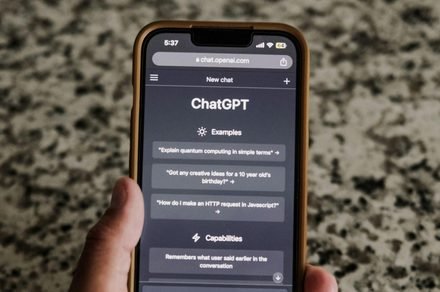
ChatGPT Go is now available in the U.S., but be prepared to see ads
A new low-cost ChatGPT subscription that delivers GPT-5.2 access, significantly higher usage limits, and enhanced memory, without the price of premium tiers.
Airam Dato-on / Pexels
OpenAI has announced ChatGPT Go, the cheaper subscription tier of the popular AI chatbot, which offers a handful of benefits over the free tier. However, along with that, the Sam Altman-led company will begin testing ads in ChatGPT (in the coming weeks), for both mobile and web users.
Initially, OpenAI launched its cheaper ChatGPT Go subscription in India (last year). But starting January 16, 2026, it is available worldwide, including the U.S., where it costs $8 a month. For the price, the subscription offers 10x more messages, file uploads, and image creation than the free version.
ChatGPT Go is rolling out globally in every country where ChatGPT is available.
ChatGPT Go is our low-cost subscription tier that gives you 10x more messages, file uploads and image creation vs free tier, more memory, longer context window, and unlimited use of GPT 5.2 instant…
— OpenAI (@OpenAI) January 16, 2026
Higher conversation and image-generation limits for $8 per month
More importantly, it offers access to the latest GPT-5.2 model, which offers improved reasoning, stronger adherence to facts, quicker responses, and safer responses. Last but not least, ChatGPT’s latest version also features a larger memory for more context.
ChatGPT Go ($8 per month) sits below the Plus ($20 per month) and Pro ($200 per month) subscription tiers, which are primarily targeted toward data analysts, researchers, scientists, or other professionals. Basically, ChatGPT Go is a low-cost upgrade with higher usage limits and more creative control.
Interestingly, OpenAI has offered ChatGPT Go free for 12 months for eligible Indian users as part of a limited-time promotional offer. Even otherwise, the subscription tier costs a little less than $5 when converted from the Indian currency.
Elsewhere, OpenAI will soon begin “testing ads in the free tier and ChatGPT Go” for users in the United States. The more expensive tiers will remain ad-free, at least for the foreseeable future. Honestly, this had to happen sooner or later; ads could open up a hefty income stream for the company.
In the coming weeks, we plan to start testing ads in ChatGPT free and Go tiers.
We’re sharing our principles early on how we’ll approach ads–guided by putting user trust and transparency first as we work to make AI accessible to everyone.
What matters most:
– Responses in… pic.twitter.com/3UQJsdriYR— OpenAI (@OpenAI) January 16, 2026
In the beginning, the platform will “test ads at the bottom of answers in ChatGPT,” primarily when there’s a relevant sponsored product or service based on the user’s current conversation. OpenAI clarifies that the ads will be labeled and separated from the organic answers.
Most importantly, we’ve been promised that our conversations with ChatGPT aren’t shared with advertisers and that ads don’t influence the chatbot’s responses. Consider this a soft launch of advertisements in one of the most popular chatbots in the world.
It seems a bit counterintuitive at first because the entire point of such chatbots was to have a focused conversation without distractions in the form of advertisements. Anyway, users over 18 should start seeing advertisements in the U.S. soon.
For more than five years, Shikhar has consistently simplified developments in the field of consumer tech and presented them…
I tried these shoes that can only exist thanks to 3D printing
Shoe maker Syntilay has unveiled its new PulsePodz shoes, which it claims couldn’t have been made without 3D printing and AI.
These recovery slides feature nine individual pods on the base, designed with a lattice structure and different densities that create a cushion to target support where the foot needs it most.
This chip can make future phones thinner and faster through tiny ‘earthquakes’
The design uses surface acoustic waves to replace bulky wireless components
Researchers from the University of Colorado Boulder, University of Arizona, and Sandia National Laboratories have developed a new device that generates controlled vibrations on the surface of a microchip. These waves could help future smartphones become thinner, faster, and more efficient at handling wireless signals.
According to the research paper, they have developed a surface acoustic wave (SAW) phonon laser that can create “the tiniest earthquakes imaginable”. Instead of light, this laser sends mechanical waves that skim along the surface of a material.
Scientists are teaching OLED screens how to shine smarter
Brighter displays might not drain your battery faster
You know that annoying moment when you step outside on a sunny day, pull out your phone, and suddenly can’t see a single thing on the screen? You’re squinting, cranking the brightness slider all the way to the max, and watching your battery percentage nosedive in real-time. It’s a struggle we all deal with. Well, a team of researchers over in South Korea might have just fixed that for good, and they managed to do it without turning our sleek phones into bulky bricks.
A group from KAIST, led by Professor Seunghyup Yoo, just published some pretty massive findings in Nature Communications. Basically, they have figured out a way to make OLED screens—the kind found in most high-end phones and TVs these days—significantly brighter. And the best part? They didn’t have to sacrifice that ultra-thin, flat look that we all love.
