

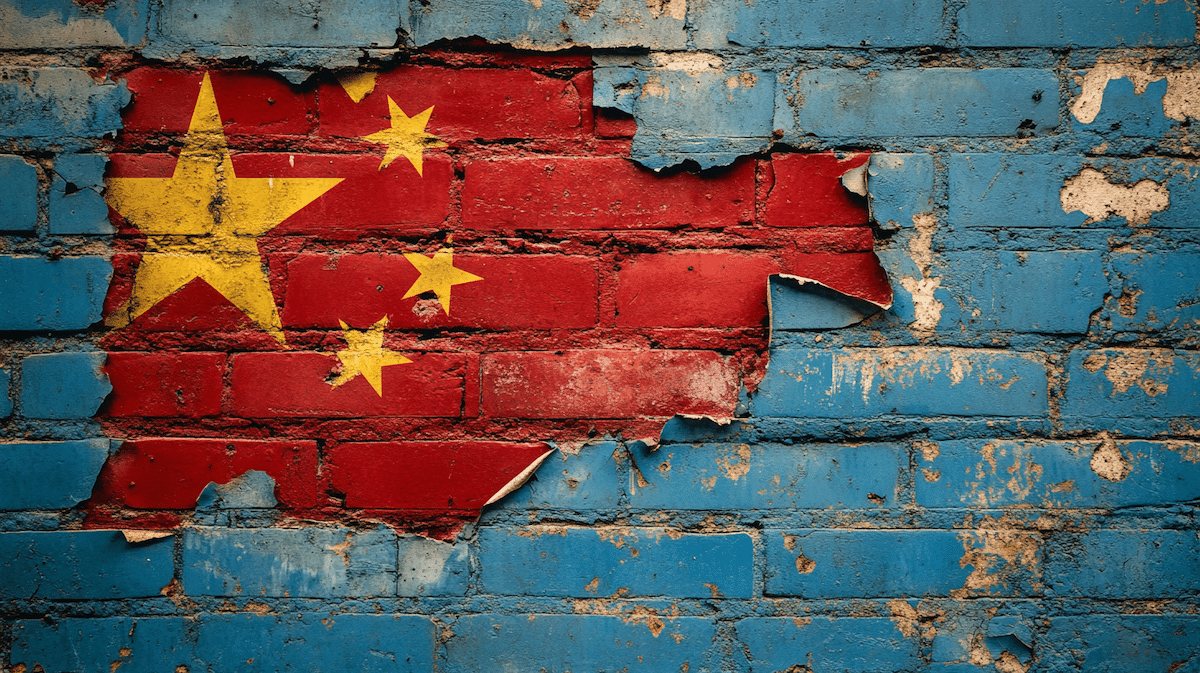
China’s Great Firewall Upgrade Backfires – And That’s a Bigger Story Than You Think
Key Takeaways
- China’s censorship system just got more complex and more fragile: A major upgrade to the Great Firewall added deep packet inspection for QUIC traffic, but new research shows this makes the system slower, easier to bypass, and vulnerable to abuse.
- Spoofing the firewall is now possible: Researchers found a way to trick the GFW into blocking any UDP traffic, even if it’s legitimate. This availability attack impacts cloud providers and reveals new risks beyond censorship.
- Circumvention tools adapt fast: Open-source projects like Firefox, quic-go, and VPNs have already rolled out updates that slip past China’s filters, using fragmentation, fake packets, and other clever tricks.
- Design shortcuts reveal deeper flaws: From skipping fragmented packets to relying on port-based heuristics, the firewall’s rules hint at a rushed system struggling to scale, and possibly breaking under its own complexity.
For years, the Great Firewall of China (GFW) has been the most powerful censorship machine on the planet.
It’s a digital barrier that controls what information flows into and out of the country.
Now, the very upgrade designed to make it stronger has introduced a weakness the designers likely didn’t anticipate.
A new research paper presented at the USENIX Security Symposium 2025 shows just how messy things have gotten under the hood, and how that mess might turn into an opportunity for those trying to get around censorship.
QUIC – The Protocol Beijing Didn’t See Coming
Let’s rewind a bit. In 2021, a new internet protocol called QUIC was standardized.
Built by Google and later adopted widely, QUIC underpins HTTP/3. It’s designed to be fast, secure, and hard to mess with.
Naturally, this gave censorship systems like the GFW a headache.
QUIC encrypts the first ‘hello’ packet between your browser and a website. That makes it harder for censors to see what site you’re visiting.
With older protocols like TLS, the Server Name Indication (SNI) was visible. QUIC changes that.
China had two options: block QUIC entirely, or learn how to peer inside it. They picked the second one.
The Upgrade That Backfired
According to the researchers from Stanford, UMass Amherst, Colorado Boulder, and the activist group Great Firewall Report, China began rolling out QUIC-specific censorship around April 2024.
This wasn’t just a crude ‘block everything’ tactic. The GFW started decrypting QUIC handshake packets to scan for forbidden domains in the SNI field.
If a match was found, the firewall quietly blocked all traffic for a few minutes.
This happened across the country, in real time. It was ambitious, and it sort of worked.
But trying to decrypt every QUIC connection creates serious strain. The GFW has limits, and this upgrade pushed them.
The firewall must now handle cryptographic operations on millions of connections, using a key derived from each packet’s connection ID and version-specific salt. And it has to do this fast – before the rest of the connection takes off.
To handle the load, the GFW cuts corners.
It only checks packets where the source port is higher than the destination, skips fragmented ones (which Chrome now sends by default), and ignores connections if a random packet comes first.
These tricks save resources but leave gaps. When traffic gets heavy, the firewall starts to fall behind. During peak hours, it misses more connections simply because it can’t keep up. Blocking can be delayed by seconds.
The upgrade may look smarter on paper, but when pushed, it turns out to be easier to break through.
A Tool That Can Be Turned Around
The most surprising part of the study is that this censorship system can be hijacked.
Researchers found a way to spoof a few specific QUIC packets and make the firewall block any UDP traffic between two machines – even if neither of them was doing anything wrong.
It’s like tricking airport security into thinking your friend is carrying a banned item. Suddenly, they get pulled aside, even though they never had it.
We found that over half (17) of the 32 EC2 instances were heavily impacted by our attack,
– the researchers wrote.
While some packets still get through for heavily impacted hosts, we find this is largely due to the timing of when the 3-minute residual censorship expires.
What started as a method to control information flow now doubles as a potential attack surface.
The implications go well beyond censorship. For example, attackers could block access to public DNS servers or disrupt financial systems that rely on UDP connections.
It opens the door to cutting off parts of China’s internet from the rest of the world. Not through hacking, but by abusing the firewall’s own rules.
Who Could Use This – and Why It Matters
So far, most news coverage talks about censorship and circumvention.
But there’s another side worth digging into. If someone wants to quietly disrupt Chinese internet traffic, this vulnerability gives them a starting point.
The attacker wouldn’t need access to systems in China – just the ability to spoof UDP traffic in the right way.
That shifts the focus from surveillance to network stability. It’s not about speech anymore. It’s about how fragile these controls are when pushed from the outside.
Design Shortcuts Are Showing
If you’ve ever managed a messy IT system filled with outdated rules and unexplained behaviors, you’ll recognize the pattern here.
The GFW only looks at packets where the source port is higher than the destination port.
That’s because most clients use high-numbered ephemeral ports, and servers usually sit on low-numbered ones like 443.
So the system throws out traffic that doesn’t match this pattern.
Another shortcut: the GFW doesn’t reassemble fragmented QUIC packets. Chrome browsers started fragmenting them by default in late 2024.
That means many users in China can now connect without hitting GFW filters, simply because their packets don’t arrive in a shape the firewall understands.
These quirks give away a lot about how rushed or resource-constrained this censorship layer may be.
Circumvention Tools Are Already One Step Ahead
One of the most encouraging parts of this story is how fast the open-source world adapted.
Projects like Mozilla Firefox, quic-go, and VPN tools, including Hysteria, Sing-box, and Xray, added workarounds almost immediately.
Firefox added a new feature in April 2025 that splits the SNI field in ways the firewall can’t parse. It was originally added for other reasons, but turns out, it slips past China’s filter just fine.
Other tools have added tricks like sending fake packets before the handshake or hopping between IP addresses mid-connection.
Each tweak makes life harder for the GFW.
It’s a moving target, and right now, the target seems to be one step behind.
The Ethics of Helping – or Not Helping – the Firewall
There’s a quiet ethical dilemma here. The researchers contacted Chinese authorities and disclosed the most dangerous part of their findings – the availability attack.
They avoided tipping off the firewall operators about less damaging flaws, especially ones that only affect the censorship tools themselves.
They did this because helping fix the GFW might also help it become better at blocking free communication. The team made a choice: protect users, not the system that censors them.
A few weeks after their report, the GFW stopped responding to external spoofing packets.
Maybe someone read the disclosure. Maybe it was a coincidence. Either way, the issue remains open inside China.
Where Things Go From Here
The research paints a picture of censorship that’s more brittle than it looks.
The GFW is still a powerful tool. But its complexity is starting to work against it. The same features that make QUIC powerful – encryption, flexibility, speed – also make it harder to police.
China tried to keep up by breaking open encrypted packets at a massive scale. That worked to a degree, but it came at a cost.
Now, security researchers can use those costs to their advantage. They can overwhelm, confuse, or bypass the system using tricks already built into modern browsers and open-source tools.
Firewalls built to last are now being tested by clever engineers armed with nothing more than a few lines of code and cloud servers.
If nothing else, this research proves that even the most locked-down networks have a way of opening up, especially when they overreach.
Anya Zhukova is an in-house tech and crypto writer at Techreport with 10 years of hands-on experience covering cybersecurity, consumer tech, digital privacy, and blockchain. She’s known for turning complex topics into clear, useful advice that regular people can actually understand and use. Her work has been featured in top-tier digital publications including MakeUseOf, Online Tech Tips, Help Desk Geek, Switching to Mac, and Make Tech Easier. Read more
Whether she’s writing about the latest privacy tools or reviewing a new laptop, her goal is always the same: help readers feel confident and in control of the tech they use every day. Anya holds a BA in English Philology and Translation from Tula State Pedagogical University and also studied Mass Media and Journalism at Minnesota State University, Mankato. That mix of language, media, and tech has given her a unique lens to look at how technology shapes our daily lives. Over the years, she’s also taken courses and done research in data privacy, digital security, and ethical writing – skills she uses when tackling sensitive topics like PC hardware, system vulnerabilities, and crypto security. Anya worked directly with brands like Framework, Insta360, Redmagic, Inmotion, Secretlab, Kodak, and Anker, reviewing their products in real-life scenarios.
Her testing process involves real-world use cases – whether it’s stress-testing laptops for creative workloads, reviewing the battery performance of mobile gaming phones, or evaluating the long-term ergonomics of furniture designed for hybrid workspaces. In the world of crypto, Anya covers everything from beginner guides to deep dives into hardware wallets, DeFi protocols, and Web3 tools. She helps readers understand how to use multisig wallets, keep their assets safe, and choose the right platforms for their needs. Her writing often touches on financial freedom and privacy – two things she strongly believes should be in everyone’s hands.
Outside of writing, Anya contributes to editorial style guides focused on privacy and inclusivity, and she mentors newer tech writers on how to build subject matter expertise and write responsibly.
She sticks to high editorial standards, only recommends products she’s personally tested, and always aims to give readers the full picture. You can find her on LinkedIn, where she shares more about her work and projects.
Key Areas of Expertise: Consumer Tech (laptops, phones, wearables, etc.) Cybersecurity and Digital Privacy PC/PC Hardware Blockchain, Crypto Wallets, and DeFi In-Depth Product Reviews and Buying Guides Whether she’s reviewing a new wallet or benchmarking a PC build, Anya brings curiosity, care, and a strong sense of responsibility to everything she writes. Her mission? To make the digital world a little easier – and safer – for everyone. Read less
The Tech Report editorial policy is centered on providing helpful, accurate content that offers real value to our readers. We only work with experienced writers who have specific knowledge in the topics they cover, including latest developments in technology, online privacy, cryptocurrencies, software, and more. Our editorial policy ensures that each topic is researched and curated by our in-house editors. We maintain rigorous journalistic standards, and every article is 100% written by real authors.
