

Court: “Because Trump said to” may not be a legally valid defense
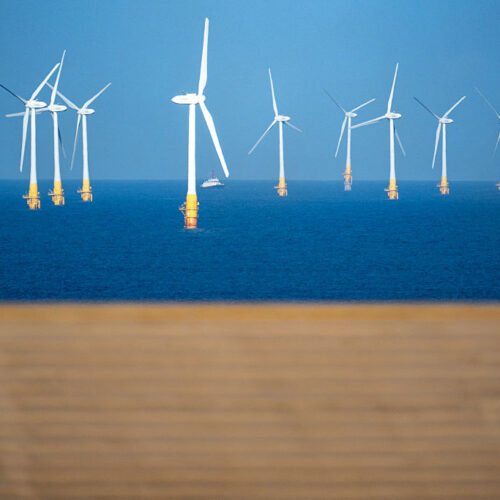
On Monday, US District Court Judge Patti Saris vacated a Trump executive order that brought a halt to all offshore wind power development, as well as some projects on land. That order had called for the suspension of all permitting for wind power on federal land and waters pending a review of current practices. This led states and an organization representing wind power companies to sue, claiming among other things that the suspension was arbitrary and capricious.
Over 10 months since the relevant government agencies were ordered to start a re-evaluation of the permitting process, testimony revealed that they had barely begun to develop the concept of a review. As such, the only reason they could offer in defense of the suspension consisted of Trump’s executive order and a Department of the Interior memo implementing it. “Whatever level of explanation is required when deviating from longstanding agency practice,” Judge Saris wrote, “this is not it.”
Lifting Trump’s suspension does not require the immediate approval of any wind projects. Instead, the relevant agencies are likely to continue following Trump’s wishes and slow-walking any leasing and licensing processes, which may force states and project owners to sue individually. But it does provide a legal backdrop for any suits that ultimately occur, one in which the government’s actions have little justification beyond Trump’s personal animosity toward wind power.
Can you stop the wind?
The previous administration had made developing offshore wind a major priority, and it plays a significant role in the climate plans for many northeast states, which often lack good onshore sites for wind or solar power. But the Trump administration issued its block on wind power development on land or water it controls on its very first day in office, pending a “comprehensive assessment” of the permitting process. Since then, all projects that hadn’t made it through the permitting process have been paused, and the administration has even attempted to stop two projects that were already under construction.
In one of those cases, a judge lifted the hold on construction, ruling that a lack of a sound justification for the hold made it “the height of arbitrary and capricious,” a legal standard that determines whether federal decision-making is acceptable under the Administrative Procedures Act. If this were a fictional story, that would be considered foreshadowing.
With no indication of how long the comprehensive assessment would take, 17 states sued to lift the hold on permitting. They were joined by the Alliance for Clean Energy New York, which represents companies that build wind projects or feed their supply chain. Both the plaintiffs and the agencies that were sued asked for summary judgment in the case.
The first issue Judge Saris addressed is standing: Are the states suffering appreciable harm from the suspension of wind projects? She noted that they would receive tax revenue from the projects, that their citizens should see reduced energy costs following their completion, and that the projects were intended to contribute to their climate goals, thus limiting harm to their citizens. At one point, Saris even referred to the government’s attempts to claim the parties lacked standing as “tilting at windmills.”
The government also argued that the suspension wasn’t a final decision—that would come after the review—and thus didn’t fall under the Administrative Procedures Act. But Saris ruled that the decision to suspend all activity pending the rule was the end of a decision-making process and was not being reconsidered by the government, so it qualified.
Because Trump told us to
With those basics out of the way, Saris turned to the meat of the case, which included a consideration of whether the agencies had been involved with any decision-making at all. “The Agency Defendants contend that because they ‘merely followed’ the Wind Memo ‘as the [Wind Memo] itself commands,’ the Wind Order did not constitute a ‘decision’ and therefore no reasoned explanation was required,” her ruling says. She concludes that precedent at the circuit court level blocks this defense, as it would mean that agencies would be exempt from the Administrative Procedures Act whenever the president told them to do anything.
(A recent Supreme Court precedent in Orr was determined not to apply because it focuses on a statute that specifically allocates decision-making to the president.)
Things then went very badly for the government, as the Administrative Procedures Act requires agencies to provide a “reasoned explanation” for their actions. And the government can’t come up with anything beyond Trump ordering them to make the decision. “The administrative record consists of only two documents: the Wind Memo and the Interior Department’s written order suspending the issuance of renewable energy authorizations pursuant to the Wind Memo,” Saris wrote. “The Agency Defendants have certified that these two documents constitute the entirety of the ‘evidence considered, directly or indirectly, by [the Agency] Defendants for the alleged decision.”
Testimony didn’t help matters for the government. “The Agency Defendants candidly concede that the sole factor they considered in deciding to stop issuing permits was the President’s direction to do so,” the judge noted.
That makes the agency’s actions arbitrary and capricious and would be enough for summary judgment. But Saris also ruled that the very idea of an indefinite suspension runs counter to the statutes that govern the issuing of leases and licenses for wind power, which stipulate that decisions must be made in a “reasonable time.” But the agencies have not provided any indication of how long the Assessment will take. In testimony, they claimed it was “underway,” but one agency acknowledged that it had only gotten as far as identifying the staff who would take part and had only “engaged in preliminary coordination to prepare to support the assessment.”
What comes next
Given its obvious legal flaws, Saris has vacated the entire wind-focused executive order. So if any of the agencies want to block wind power development, they’ll have to come up with a reasonable justification for doing so beyond “the president told us to.” And so far, at least, all indications from this and the previous case are that nobody has even started to consider any possible justifications. Alternatively, the agencies could appeal to the Supreme Court and hope the six conservative justices decide that a presidential order is all that’s needed to overrule the Administrative Procedures Act.
That doesn’t mean that agencies will suddenly start approving projects within the “reasonable time” set out in the relevant statutes. Failure to do so will simply mean that some of the parties involved will have to start an additional lawsuit, adding months of additional delays. In the meantime, the companies backing these projects will lose money on financing, idled hardware, infrastructure, and workers; a number of companies have already abandoned potential projects.
So while the president’s personal animosity toward wind power is in no way legally compelling, the uncertainty it created may ultimately lead to the same end.
John is Ars Technica’s science editor. He has a Bachelor of Arts in Biochemistry from Columbia University, and a Ph.D. in Molecular and Cell Biology from the University of California, Berkeley. When physically separated from his keyboard, he tends to seek out a bicycle, or a scenic location for communing with his hiking boots.
