

Does the Xbox app for Arm signal a gaming renaissance? Not yet
Image: Mark Hachman / Foundry
Summary created by Smart Answers AI
In summary:
- PCWorld examines Microsoft’s rollout of the Xbox app to Windows on Arm PCs, enabling local Game Pass downloads on Qualcomm’s Snapdragon X2 chips.
- While 85% of Game Pass games are now supported and Qualcomm promises 1080p 60fps gaming, testing reveals significant crashes and glitches.
- Despite strong graphics benchmarks from Snapdragon X Elite processors, persistent compatibility issues highlight ongoing challenges for Windows on Arm gaming.
Is it finally time to game on Windows on Arm? Microsoft thinks so…and the company is right! Well, barely.
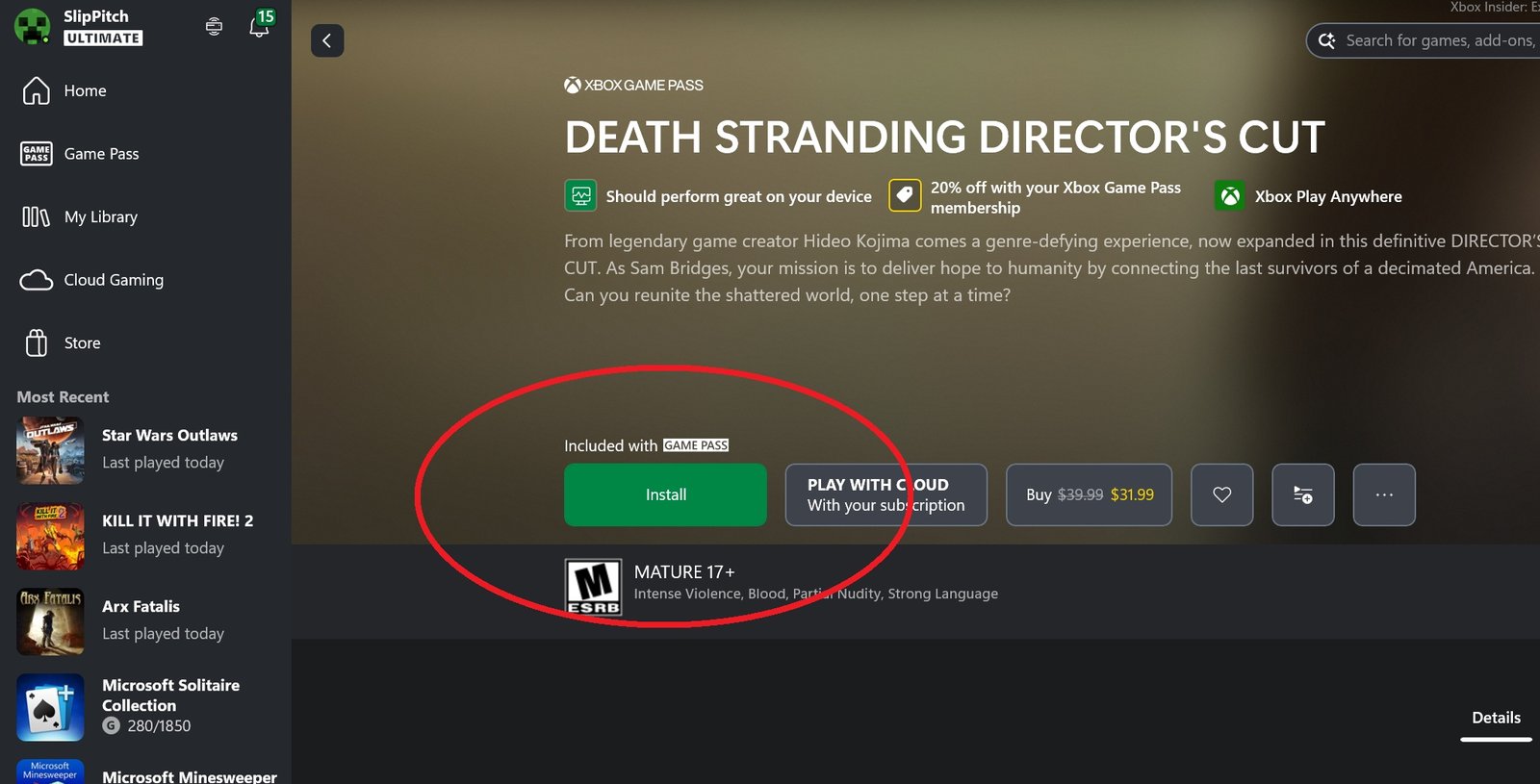
On Wednesday, Microsoft began rolling out the Xbox app to all Windows on Arm PCs. It’s a bit more significant than that; those PCs are now seeing games that are installable and playable locally, rather than just being accessible via the cloud. In fact, Microsoft says that 85 percent of all Game Pass games accessible via the Xbox app can be downloaded and played directly via the Xbox app.
It’s a milestone for Windows on Arm. When Microsoft began its Windows on Arm journey with the Qualcomm 8-series of processors, some basic applications had trouble running. Over time, both Microsoft and Qualcomm worked aggressively to solve app compatibility issues, patching everything from basic productivity applications to VPNs. A year ago, I took a Microsoft Surface Laptop with a Qualcomm Snapdragon X Elite chip inside running Windows on Arm, and had no issues at all. In my experience, the one thing the Windows on Arm ecosystem still struggles with are older printer drivers and utility apps.
However, I never used Windows on Arm for gaming — for me, it was always a productivity solution. Then Qualcomm launched the next-gen Snapdragon X2 Elite Extreme last fall, and it blew away Intel’s older chips in CPU benchmarks. The company launched a slimmed-down Snapdragon X2 Elite Plus at CES, even before X2 Elite laptops shipped. I didn’t have a chance to play any games with either chip, but the 3DMark graphics benchmark scores were impressive.
Still, the ecosystem remains separated into two camps: “real” gaming systems that use X86 chips, and then Qualcomm’s Snapdragon Arm processors. Previously, when the Xbox app was opened, the app would show a button to play these games via Microsoft’s cloud gaming feature, which used Microsoft’s own servers and processors rather than your PC.
Could gaming be the next shoe to drop for Snapdragon?
Qualcomm thinks so, reporting that games playable at lower settings at 1080p should be playable closer to 60fps on the latest X2 chips. Qualcomm now has a Snapdragon Control Panel, which works a bit like Nvidia’s GeForce Experience as a source of new drivers and some optimization technologies. The next step ahead, though, is simply providing the ability to download and run games locally, just like a “real” gaming PC.
Does it work? Well, kind of.
It’s a refreshing change to see an Xbox app where all of the games I viewed could be downloaded locally. Unfortunately, all of the three games I actually did download all had some glitches. Arx Fatalis, develoepd by Dishonored developer Arkane in 2002, opened and ran without sound, and with an ugly black square surrounding the main cursor. It also played conversational cutscenes in its own black window, which doesn’t seem right.
Mark Hachman / Foundry
A new game, Kill It With Fire 2, just barely opened before the game crashed, with a popup saying so. And while I was able to install Star Wars: Outlaws with the requisit Denuvo Anti-Tamper and Ubisoft applications, the game simply wouldn’t open, though the Xbox app promised it would. (Once clicked, the “Play” icon remained grayed out.)
It’s a disappointing start to what could be a promising addition to Windows on Arm: gaming. Qualcomm has promised to deliver the performance necessary to run these games, but rivals have consistently mocked the company for failing to deliver a platform upon which games would actually run. But the fault really lies at the feet of Microsoft, which looks like it’s simply pushed a “paper launch” of gaming on Snapdragon.
Having largely solved the productivity experience, it sounds like the next step is to nail down app compatibility. Sound familiar?
Author: Mark Hachman, Senior Editor, PCWorld
Mark has written for PCWorld for the last decade, with 30 years of experience covering technology. He has authored over 3,500 articles for PCWorld alone, covering PC microprocessors, peripherals, and Microsoft Windows, among other topics. Mark has written for publications including PC Magazine, Byte, eWEEK, Popular Science and Electronic Buyers’ News, where he shared a Jesse H. Neal Award for breaking news. He recently handed over a collection of several dozen Thunderbolt docks and USB-C hubs because his office simply has no more room.
