

DuckDuckGo’s AI lets you talk to it without giving up privacy
DuckDuckGo’s Duck.ai voice chat is now live, promising no recording, no storage, and no training.
duck.ai
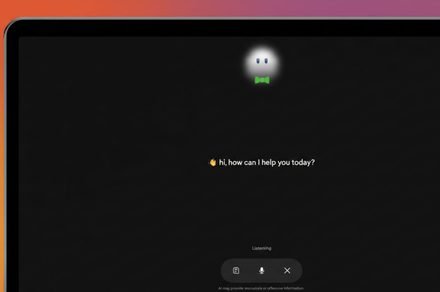
DuckDuckGo’s Duck.ai voice chat is now live, giving you a hands-free way to talk to its AI while it leans on a familiar promise, your audio won’t be recorded or stored, and it won’t be used for training.
Voice is creeping into every AI app, and it usually comes with a quiet tradeoff, more data flowing somewhere you can’t see. Duck.ai voice chat is aimed at people who want spoken answers without feeling like they’re feeding another voice dataset.
The rollout is real, but a few practical bits still take digging. DuckDuckGo says voice chat works in its own browser and most other browsers, with Firefox support listed as coming soon. It also applies daily usage limits, but doesn’t publish a number.
The promise is the product
Duck.ai voice chat runs at Duck.ai. Turn it on, grant mic permission, and you can start speaking and get spoken replies back.
DuckDuckGo is also leaning on plumbing details to back up the privacy pitch. It says your mic audio is streamed using WebRTC through an encrypted relay, then processed to generate a response. The company says it doesn’t store your voice.
Limits and tradeoffs you should know
The privacy claim is clear, but voice is still touchy. A single question can include names, places, or other personal details, and your voice itself can be identifying.
There’s also the usage cap. DuckDuckGo confirms voice chats have a daily limit, and subscribers get higher limits than free users. It says it won’t spell out the exact method to prevent abuse. It also warns that VPNs or being on a cellular network can sometimes make you hit the limit sooner.
A practical way to try it
If you test Duck.ai voice chat, treat the first run like a quick checkup. Look at the permissions it requests, how easy it is to shut off, and whether it behaves the same on your phone and your laptop.
For now, keep sensitive topics out of voice mode and use it for low-stakes tasks where convenience is the main win. If DuckDuckGo adds clearer disclosures on providers and handling, that’s the moment to reassess whether it’s ready for more personal conversations.
Paulo Vargas is an English major turned reporter turned technical writer, with a career that has always circled back to…
AI is helping call center scammers dupe more victims worldwide
AI is making scam calls harder to spot and easier to scale
Artificial intelligence is quietly reshaping the global scam economy by making it harder to spot and easier to scale. According to a new Bloomberg report, scammer call centers across Southeast Asia are increasingly using cheap, widely available AI tools to dupe more victims.
This is why scams are becoming more convincing, even as governments are tightening the screws. There have also been previous reports of AI tools being repurposed for cybercrime and exploiting chatbots like ChatGPT for malware generation.
You’ll soon make WhatsApp video calls right in your browser
The web client is getting calling controls for some beta users, with a wider rollout next.
WhatsApp web video calls are starting to roll out, so you can place voice and video calls straight from a browser tab. You won’t need the desktop app for the basics anymore, at least if the feature has reached your account.
The first wave is limited to one-to-one chats. Open a conversation, tap the call icon, and you can start a voice or video call without leaving WhatsApp Web. Group calls aren’t part of this initial release.
You can avoid ChatGPT ads, but your Free limits may change
ChatGPT ads are in testing for U.S. Free and Go users, and opting out can reduce your daily message limits.
ChatGPT ads are now in testing, and OpenAI is starting in the US with logged-in adults on the Free and Go tiers. If you fall into that group, ads can show up as sponsored placements inside the ChatGPT experience.
OpenAI is keeping paid tiers ad-free during this test. It lists Plus, Pro, Business, Enterprise, and Education as not receiving ads, while it experiments with advertising as a way to support free access without forcing everyone into a subscription.
