East German Stasi Tactics – Zersetzung (2021)
This post takes a look at the experiences of political activists in East Germany (GDR) who had to deal with Stasi informants and infiltration before the fall of the Berlin Wall in 1989.
The invasive spying and disorientation tactics used by the East German secret police (Stasi) meant there were significantly fewer possibilities for civil disobedience and direct action than political grassroots activists have today in places such as Western Europe and North America. Nevertheless political activists in East Germany managed to start a grassroots revolution in 1989.
This text is based on interviews with people who were politically active in East German times, and reflects their experiences. Those familiar with how police spies have been used, for example in Britain may recognise the tactics used by both contemporary secret police and GDR activists.
East German opposition and activism
Because non-state organisations were prohibited in the GDR, networking and co-ordination between activists was informal: independent groups and networks stayed in contact through newsletters and the exchange of campaign materials, and there was a mix of local and regionally co-ordinated covert and open actions.
Activists in the GDR also campaigned on issues that will feel familiar to many campaigners today: anti-nuclear and peace issues, challenging economic paradigms of growth and consumption at any cost; resistance to an undemocratic state and its activities; propagating and practising sustainable choices versus exploitation of environment and animals. There was a strong emphasis on DIY culture with egalitarian, equitable principles – politically most activists in the GDR in the 1980s self-defined as socialist or anarchist.
East Germany and the Stasi
CC-BY-SA David Liuzzo
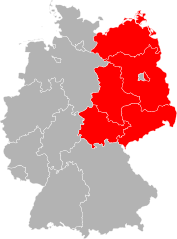
Between 1945 and 1990 Germany was (to simplify a little) divided in two – West Germany, integrated into NATO and Western markets, and East Germany (German Democratic Republic: GDR), in the Soviet dominated Eastern Bloc.
The Stasi (Ministerium für Staatssicherheit) was the East German secret police, and that country had the highest proportion of informants and secret police in history: 1 in 60 people were involved by 1989.
The Stasi and Zersetzung
After the East German popular uprising of June 1953 (suppressed by Soviet troops) the government gave the Stasi the task of systematic surveillance and prevention of unrest in the population. Initially this took the form of brutal physical repression: imprisonment and physical abuse (including torture) by police and secret police. But this changed during the 1970s when the GDR became more interested in gaining a positive international image, and the repression of activists became more subtle. The Stasi redefined the military term Zersetzung (attrition or corrosion) to name their harassment tactics: the aim was to disrupt the working of groups and the lives of individuals to such a degree that their activism became ineffective, or more preferably, ceased altogether.
The aim of the Zersetzung was to ‘switch off’ the group by rendering it ineffective, with an interim goal of hindering any positive media or public exposure. The usual ways to switch groups off were to:
- create conflict between members – particularly useful subjects for sowing discord were those of a philosophical or political nature, money and personal (sexual) relations;
- hinder and sabotage activities by the use of one or more infiltrators, who would agree to do tasks, but not get round to doing them, lose materials and equipment, repeatedly request changes and further edits of materials to slow down production, attempt to divert the group into more harmless activities etc;
- isolate the groups from other activists, eg by spreading rumours regarding unacceptable behaviour and political views etc.
The choice of tactics in any particular case was based on extensive psychological profiling and intelligence on the group members, particularly: who plays what role, who fulfills what kind of task; what are relationships within the group like, who hangs out with whom.
Informants (IM: Inoffizielle Mitarbeiter) were the usual way to gain information on a group and were also used to implement the plans to incapacitate a group and sabotage its activities. In activist circles the informants were almost never Stasi or police officers, but were usually existing members of the groups who had been pressured, persuaded or blackmailed into helping the Stasi. Alternatively,a suitable outsider would be recruited to infiltrate the group.
How did the Stasi persuade people to become informants?
- Appeals to patriotism
- Cash or material reward
- Blackmail (eg offers of immunity from threatened prosecution)
- Making the mission sound like an exciting adventure
Zersetzung of individuals
As in the case of groups, the Zersetzung of individuals had the aim of ‘switching off’ that person’s efficacy by undermining their confidence and their belief in the value of their activities. The Stasi did not usually care whether an individual was switched off through disillusionment, fear, burn-out or mental illness: all outcomes were acceptable, and people’s mental health and social standing during or after an operation were of no concern to the officers involved.
Worrying about informants
The Stasi made little secret of the fact that they used informants, and in fact deliberately helped spread rumours about informants. This was the cheapest and most efficient way to incapacitate individuals and groups.
The Zersetzung of individuals was usually carried out by systematically undermining the target’s quality of life (both socially and in the workplace) with the intention of simply destroying the target’s confidence. The tactics took various forms, such as spreading slanderous rumours, causing trouble at work etc. Rumours and information (such as about unacceptable political viewpoints, inappropriate behaviour, the possibility they may be an informant etc) that were passed on to work colleagues, bosses and social circles might be based on true facts, but were often plausible untruths that were difficult or impossible to refute.
The first stage of Zersetzung was a comprehensive evaluation of state-held data and information, eg medical records, school reports, police records, intelligence reports, searches of target’s residence. At this point they were looking for any weak points (social, emotional or physical) that could be used to put pressure on the target, eg extra-marital affairs, criminal records, alcoholism, drug use, differences between the target and their group (eg age, class, clothing styles) that could be exploited to socially isolate them.
After this a detailed Zersetzung strategy was drawn up: What was the specific aim? What tactics should be used to exploit the target’s personal situation and character traits? What was the timescale?
The next stage was often to supplement covert surveillance with overt observation in order to communicate to the target that they were of interest to the Stasi and to create a sense of insecurity and paranoia. Tactics included questioning, repeated stop and searches, strange noises on telephone lines, conspicuous visits to the workplace so that bosses and colleagues were aware of the police interest etc.
The final stages entailed psychological and physical harassment: moving things around at home (one morning the alarm clock goes off at 5am instead of 7am, and the socks are in the wrong drawer, there’s no coffee left …); damage to bikes and vehicles (eg slashing tyres); the spreading of rumours as mentioned above; ordering goods and making appointments in target’s name etc.
Families were often used as leverage against activists at this stage – either as a method of blackmail (eg family members subjected to oppression as a way of putting indirect pressure on the activist), or persuasion (“your daughter will land in deep trouble if she remains involved in that group, can’t you make her see sense? It’s her career at stake …”).
Physical harassment often included repeated arrests, physical attacks on the street (eg by plain clothes officers), or abuse and assault could be incited by the rumours that had been spread (eg bullying at work, avoidance by neighbours).
How effective was the Stasi?
1) Paralysing individuals and groups
The militarily organised Stasi simply couldn’t understand how many activist groups functioned without leaders and hierarchies. They often mistook informal hierarchies (caused for example by differences in empowerment levels or dominant behaviour patterns) for organisational structure – they would target those who talked the most, or took on the most tasks, and didn’t realise that even if these individuals were ‘switched off’, the rest of the group could continue to function and wouldn’t necessarily fall apart.
The dedication of groups was also often underestimated – even if an informant successfully sabotaged a group’s activities, the group would rarely be completely disheartened, but would try all the harder to achieve their goals.
The tactics of Zersetzung had a significant control function, if you were engaged in (or merely suspected of) activities that the Stasi didn’t like then repression was a way to punish you (not unlike the commonly used extra-judicial punishment practiced by the police in Britain today: the threat of ASBOs, severe bail conditions, the requirement to repeatedly answer bail etc).
The human cost of Zersetzung is hard to quantify – many GDR activists are still suffering from burnout, trauma and chronic mental health issues as a result of being targeted: on a personal level the Stasi was frighteningly effective.
2) Gathering and using intelligence
Informants weren’t just deployed to sabotage group activities and implement Zersetzung plans, but also to gather intelligence on individuals and groups (around 160km worth of Stasi archives survived the end of the GDR). Most intelligence was used to evaluate relationships and activities (which then led to an extension of intelligence gathering to previously untargeted individuals and groups), and as a basis for planning Zersetzung operations. Obviously plans for actions and activities were also reported, but these were acted upon only in rare and serious cases – if intelligence were used to disrupt the activities in any obvious way then suspicion could be drawn to the informant.
Intelligence from surveillance and the use of informants was rarely used to actually gain evidence for a prosecution – the Stasi desperately needed the huge amount of information it was processing in order to justify its own existence (along with the salaries and expenses of its officers and staff). If anything, this made the Stasi more dangerous to activists – the Stasi’s dependency on gathering intelligence and mounting operations made the surveillance, Zersetzung and sabotage more likely to happen, along with the associated human cost.
Informants were regularly found out – mostly because of poor preparation (at one infamous meeting, several rather conspicuous figures all introduced themselves with the same name), and chance (eg groups who came across evidence that an informant was passing information to the Stasi). But it is significant that most informants were only discovered after 1989 when the Stasi files were opened.
Dealing with Zersetzung
Many people succumbed to pressure from the Stasi and other security forces, often because of mental health difficulties (brought about by the pressure) or through a process that was commonly called ‘inner migration’: giving up political and social beliefs, following the path of least resistance and ceasing oppositional activity.
On the other hand resistance to Zersetzung was remarkably commonplace, and activists found ways to remain both healthy and active. When East German activists talk today about how they managed to continue their activism, the same points come up again and again. These are summarised below.
Support from friends and other activists was essential – a circle of close friends who shared an understanding of the political and policing situation was probably the most effective way to counter the Stasi. With such friends activists could talk openly about fears, suspicions and needs – they could work out ways to deal with the pressure. They spent time with these friends doing non-activism related activities which helped to build trust in the group. This helped them to know that if things got bad for them, they could both trust their friends, and be trusted by them; they would be there if help and support were needed. As a group they would make plans for possible situations – for example, who would take care of the children in case of arrest or even imprisonment, or who could provide a ‘safe house’ if somebody was being shadowed and needed a break.
On a wider level the solidarity between groups was an important factor in their survival and freedom to remain active: those groups that had strong relationships with others around the country were generally subject to less repression. In later years, particularly in East Berlin, even when repression happened, widespread solidarity actions and concerted efforts to gain publicity led to quick results (arrested or imprisoned individuals released, the work of the group allowed to resume etc). On the other hand, those groups that weren’t so well networked (usually those in small towns and rural areas where they might be the only activists) were easy pickings for the Stasi – at times whole regions of the country were ‘cleansed’ of grassroots activism.
Groups openly discussed the possibility of surveillance and intervention. The groups would aim to work out what oppression measures they might be subject to (currently and in future) and think of ways they could deal with them. The hard bit was not to get lost in paranoia (particularly since there was a good chance that the group already had an informant present!), nor to be naïve or ignorant about the possibilities, but to find a middle ground of sensible measures that would, if needed, help, while not bogging the group down in extensive security measures that would just hinder the work of the group.
Part of working out the level of threat from the Stasi, and how to deal with it, was to consider the way the group worked, and how open the group was to newcomers. It is tempting to think that preparing and carrying out actions in the utmost secrecy would be the best defence against an opponent like the Stasi, but of the groups we know about which worked covertly in the GDR, all were subject to brutal Zersetzung measures, while those working openly were often subject ‘only’ to surveillance and sabotage by informants, but could nevertheless carry on their activities to a greater or lesser extent. When open groups were subject to extraordinary repression levels, they were in a good position to mobilise support from other groups and interest from West German media. (It’s difficult to draw conclusions though – generally only those from open groups are willing to speak of their experiences, and any covert group that might have survived would be, by definition, hard to find out about.) Working openly also did not preclude the need to work secretly at times, particularly when planning an action or dealing with sensitive issues, and steps would often be taken to avoid surveillance.
If a group identified an individual as a possible informant they might have decided not to take any obvious initial action. An immediate reaction would be to assess whether there might be any merit in the suspicions rather than to spread rumours. The usual way of dealing with the situation would be for a few trusted individuals to discreetly research the suspect. Backgrounds would be checked (are there any family members? Do they exist? Has anyone else from the group spoken to them? What about friendships outside the group? Did the suspect actually work where they said they did? Are they familiar with the town they say they grew up in? etc) This worked well enough for informants who had been provided with a cover story and infiltrated into the group by the Stasi, but couldn’t provide clear results if the informant was a ‘real’ person who had been turned.
By making notes of behaviour patterns and movements of a suspect the group might think they were finding evidence of Stasi involvement, but equally, they might be framing an innocent individual. Discovering reports to handling officers would be a clear sign. But if an individual were guilty only of losing materials and not getting round to completing agreed tasks, it could not be simply assumed that they were an informant or saboteur – no matter how regularly it might happen! In other words, groups needed to be extremely careful when they thought they might have discovered an informant – it was all too easy to start a witch hunt against innocents, something that would easily paralyse groups and individuals and play right into the hands of the Stasi.
Conclusion
It is easy to get lost in analysing the techniques the Stasi used, and the more you look into it, the more frightening it gets. But it’s worth mentioning that, in our assessment, the grassroots opposition movements made the biggest contribution to the revolution that started in East Germany in autumn 1989 – despite the horrifying levels of repression and surveillance that they had faced for decades. Quite simply, the Stasi failed to predict the events of that year, and once things had started, their Zersetzung tactics became ineffective.
Links and Further Reading
- How realistic is Deutschland 83?
- Wikipedia has articles on Zersetzung and the Stasi, including on IM informants.
Affected by or interested in issues of surveillance and Zersetzung in the UK today?
Being on the receiving end of tactics like those described above can be extremely traumatic, and it is important to seek support from your friends and other activists.
This post is intended for a UK audience and the links below reflect that.
Activist Trauma Support – support group for those injured or suffering from mental health issues due to activism.
Campaign Opposing Police Surveillance – blog on police surveillance in the UK.
Counselling for Social Change – emotional support to people working to make a difference.
NetPol – monitor public order, protest and street policing.
Police Spies Out of Lives – Support group for women’s legal action against undercover policing.
Undercover Research Group – online resource on political policing and undercover surveillance in the UK, including the excellent booklet Was My Friend A Spycop? which gives guidance on finding out whether your group was spied upon.
You may also like:
- Top Ten GDR Museums in and around Berlin
- An East German Glossary
- Writing the Stasi – guest post by Fiona Rintoul
- How realistic is Deutschland 83?
Stay in Touch
- Sneak previews, features and news – straight to your inbox
- Plus, a free short story when you sign up