

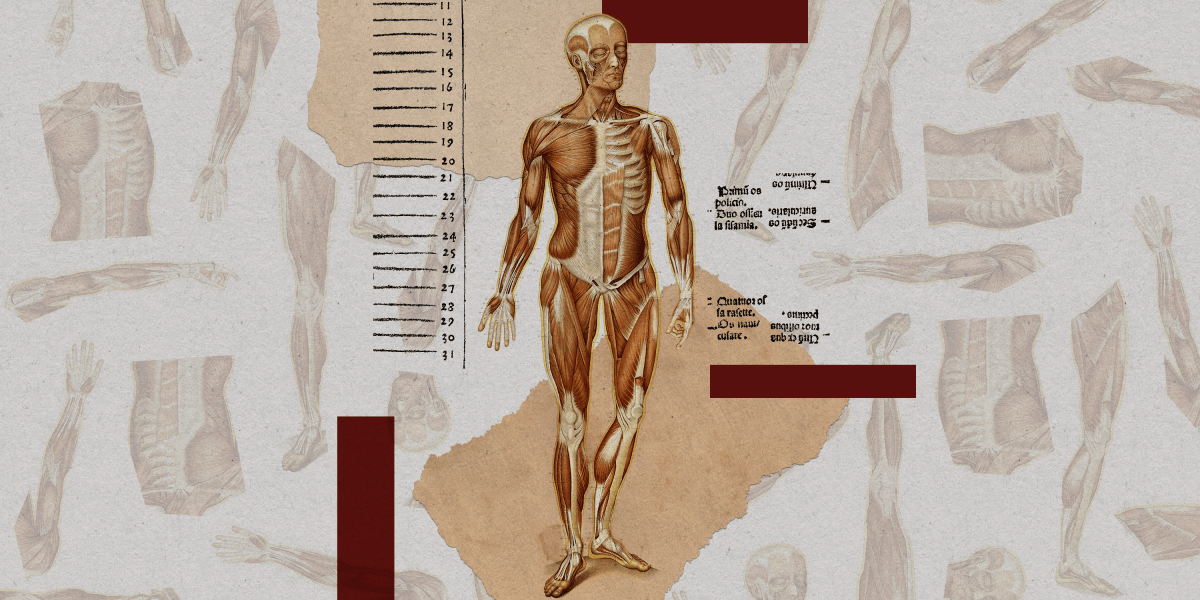
Ethically sourced “spare” human bodies could revolutionize medicine
Why do we hear about medical breakthroughs in mice, but rarely see them translate into cures for human disease? Why do so few drugs that enter clinical trials receive regulatory approval? And why is the waiting list for organ transplantation so long? These challenges stem in large part from a common root cause: a severe shortage of ethically sourced human bodies.
It may be disturbing to characterize human bodies in such commodifying terms, but the unavoidable reality is that human biological materials are an essential commodity in medicine, and persistent shortages of these materials create a major bottleneck to progress.
This imbalance between supply and demand is the underlying cause of the organ shortage crisis, with more than 100,000 patients currently waiting for a solid organ transplant in the US alone. It also forces us to rely heavily on animals in medical research, a practice that can’t replicate major aspects of human physiology and makes it necessary to inflict harm on sentient creatures. In addition, the safety and efficacy of any experimental drug must still be confirmed in clinical trials on living human bodies. These costly trials risk harm to patients, can take a decade or longer to complete, and make it through to approval less than 15% of the time.
There might be a way to get out of this moral and scientific deadlock. Recent advances in biotechnology now provide a pathway to producing living human bodies without the neural components that allow us to think, be aware, or feel pain. Many will find this possibility disturbing, but if researchers and policymakers can find a way to pull these technologies together, we may one day be able to create “spare” bodies, both human and nonhuman.
These could revolutionize medical research and drug development, greatly reducing the need for animal testing, rescuing many people from organ transplant lists, and allowing us to produce more effective drugs and treatments. All without crossing most people’s ethical lines.
Bringing technologies together
Although it may seem like science fiction, recent technological progress has pushed this concept into the realm of plausibility. Pluripotent stem cells, one of the earliest cell types to form during development, can give rise to every type of cell in the adult body. Recently, researchers have used these stem cells to create structures that seem to mimic the early development of actual human embryos. At the same time, artificial uterus technology is rapidly advancing, and other pathways may be opening to allow for the development of fetuses outside of the body.
Such technologies, together with established genetic techniques to inhibit brain development, make it possible to envision the creation of “bodyoids”—a potentially unlimited source of human bodies, developed entirely outside of a human body from stem cells, that lack sentience or the ability to feel pain.
There are still many technical roadblocks to achieving this vision, but we have reason to expect that bodyoids could radically transform biomedical research by addressing critical limitations in the current models of research, drug development, and medicine. Among many other benefits, they would offer an almost unlimited source of organs, tissues, and cells for use in transplantation.
It could even be possible to generate organs directly from a patient’s own cells, essentially cloning someone’s biological material to ensure that transplanted tissues are a perfect immunological match and thus eliminating the need for lifelong immunosuppression. Bodyoids developed from a patient’s cells could also allow for personalized screening of drugs, allowing physicians to directly assess the effect of different interventions in a biological model that accurately reflects a patient’s own personal genetics and physiology. We can even envision using animal bodyoids in agriculture, as a substitute for the use of sentient animal species.
Of course, exciting possibilities are not certainties. We do not know whether the embryo models recently created from stem cells could give rise to living people or, thus far, even to living mice. We do not know when, or whether, an effective technique will be found for successfully gestating human bodies entirely outside a person. We cannot be sure whether such bodyoids can survive without ever having developed brains or the parts of brains associated with consciousness, or whether they would still serve as accurate models for living people without those brain functions.
Even if it all works, it may not be practical or economical to “grow” bodyoids, possibly for many years, until they can be mature enough to be useful for our ends. Each of these questions will require substantial research and time. But we believe this idea is now plausible enough to justify discussing both the technical feasibility and the ethical implications.
Ethical considerations and societal implications
Bodyoids could address many ethical problems in modern medicine, offering ways to avoid unnecessary pain and suffering. For example, they could offer an ethical alternative to the way we currently use nonhuman animals for research and food, providing meat or other products with no animal suffering or awareness.
But when we come to human bodyoids, the issues become harder. Many will find the concept grotesque or appalling. And for good reason. We have an innate respect for human life in all its forms. We do not allow broad research on people who no longer have consciousness or, in some cases, never had it.
At the same time, we know much can be gained from studying the human body. We learn much from the bodies of the dead, which these days are used for teaching and research only with consent. In laboratories, we study cells and tissues that were taken, with consent, from the bodies of the dead and the living.
Recently we have even begun using for experiments the “animated cadavers” of people who have been declared legally dead, who have lost all brain function but whose other organs continue to function with mechanical assistance. Genetically modified pig kidneys have been connected to, or transplanted into, these legally dead but physiologically active cadavers to help researchers determine whether they would work in living people.
In all these cases, nothing was, legally, a living human being at the time it was used for research. Human bodyoids would also fall into that category. But there are still a number of issues worth considering. The first is consent: The cells used to make bodyoids would have to come from someone, and we’d have to make sure that this someone consented to this particular, likely controversial, use. But perhaps the deepest issue is that bodyoids might diminish the human status of real people who lack consciousness or sentience.
Thus far, we have held to a standard that requires us to treat all humans born alive as people, entitled to life and respect. Would bodyoids—created without pregnancy, parental hopes, or indeed parents—blur that line? Or would we consider a bodyoid a human being, entitled to the same respect? If so, why—just because it looks like us? A sufficiently detailed mannequin can meet that test. Because it looks like us and is alive? Because it is alive and has our DNA? These are questions that will require careful thought.
A call to action
Until recently, the idea of making something like a bodyoid would have been relegated to the realms of science fiction and philosophical speculation. But now it is at least plausible—and possibly revolutionary. It is time for it to be explored.
The potential benefits—for both human patients and sentient animal species—are great. Governments, companies, and private foundations should start thinking about bodyoids as a possible path for investment. There is no need to start with humans—we can begin exploring the feasibility of this approach with rodents or other research animals.
As we proceed, the ethical and social issues are at least as important as the scientific ones. Just because something can be done does not mean it should be done. Even if it looks possible, determining whether we should make bodyoids, nonhuman or human, will require considerable thought, discussion, and debate. Some of that will be by scientists, ethicists, and others with special interest or knowledge. But ultimately, the decisions will be made by societies and governments.
The time to start those discussions is now, when a scientific pathway seems clear enough for us to avoid pure speculation but before the world is presented with a troubling surprise. The announcement of the birth of Dolly the cloned sheep back in the 1990s launched a hysterical reaction, complete with speculation about armies of cloned warrior slaves. Good decisions require more preparation.
The path toward realizing the potential of bodyoids will not be without challenges; indeed, it may never be possible to get there, or even if it is possible, the path may never be taken. Caution is warranted, but so is bold vision; the opportunity is too important to ignore.
Carsten T. Charlesworth is a postdoctoral fellow at the Institute of Stem Cell Biology and Regenerative Medicine (ISCBRM) at Stanford University.
Henry T. Greely is the Deane F. and Kate Edelman Johnson Professor of Law and director of the Center for Law and the Biosciences at Stanford University.
Hiromitsu Nakauchi is a professor of genetics and an ISCBRM faculty member at Stanford University and a distinguished university professor at the Institute of Science Tokyo.
