

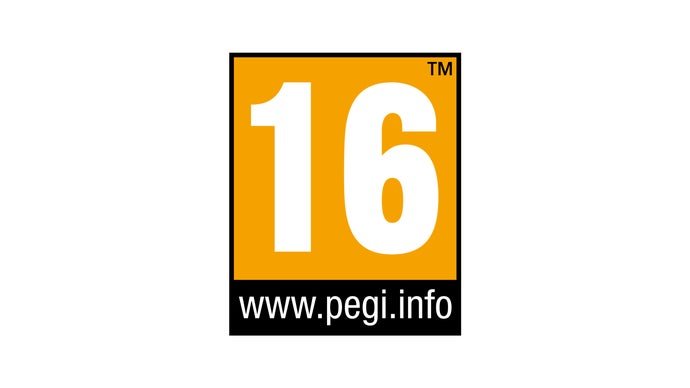
Games with loot boxes will be rated PEGI 16 from June, as part of sweeping changes to the age-rating system
PEGI director Dirk Bosmans explains why the European body is rethinking how it rates games, taking into account “online interactive risks” such as battle passes and login streaks
From the beginning of June, submitted games that contain paid random items (such as loot boxes) will be rated 16 under the Pan-European Games Information (PEGI) age-rating system. The June changes also extend to in-game purchases, online communication, and “pressure to play” through incentives to revisit a game, such as daily quests.
The full changes are as follows:
- Paid random items. Games containing paid random items, such as card packs, gacha systems, or keys to unlock random items, will be rated PEGI 16. Social casino games will be rated PEGI 18.
- In-game purchases. Games that offer time- or quantity-limited offers, such as paid battle passes or countdown timers, will be rated PEGI 12. But if in-game controls are included that turn off spending by default, this rating will be lowered to PEGI 7. Any games with purchases linked to NFTs that are required to play and that can be traded in game will be rated PEGI 18.
- Pressure to play. Any game that offers incentives to revisit or “play-by-appointment”, such as daily quests or login streaks, will be rated PEGI 7. Games that include paid battle passes with rewards that become unobtainable if certain goals are not met will be rated PEGI 12. Likewise, games in which the player’s acquired content or status can be lost if they do not return to the game will also be rated PEGI 12.
- Safe online gameplay. In rare cases in which a game offers completely unrestricted communication functionality (without any reporting systems or community standards, for example), it will be rated PEGI 18.
The new rules will only apply to games that are submitted for classification from June onwards.
For loot boxes in particular, rules have been tightening around the world for some time now, as GamesIndustry.biz has been covering in our annual Loot Box State of Play features. Belgium, for example, banned loot boxes back in 2018 (although there are some suggestions the ban hasn’t been strictly enforced), while Australia has required games containing loot boxes to be rated 15 since 2024.
The PEGI rules shakeup could mean some upcoming titles in well-known franchises will potentially have a much higher age rating than the developers perhaps anticipated.
Background
The PEGI system is used across almost the whole of Europe: in the UK, it took over legal responsibility for games ratings from the British Board of Film Classification in 2012. One of the few countries in which PEGI isn’t used is Germany, whose age-rating system, USK (Unterhaltungssoftware Selbstkontrolle), pre-dated the formation of PEGI.
In 2023, USK made some sweeping changes to comply with an update of the German Youth Protection Act, with ratings taking into account things like loot boxes and online risk. Now, PEGI is following suit.
“We’ve actually worked together with USK quite closely to make sure that we once again realign,” says Dirk Bosmans, director of PEGI, in an interview with GamesIndustry.biz. “Because over time, if you go back more than three years ago, you could see that USK rating outcomes were quite similar to PEGI.”
The last major change to PEGI’s rating system was the introduction of of an “in-game purchases” content descriptor back in 2019. But now, “online interactive risks” such as time- or quantity-limited in-game purchases will be taken into account in the age rating itself.
This could potentially affect the ratings for a large proportion of new games, judging by past experiences in Germany. Elisabeth Secker, managing director of USK, said in a press release statement that “at least one of the new USK criteria has been applied to approximately 30% of all games that were submitted since we updated our system. Around 1 in 3 of those games have been given a higher age rating as a result.”
Traditionally, PEGI focused on the content of a game – things like sex, drugs, and violence. But Bosmans explains there’s a growing need to take the context of a game into account to provide guidance for parents, in terms of who their children are playing with, how long they play for, and how they are encouraged to spend.
He explains that PEGI looked at how these changes had been introduced in Germany and then considered how they could replicate them. “What is interesting is that the USK introduced mitigating factors, mitigating elements, that were built in by video game companies to reduce the risks,” he says. “We are looking to introduce this as well. If a game has in-game controls that put spending off by default – meaning that the parent actively needs to go into the game and turn spending on, so that normally a child when they’re playing it, they cannot access any of these offers – then a game can have a PEGI 7.”
That’s the rule for in-game purchases, but would the same apply for paid random items if a game’s spending was off by default? “Not right now, but maybe in the future,” confirms Bosmans, adding that more needs to be done in terms of convincing lawmakers of the effectiveness of parental control systems for video games, even though they have already come a long way. “They started off as an obscure setting in the settings menu of a machine that parents were afraid to touch. And these days, especially platform parental controls, are very accessible mobile apps.
“With a touch of a button, I can see how long my son has been playing today, and he can just send me a text and say, ‘Dad, I’ve done my homework, I’ve played my guitar, can I get 30 more minutes?’ So if a parent takes the step to get accustomed with these tools, they can be incredibly effective, but I think we’re not there yet in terms of convincing lawmakers how effective they really are. And I think especially in the debates around age verification, this robustness is going to grow. That is my expectation, that’s my hope. And then we may be able to apply them more universally in our criteria.”
All on board
Bosmans says that PEGI has consulted with the industry before introducing the changes. “In our management board, we have some video games companies represented, as well as some national trade associations,” he says, adding that PEGI also worked with academics to gather evidence, as well as examiners from bodies like the Games Rating Authority (GRA). “We very strongly rely on their advice when it comes to the impact of these age ratings.”
There’s also the PEGI Council, which is a meeting with representatives from the various countries where PEGI is used. “So these are people from ministries of culture, media councils, ministries of family, it’s very diverse. We normally use them to keep them updated on what PEGI does and how we change the wheels and cogs behind the screens to keep the age ratings, categories, and content descriptors relevant for parents today. But it’s also interesting if something’s happening in their country that is relevant to us that we can anticipate.”
Bosmans says that six months ago, PEGI began meetings with all of the above to discuss the proposed changes. “Sometimes it was like, ‘I think this is on the low end’. Sometimes, for example with these incentives to revisit the game, they said, ‘I consider these things to be the fun parts that keep the game fun.’ But ultimately, we thrive by consensus. So it was a lot of talking, a lot of consulting.”
“We could see that our narrative, our explanation about parental control tools, it wasn’t going to be sufficient”
PEGI is also keenly aware of the way the wind is blowing in terms of legislation across Europe. “I would argue that the Digital Services Act and the Digital Fairness Act, they serve as like, ‘Hey, this is coming’,” says Bosmans. “And although these concerns have been on our radar for a while, we could see that our narrative, our explanation about parental control tools, it wasn’t going to be sufficient. So as the pressure is rising, you need to assess to what degree you need to evolve more.”
Ultimately, he says, the changes are about making sure parents are as informed as possible. “We always say, look, if we say that the video game is 16 and you let your 14-year-old play it, if you know that the game is 16 and you decide that your 14-year-old is old enough to play this game, that’s an informed decision. That’s different from, ‘I don’t know what this all is, here, play it, and I don’t need to deal with it’.”
However, he does anticipate some pushback from game companies. “It’s not unthinkable that in the next few months, some companies will go like, ‘This is outrageous.’ But I would also ask them to read the room, and see where we are these days in terms of regulatory pressure on the one hand, responsibilities [of] the industry on the other hand, and how to move forward in between those.”
