

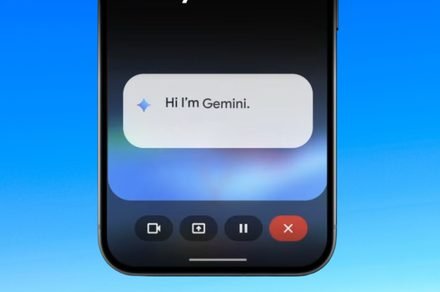
Google confirms Gemini will fully replace Assistant on phones in 2026
Google Assistant gets an extension as Gemini misses its phone deadline
Google
Google’s massive project to swap out the trusty old Google Assistant for its smarter AI successor, Gemini, is hitting a slight delay. The transition is definitely still happening, but it won’t be wrapped up this year as originally promised. Instead, the company has confirmed that the rollout will stretch into 2026, giving us all a little more time with the legacy Assistant while they iron out the kinks in the new experience.
Back in the spring, Google laid out a bold vision to completely overhaul how we use our smartphones.
The plan was to move away from a traditional voice assistant that just follows commands to an AI capable of real reasoning and deep contextual understanding. The original announcement in March suggested we would see a rapid “upgrade” to Gemini on mobile, with the old Assistant disappearing from newer Android phones and app stores over the following months.
But Gemini coming to mobile is way more than just a simple rebrand. Google views this as a fundamental shift toward personalized, AI-powered help that understands natural conversation and can actually interact with the other apps on your phone. It’s built on the latest generative AI tech, allowing for features like free-flowing chats in Gemini Live and the ability to give complex, researched answers – things the old Assistant just couldn’t handle.
Despite these big ambitions and some early launches on Wear OS watches and Android Auto, Google is tapping the brakes. They want to make sure the switch is genuinely “seamless” before they retire Assistant for good. A quiet update to their support pages clarified that moving mobile users over to Gemini is now a process that will continue through 2026, rather than finishing in 2025. The timeline for other platforms like cars is likely on a similar slow track.
For anyone with an Android phone, this means you aren’t losing the Assistant you know overnight.
You can still rely on it for the basics like setting timers, making calls, or answering quick questions. If you are eager, you can manually download the Gemini app to try out the new features now. Eventually, Gemini will take over as the default, handling those daily tasks while also pulling in data from across your apps for much smarter help.
This delay basically shows Google is playing it safe with a massive change. Replacing a system that has been the backbone of Android for nearly ten years isn’t easy. It requires rigorous testing and slow improvements to work across billions of devices without breaking anything.
Google’s end game remains the same: phase out Assistant and bake Gemini into everything – tablets, headphones, smart home gear, and cars. We will likely see this transition get a lot more aggressive in the first half of 2026 as Gemini gets smarter and integrates deeper into the Google ecosystem.
Moinak Pal is has been working in the technology sector covering both consumer centric tech and automotive technology for the…
OnePlus 15R launches with absolutely massive battery, and alongside iPad competitor
OnePlus is ending the year strong with solid smartphone and tablet offerings
OnePlus has officially launched a trio of new products after teasing all three for a couple of months now. The headliner among them is the OnePlus 15R and its ginormous battery, and it lands alongside new affordable tablet and smartwatch devices.
Kicking off with the OnePlus 15R, the star of the show with it’s 7,400mAh battery, which is 100mAh bigger than the already-huge power pack found in its flagship sibling, the OnePlus 15.
After a day with the OnePlus 15R, two of its least-flashy features have won me over
Our OnePlus 15R hands-on reveals two of its best specs
It only took me a day of testing the brand-new OnePlus 15R to find two features that I absolutely loved. And no, I’m not talking about a flashy new mode or addition – the phone nails two basics better than most rivals on the market right now.
This budget alternative to the OnePlus 15 sells for $699.99 (for 256GB storage, or $100 more for 512GB), so it undercuts its sibling by a hearty $200, but represents a $100 price hike over the OnePlus 13R (despite losing a zoom camera). It was released alongside the OnePlus Pad Go 2, an affordable Android tablet, at the tail end of 2025.
Android could soon let you lock out users from Wi-Fi networks on shared devices
Android is finally giving users the power to decide who gets automatic access to saved networks on shared phones and tablets.
Google is developing a new set of Wi-Fi controls for Android that will let users choose whether a saved Wi-Fi network is shared with other profiles on the same device (via Android Authority).
Currently, when a device connects to a Wi-Fi network, all other profiles on the device automatically gain access without any verification. However, a new “Share Network” toggle in the latest Android Canary build lets users turn it off, so only the profile that entered the credentials in the first place can connect automatically.
