

Google recovers “deleted” Nest video in high-profile abduction case
Users only get three hours of free Nest video storage, but Google can retrieve videos much later.
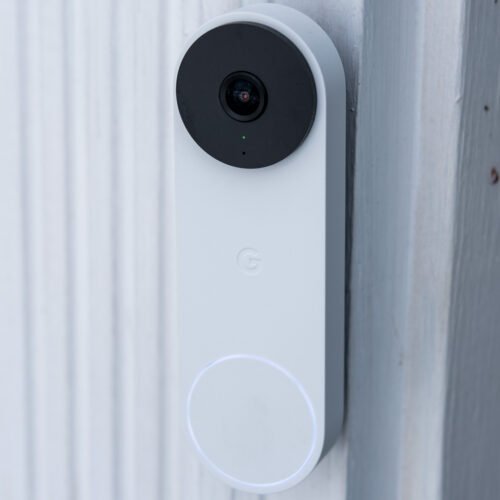
Google’s Nest doorbells only save a few hours of video without a subscription.
Credit:
Ryan Whitwam
Like most cloud-enabled home security cameras, Google’s Nest products don’t provide long-term storage unless you pay a monthly fee. That video may not vanish into the digital aether right on time, though. Investigators involved with the high-profile abduction of Nancy Guthrie have released video from Guthrie’s Nest doorbell camera—video that was believed to have been deleted because Guthrie wasn’t paying for the service.
Google’s cameras connect to the recently upgraded Home Premium subscription service. For $10 per month, you get 30 days of stored events, and $20 gets you 60 days of events with 10 days of the full video. If you don’t pay anything, Google only saves three hours of event history. After that, the videos are deleted, at least as far as the user is concerned. Newer Nest cameras have a small amount of local storage that can cache clips for a few hours in case connectivity drops out, but there is no option for true local storage. Guthrie’s camera was reportedly destroyed by the perpetrators.
Suspect in abduction approaches doorbell camera.
Expired videos are no longer available to the user, and Google won’t restore them even if you upgrade to a premium account later. However, that doesn’t mean the data is truly gone. Nancy Guthrie was abducted from her home in the early hours of February 1, and at first, investigators said there was no video of the crime because the doorbell camera was not on a paid account. Yet, video showing a masked individual fiddling with the camera was published on February 10.
The first video shows the person approaching the door and noticing the doorbell camera. They place their hand over the lens and appear to pull on the mounting bracket. Nest doorbell cameras have a small security screw that makes it difficult to remove them without causing damage. In the second video, the individual seems to try to drape a plant over the camera to block its view. Both videos are short, which is what you’d expect from an “event” as identified by the Google Home system.
Suspect attempts to cover camera with a plant.
In statements made by investigators, the video was apparently “recovered from residual data located in backend systems.” It’s unclear how long such data is retained or how easy it is for Google to access it. Some reports claim that it took several days for Google to recover the data.
In large-scale enterprise storage solutions, “deleted” for the user doesn’t always mean that the data is gone. Data that is no longer needed is often compressed and overwritten only as needed. In the meantime, it may be possible to recover the data. That’s something a company like Google could decide to do on its own, or it could be compelled to perform the recovery by a court order. In the Guthrie case, it sounds like Google was voluntarily cooperating with the investigation, which makes sense. Publishing video of the alleged perpetrator could be a major breakthrough as investigators seek help from the public.
It’s not your cloud
There is a temptation to ascribe some malicious intent to Google’s video storage setup. After all, this video expired after three hours, but here it is nine days later. That feels a bit suspicious on the surface, particularly for a company that is so focused on training AI models that feed on video.
We have previously asked Google to explain how it uses Nest to train AI models, and the company claims it does not incorporate user videos into training data, but the way you interact with the service and with your videos is fair game. “We may use your inputs, including prompts and feedback, usage, and outputs from interactions with AI features to further research, tune, and train Google’s generative models, machine learning technologies, and related products and services,” Google said.
If we take Google at its word, it has no incentive to keep “deleted” user videos around. If no one is paying for the storage, keeping it only costs the company money. Still, this is something to keep in mind if you’re using a Google camera. Even if you aren’t paying for storage, every event recorded by the camera is going to Google’s servers, and it’s probably recoverable long past the deletion timeline stipulated in the company’s policy.
If this concerns you, there are still more traditional “DVR” security cameras, which record footage to dedicated local storage. Many NAS boxes also have support for storing and managing video from select security cameras. If you’re sending video to the cloud, you can’t expect it will be totally gone even if you no longer have access to it.
When Google announced its big Gemini-powered Home revamp late last year, we asked if it retained any user video beyond the limits specified in its plans. Representatives did not address the substance of the question at the time. We’ve again asked Google to clarify its storage policy for user videos, as well as the circumstances in which it might recover “deleted” videos. The company has not responded as of this posting.
Ryan Whitwam is a senior technology reporter at Ars Technica, covering the ways Google, AI, and mobile technology continue to change the world. Over his 20-year career, he’s written for Android Police, ExtremeTech, Wirecutter, NY Times, and more. He has reviewed more phones than most people will ever own. You can follow him on Bluesky, where you will see photos of his dozens of mechanical keyboards.
