

How Each Gulf Country Is Intercepting Iranian Missiles and Drones
Over the past week, residents across the Gulf have watched missiles and drones cross the night sky—sometimes followed seconds later by bright flashes as air-defense systems intercept them. In cities like Dubai and Abu Dhabi, videos of interceptions have spread quickly across social media, turning what is normally a largely unseen security architecture into something suddenly visible.
Authorities have urged people not to film or share footage online of interceptions or military activity, warning that such videos could reveal sensitive information about defense operations.
Iran has launched waves of missile and drones toward several Gulf countries in retaliation for US-Israeli strikes which killed Iranian supreme leader Ali Khamenei. These attacks have triggered air-defense responses across the region.
Governments from the United Arab Emirates to Kuwait and Bahrain have reported detecting or intercepting hundreds of missiles and drones in recent days targeting airspace, military facilities, and infrastructure.
Here is how each country has responded.
United Arab Emirates
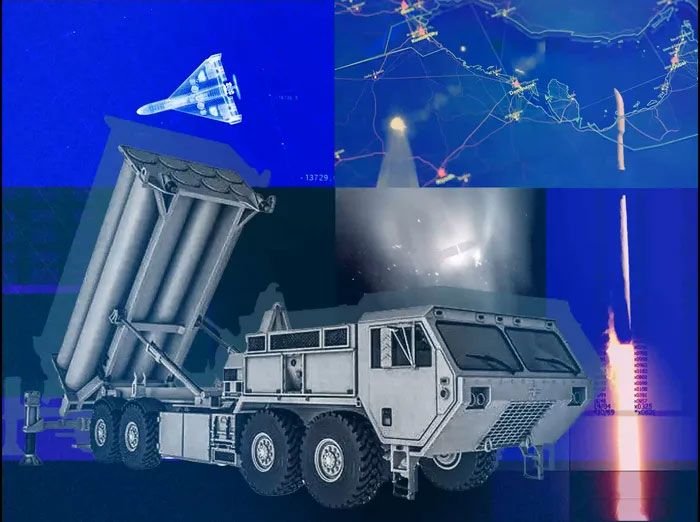
The UAE operates a layered air-defense network designed to intercept threats at different stages of flight. At the highest altitude sits the Terminal High Altitude Area Defense (THAAD) system, developed by Lockheed Martin, designed to intercept ballistic missiles during the final phase of their descent using a “hit-to-kill” method—destroying the target through direct impact rather than an explosive warhead.
Closer to the ground, Patriot missile-defense batteries developed by Raytheon provide another layer capable of intercepting missiles and other aerial threats at lower altitudes. Radar networks detect launches hundreds of kilometers away, allowing operators to calculate trajectories and launch interceptors within minutes.
As of writing, the UAE Ministry of Defense said that 196 ballistic missiles have been detected heading toward the country since the escalation began on February 28. Of those, 181 were destroyed by air-defense systems, 13 fell into the sea, and two missiles landed inside UAE territory. The attacks resulted in three fatalities and 78 injuries, most caused by falling debris rather than direct missile impacts.
Attacks have also affected digital infrastructure. Amazon Web Services facilities in the UAE and Bahrain were directly struck, causing structural damage and power disruptions.
The high interception rates highlight the effectiveness of the region’s layered defense architecture—but they also reveal the strain placed on these systems when attacks occur in repeated waves.
“I would assess Gulf missile-defense performance as tactically capable but strategically stressed,” says Andreas Krieg, an associate professor at the Department of Defense Studies at King’s College London.
“The real story of this escalation is not whether the Gulf can intercept,” he says. “It is whether it can sustain interception at the tempo these attacks create.”
Missile defense, Krieg notes, is increasingly a contest not just of technology but of endurance. Interceptors can cost millions of dollars each, while many drones used in attacks cost a fraction of that amount.
In prolonged conflicts, maintaining interceptor stocks and coordinating defense across multiple sites becomes a major strategic challenge. “Once you get into repeated raids, mixed salvos, and long-duration drone pressure, the limiting factor becomes magazine depth, resupply speed. and the economics of using very expensive interceptors against cheap, persistent threats,” he says.
The UAE has spent more than a decade building its missile-defense architecture, investing heavily in systems such as THAAD and Patriot and integrating them with regional radar and early-warning networks.
Saudi Arabia
Saudi Arabia operates one of the largest air-defense networks in the Middle East, shaped by years of defending against missile and drone attacks targeting its cities and energy infrastructure.
The kingdom relies heavily on the Patriot missile-defense system, supported by radar networks and additional air-defense assets designed to intercept ballistic missiles and aerial threats approaching major population centers and oil facilities. It also operates the PAC-3 MSE interceptor, a more advanced Patriot missile developed by Lockheed Martin, designed to destroy incoming ballistic missiles through direct impact.
As of writing, Saudi authorities reported intercepting multiple missiles and drones entering the kingdom’s airspace. In one recent incident, nine drones were intercepted and destroyed shortly after entering Saudi airspace. Officials also said two cruise missiles were intercepted in Al-Kharj Governorate.
Other attacks targeted critical energy infrastructure. Air-defense systems intercepted drones approaching the Ras Tanura oil refinery, though falling debris triggered a small fire that was quickly contained. Days later, the Ras Tanura complex was struck again by an unidentified projectile, according to sources cited by Reuters, highlighting the continued risks facing the kingdom’s energy facilities despite active air-defense operations.
Defending large territories against repeated waves of missiles and drones remains a difficult task. “Even when interception rates look good on paper, the attacker doesn’t need perfect success,” Krieg says. “It needs a few penetrations, plus fear and disruption, to create strategic effect.” Saudi Arabia’s geography adds to the challenge: Major cities, military installations, and energy infrastructure are spread across vast distances, expanding the area that air-defense systems must protect.
Qatar
Qatar’s air-defense posture is closely tied to broader regional security architecture, particularly through Al Udeid Air Base, the largest US military installation in the Middle East.
Like several other Gulf states, Qatar operates the Patriot missile-defense system produced by Raytheon.
Qatar’s role in the regional defense network extends beyond protecting its own airspace. Sensors and radar systems—like the AN/FPS-132—located at Al Udeid contribute to wider early-warning coverage across the Gulf, helping detect launches and share tracking data with allied forces operating in the region.
This kind of integration is one of the strengths of Gulf air-defense architecture, says Krieg. “The integration is strongest at the ‘sense’ and ‘share’ layers—early warning, tracking, intelligence fusion, and operational coordination,” he explains.
But coordination between countries does not always extend to the interception stage itself. “Where gaps persist is at the ‘shoot’ layer,” Krieg adds. Engagement authorities remain largely national decisions, meaning each country ultimately controls when and how its systems respond to incoming threats.
As of writing, Qatar had detected and intercepted a wide range of aerial threats during the escalation, including 98 ballistic missiles out of 101 launched toward the country, three cruise missiles, and 24 drones out of the 39 detected.
Kuwait
Kuwait has also activated its air-defense systems as attacks spread across the Gulf. Like most of its neighbors, the country operates the US-made Patriot missile-defense system, designed to intercept ballistic missiles and other aerial threats approaching population centers and critical infrastructure.
As of writing, Kuwaiti authorities reported intercepting several drones and missiles during the latest escalation. In some cases, falling debris caused damage and casualties.
Even when a missile is successfully destroyed midair, fragments from the interceptor or the incoming weapon can fall back to the ground at high speed, posing dangers to civilians and infrastructure.
Bahrain
Bahrain hosts the headquarters of the US Navy’s Fifth Fleet, making it one of the region’s most strategically important military locations.
Like several other Gulf states, Bahrain operates the Patriot missile-defense system, including PAC-3 interceptors. These systems work alongside radar and early-warning networks that monitor aerial threats approaching the country.
As of writing, authorities said Bahraini air-defense systems intercepted 75 missiles and 123 drones since the attacks began. However, not every incoming threat was stopped. In an incident, a drone struck a building in the capital Manama, causing one reported death and property damage.
The International Institute for Strategic Studies noted that smaller Gulf states face structural defense constraints due to their limited size and military depth. In Bahrain, the island’s small geographic footprint leaves little buffer between incoming threats and populated areas, meaning interceptions often occur closer to urban areas.
The incident highlights the limits of even advanced missile-defense systems. While many incoming threats can be intercepted before reaching their targets, attacks arriving in waves across multiple countries can still result in a small number of threats getting through.
Oman
Oman’s role in the escalation has looked different from several of its neighbors, partly because the country does not operate the US-made Patriot missile-defense system used across most of the Gulf.
Instead, Oman relies on shorter-range air-defense systems such as the Norwegian Advanced Surface-to-Air Missile System alongside radar networks designed to monitor aerial threats approaching its coastline and strategic ports.
As of writing, the country has also experienced attacks on maritime infrastructure. Oman’s Duqm commercial port has been hit by several drone attacks. Omani authorities also said at least one oil tanker near the port of Khasab in the Strait of Hormuz was targeted during the escalation.
The incidents highlight how attacks across the Gulf have extended beyond major cities and military installations to include shipping lanes and energy infrastructure—critical nodes in the global oil supply chain.
Jordan
Jordan has also activated its air-defense systems during the escalation, intercepting missiles and drones that crossed or violated its airspace as attacks spread across the region.
As of writing, the military reported engaging dozens of incoming threats and intercepting at least 13 ballistic missiles and 49 drones. Debris has caused material damage but no reported casualties.
Because of Jordan’s geographic position between Iran and Israel, some of the missiles launched during the escalation have crossed Jordanian airspace. Intercepting them is primarily aimed at preventing debris or incoming weapons from striking populated areas.
“Intercepting projectiles crossing its airspace is basic territorial defense,” Krieg says.
The latest attacks have turned the Gulf into a real-time test of the missile-defense systems. Radar networks, interceptor missiles and layered air-defense systems have prevented far greater damage in many cases. But the past week has also shown that even advanced systems cannot eliminate risk entirely when attacks arrive in repeated waves across multiple countries.
This story originally appeared on WIRED Middle East.
