Close Menu

    Subscribe to Updates

    Get the latest creative news from FooBar about art, design and business.

    What's Hot

    What the polls say about how Americans are using AI

    Huawei Mate 80 Pro confirmed for Malaysia launch

    ASUS Showcases 2026 AI Copilot+ PC Lineup in Malaysia Led by New Zenbook and ProArt Series

    Facebook X (Twitter) Instagram
    • Artificial Intelligence
    • Business Technology
    • Cryptocurrency
    • Gadgets
    • Gaming
    • Health
    • Software and Apps
    • Technology
    Facebook X (Twitter) Instagram Pinterest Vimeo
    Tech AI Verse
    • Home
    • Artificial Intelligence

      What the polls say about how Americans are using AI

      February 27, 2026

      Tensions between the Pentagon and AI giant Anthropic reach a boiling point

      February 21, 2026

      Read the extended transcript: President Donald Trump interviewed by ‘NBC Nightly News’ anchor Tom Llamas

      February 6, 2026

      Stocks and bitcoin sink as investors dump software company shares

      February 4, 2026

      AI, crypto and Trump super PACs stash millions to spend on the midterms

      February 2, 2026
    • Business

      How Smarsh built an AI front door for regulated industries — and drove 59% self-service adoption

      February 24, 2026

      Where MENA CIOs draw the line on AI sovereignty

      February 24, 2026

      Ex-President’s shift away from Xbox consoles to cloud gaming reportedly caused friction

      February 24, 2026

      Gartner: Why neoclouds are the future of GPU-as-a-Service

      February 21, 2026

      The HDD brand that brought you the 1.8-inch, 2.5-inch, and 3.5-inch hard drives is now back with a $19 pocket-sized personal cloud for your smartphones

      February 12, 2026
    • Crypto

      Crypto Market Rebound Wipes Out Nearly $500 Million in Short Positions

      February 26, 2026

      Ethereum Climbs Above $2000: Investors Step In With Fresh Accumulation

      February 26, 2026

      Mutuum Finance (MUTM) Prepares New Feature Expansion for V1 Protocol

      February 26, 2026

      Bitcoin Rebounds Toward $70,000, But Is It a Momentary Relief or Slow Bull Run Signal?

      February 26, 2026

      IMF: US Inflation Won’t Hit Fed Target Until 2027, Delaying Rate Cuts

      February 26, 2026
    • Technology

      Resident Evil Requiem Steam player count breaks RE4’s 168K record 30 mins after release

      February 27, 2026

      Xgimi Titan 4K 5000-lumen dual-laser projector arrives with Dolby Vision, IMAX Enhanced, and DTS:X certifications

      February 27, 2026

      Razer introduces laptop sleeve featuring dual MagSafe charging pads

      February 27, 2026

      Garmin smartwatch users get new GPS-related alerts in update

      February 27, 2026

      Possible new Google Pixel flagship rears its head with Tensor G6

      February 27, 2026
    • Others
      • Gadgets
      • Gaming
      • Health
      • Software and Apps
    Check BMI
    Tech AI Verse
    You are at:Home»Technology»How Japan Plans To Help Get Rid Of Space Junk Without Even Touching It
    Technology

    How Japan Plans To Help Get Rid Of Space Junk Without Even Touching It

    TechAiVerseBy TechAiVerseSeptember 28, 2025No Comments4 Mins Read2 Views
    Facebook Twitter Pinterest Telegram LinkedIn Tumblr Email Reddit
    How Japan Plans To Help Get Rid Of Space Junk Without Even Touching It
    Share
    Facebook Twitter LinkedIn Pinterest WhatsApp Email

    How Japan Plans To Help Get Rid Of Space Junk Without Even Touching It

    Mark Garlick/science Photo Library/Getty Images

    Researchers in Japan may have found a way to tackle one of space exploration’s most pressing problems — orbital debris. The neat part is that they won’t even need to physically touch it. Engineers at Tohoku University are currently testing a new propulsion system that could slow down space junk using bursts of plasma. Rather than attempting to clear up all the defunct satellites and space debris using giant nets or robotic arms, this device could fire controlled streams of charged gas at the debris. The knocks from the plasma charges would in turn slow the debris to the point where it drops out of orbit and into Earth’s atmosphere, where it will burn on reentry.

    Where this design differs from previous attempts at utilizing the same technology is its bidirectional plasma engine. Earlier plasma concepts were ineffective, as each burst also shoved the removal satellite backward. Associate professor at Tohoku University, Kazunori Takahashi, addresses this flaw with the addition of a second plasma plume that fires in the opposite direction, holding the satellite in one place while still moving the junk.

    Lab simulations have shown great promise, with the device delivering three times the decelerating power of older models while still maintaining the balance needed to keep it steady. Early signs suggest the technology could finally make orbital debris removal a safe and viable option without the need for physical intervention.

    Why clearing orbital debris matters

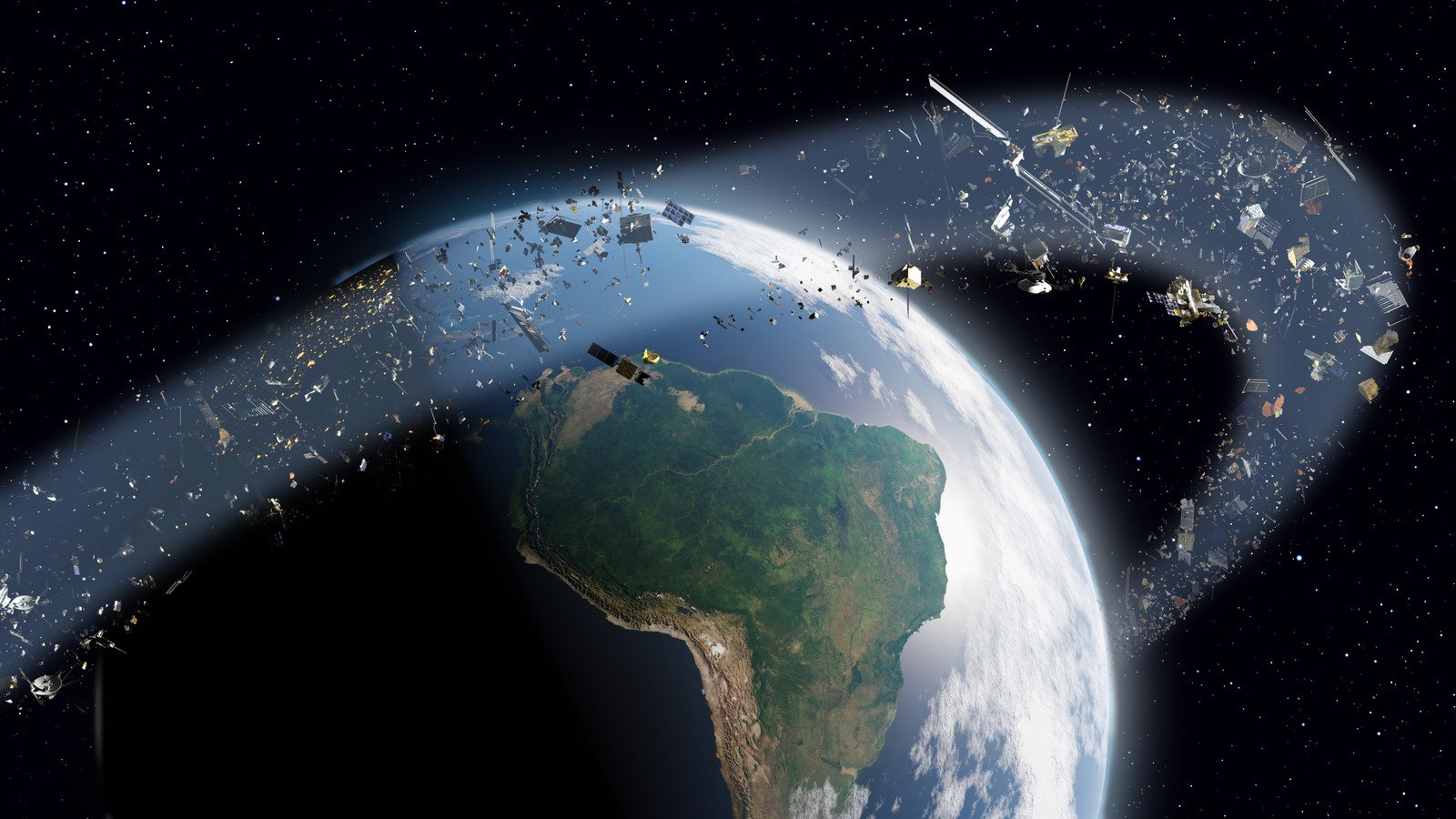
    Think of Earth’s orbit as surrounded by a fast-moving cloud of space junk. Outdated satellites, the shells of old launch vehicles, and bits of machinery from past accidents all constitute this space cloud. Where it becomes really scary is when you realize that each piece races around the planet at thousands of miles per hour, meaning that even the smallest scrap of metal can cause some serious damage. When you consider how many satellites are already in space, this dangerous debris poses a serious threat to their integrity. And the same could be said for missions that have live crew members on board. 

    History has already shown how destructive these collisions can be. In 2009, a nonfunctioning Russian satellite slammed into a working American one, resulting in thousands of fragments entering the orbit. Each new impact like this increases the odds of runaway chain reactions, where collisions create more debris in a snowball effect. Scientists call this nightmare scenario Kessler Syndrome, and it could eventually make parts of low Earth orbit too dangerous to use.

    That’s why non-contact methods like Japan’s plasma thruster are the way of the future. Unlike traditional capture tools that risk knocking into debris, a plasma-powered system can work from a safe distance, therefore decreasing the risk of fueling the problem. 

    A viable and neccessary solution

    Mark Garlick/science Photo Library/Getty Images

    One of the most promising aspects of Takahashi’s thruster is its use of argon as fuel as opposed to the standard propellant, xenon, which is more expensive and less abundant. This immediately makes large-scale cleanup missions far less costly and thus more feasible. The research team also introduced a “cusp” magnetic field to better control and direct the plasma to its intended target. This small but ingenious tweak exponentially improved the performance of what are relatively small thrusters, proving their capability of making a big impact in space.

    In theory, satellites that utilize this technology could deorbit space debris in as little as 100 days, and the timing couldn’t be better. As more companies, like Elon Musk’s Starlink service, plan on sending an ever-increasing amount of satellites into Earth’s orbit, the problem of space junk will only get worse. All it takes is one unfortunate collision to trigger a devastating chain of events that could, in theory, cripple our navigation, weather services, and global communication.

    Tohoku University’s plasma propulsion system is as much a solution to preserving human activity in space as it is an engineering marvel. If it can replicate the positive results it showed in the lab but in real life, this piece of technology will become an instrumental tool in preventing orbit from becoming a junkyard.

    Share. Facebook Twitter Pinterest LinkedIn Reddit WhatsApp Telegram Email
    Previous ArticleWhat Is ‘Title Jumping’ And Why Is It Illegal In Every State?
    Next Article Subaru Teases Long-Awaited Return Of An Iconic Performance Model (But With A Twist)
    TechAiVerse
    • Website

    Jonathan is a tech enthusiast and the mind behind Tech AI Verse. With a passion for artificial intelligence, consumer tech, and emerging innovations, he deliver clear, insightful content to keep readers informed. From cutting-edge gadgets to AI advancements and cryptocurrency trends, Jonathan breaks down complex topics to make technology accessible to all.

    Related Posts

    Resident Evil Requiem Steam player count breaks RE4’s 168K record 30 mins after release

    February 27, 2026

    Xgimi Titan 4K 5000-lumen dual-laser projector arrives with Dolby Vision, IMAX Enhanced, and DTS:X certifications

    February 27, 2026

    Razer introduces laptop sleeve featuring dual MagSafe charging pads

    February 27, 2026
    Leave A Reply Cancel Reply

    Top Posts

    Ping, You’ve Got Whale: AI detection system alerts ships of whales in their path

    April 22, 2025696 Views

    Lumo vs. Duck AI: Which AI is Better for Your Privacy?

    July 31, 2025280 Views

    6.7 Cummins Lifter Failure: What Years Are Affected (And Possible Fixes)

    April 14, 2025162 Views

    6 Best MagSafe Phone Grips (2025), Tested and Reviewed

    April 6, 2025122 Views
    Don't Miss
    Artificial Intelligence February 27, 2026

    What the polls say about how Americans are using AI

    What the polls say about how Americans are using AIListen to this article with a…

    Huawei Mate 80 Pro confirmed for Malaysia launch

    ASUS Showcases 2026 AI Copilot+ PC Lineup in Malaysia Led by New Zenbook and ProArt Series

    Resident Evil Requiem Steam player count breaks RE4’s 168K record 30 mins after release

    Stay In Touch
    • Facebook
    • Twitter
    • Pinterest
    • Instagram
    • YouTube
    • Vimeo

    Subscribe to Updates

    Get the latest creative news from SmartMag about art & design.

    About Us
    About Us

    Welcome to Tech AI Verse, your go-to destination for everything technology! We bring you the latest news, trends, and insights from the ever-evolving world of tech. Our coverage spans across global technology industry updates, artificial intelligence advancements, machine learning ethics, and automation innovations. Stay connected with us as we explore the limitless possibilities of technology!

    Facebook X (Twitter) Pinterest YouTube WhatsApp
    Our Picks

    What the polls say about how Americans are using AI

    February 27, 20262 Views

    Huawei Mate 80 Pro confirmed for Malaysia launch

    February 27, 20262 Views

    ASUS Showcases 2026 AI Copilot+ PC Lineup in Malaysia Led by New Zenbook and ProArt Series

    February 27, 20262 Views
    Most Popular

    7 Best Kids Bikes (2025): Mountain, Balance, Pedal, Coaster

    March 13, 20250 Views

    VTOMAN FlashSpeed 1500: Plenty Of Power For All Your Gear

    March 13, 20250 Views

    Travis Kalanick thinks Uber screwed up: “Wish we had an autonomous ride-sharing product”

    March 13, 20250 Views
    © 2026 TechAiVerse. Designed by Divya Tech.
    • Home
    • About Us
    • Contact Us
    • Privacy Policy
    • Terms & Conditions

    Type above and press Enter to search. Press Esc to cancel.