

How Steam changes and a China strategy helped TinyBuild’s The King is Watching hit 500k sales
The publisher’s CEO and founder, Alex Nichiporchik, explains label’s long-term vision for the game, and why the title pivoted to becoming a roguelite
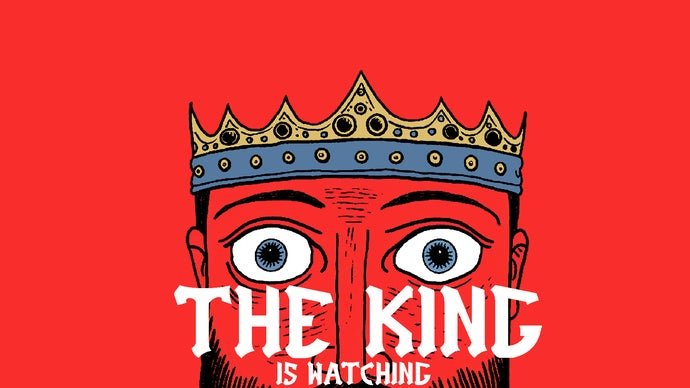
Roguelite kingdom builder The King is Watching, from Serbian developer Hypnohead and publisher TinyBuild, has shifted over 500,000 copies since its release in July 2025.
Now one of the label’s most successful games to date, the project had more humble beginnings, starting out at 2023’s Ludum Dare 54 game jam event, where the title picked up third prize and a publishing contract.
Over the course of the next 12 months, the studio iterated on the project with the intention of releasing something quickly, but after the first year, the game was not coming together. Although the playtesting scores were “quite good,” according to TinyBuild’s CEO and founder, Alex Nichiporchik, the time that people spent with the game was “not up to par.”
As a result, Hypnohead and TinyBuild decided to pivot the game to introduce roguelite elements, something that Nichiporchik says “takes guts” on both the developer and publisher side.
“It’s always terrifying to do a pivot, I’ll tell you that,” he says. “We’ve pivoted a lot of games; sometimes it works, sometimes it doesn’t. Making a decision like that is terrifying, but the more we talked with the developer, the more we realised it’s the correct decision. He had a lot of very interesting ideas of how to integrate it. It’s not like being a roguelike is a selling point. It’s a solution to have more replayability and the more replayability you have, the more people spend time in the game and therefore the more concurrent users you have.”
He continues: “Don’t go out and just say: ‘Okay, I’m going to make a roguelite, because that’s what people are making. Mewgenics is amazing, I’m going to make a roguelike. Do not do that. Do something that is really fun to play, and then pick and choose elements of genres you believe fit what you are trying to develop.”
Part of the thinking behind this change in direction was the metrics that tend to determine a game’s success on Steam, such as concurrent players. “Everyone today looks at SteamDB and looks at the player number,” Nichiporchik says.
“What no one talks about is that the concurrent player number is directly relevant or relative to the amount of time you spend on the game, because people play your game for four hours.”
Before launch, TinyBuild was confident in The King is Watching’s success, but Nichiporchik says he didn’t think the game would do “this well.” He thinks one element that contributed to the roguelite title shifting over half a million copies was how Steam has changed.
“A few years ago, there was more of a formula,” Nichiporchik explains. “You had your number of wish lists, your social media buzz, your review scores. In this case, it was a matter of finding the right audience and those players getting really into the game.
“Valve has talked for a couple of years now about its tagging system. Based on the games that you play and the tags associated with those games, you are given a lot of personalised recommendations. If we were to launch this game three or four years ago, it probably wouldn’t have done as well, because the wish lists that we have accumulated were directly targeted for this very specific target audience. Valve’s decision-making was initially surprising to developers and publishers, but now you can really find a concrete niche for your game.”
TinyBuild and HypnoHead released a demo on the Itch.io storefront as well as via the Opera GX web browser. In total, these were downloaded more than one million times. In particular, The King is Watching ended up trending in China. Courting the Chinese audience is “both an opportunity and a challenge,” says Nichiporchik, as players are “extremely picky” when it comes to localisation.
All in, TinyBuild spent three or four times more on localisation for the Chinese version than it normally would, and invested in a social media presence to make sure that players saw the game all over the place. The result was that more than 30% of The King is Watching’s sales came from China.
“There is a lot of interest in these interesting satirical games that are on the edge a little bit in China,” Nichiporchik says. “It’s also an emerging region that is now playing on consoles, that’s now playing AAA games. When you have something that people play for a long time, more people find out about it, and that just keeps everyone engaged.”
In addition, he thinks having everything localised into Chinese, including news about the game, was a big help. “You see that and go: ‘Oh, they speak my language, literally’. There was a lot of faith that was built up there.”
In the long term, TinyBuild reckons that The King is Watching has franchise potential, joining its stable of IP such as Hello Neighbor, SpeedRunners, and Party Hard.
“Usually, franchises fully open up between years seven and 14, which is a very long time”
“We always want a situation like this,” Nichiporchik says of the game’s success. “The thing about video games is when you have something that becomes successful, it’s easier to make it more successful and to maintain it than to make another game more successful. This creates a challenge for the publisher–developer dynamic in general. The developer will have made a lot of money, which is fantastic, but they’ve also worked really, really hard for a long time together.
“The structure that I really want for developers is when you’ve published with us, you become successful, we always have these terms where we would love the developers to continue working on the game they have created, and if they want, they can do something else, and they’ll get a passive royalty, because then we continue working on the game.
“Usually, franchises fully open up between years seven and 14, which is a very long time. We’re working on a sequel for SpeedRunners at the moment; we published that game 14 years ago, and now we’re working on a sequel. It’s a very long-term play once you see success, because this kind of success is very rare, and it’s important to continue working on this IP to make it a franchise.”
