

Korean acquisitions, buying for back catalogue, and filling the content gap: video game investment and M&A trends for 2026
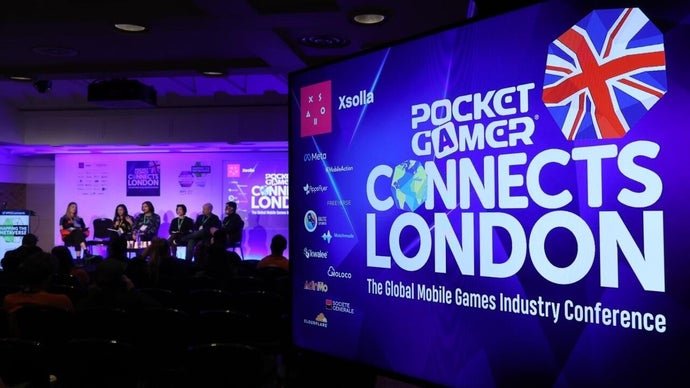
At Pocket Gamer Connects London this week, a panel of well-known games industry investors gathered to discuss “Investment and M&A Trends for 2026”. GamesIndustry.biz was there, and the general message of the talk was to expect a slightly rosier outlook for merger and acquisition (M&A) activity in the current months, even though the overall picture remains somewhat risk-averse, with funding still hard to find.
The panel was made up of Alina Soltys (partner and founder, Quantum Tech Partners), Bibbi Wikman (founder, PlayCap), Sikander Chahal (principal, Transcend Fund), Phil Mansell (co-founder, The Games Angels), and Shum Singh (MD and founder, Agnitio Capital), and below is a summary of the key takeaways.
M&A is coming back in 2026
Alina Soltys suggested that the huge, $55 billion EA deal from last year could kickstart more M&A activity in the games industry. “M&A analysts believe big mega deals trickle down to everybody else,” she said. “That certainly happens, and it creates confidence in the industry, and it gets headlines. And all of a sudden you see other people looking into the industry, thinking about investing into gaming. So that EA deal, for example, is positive from that perspective.”
A recent report from investment bank Aream & Co showed that there was just $500 million in video games M&A activity in the final quarter of 2025, an 89% drop year-on-year. But Soltys said that at the beginning of 2026 we’re seeing “higher activity of transactions starting,” and noted that M&A data tends to be backwards-looking, reflecting what was happening months previously. “If you think about the time it takes to close a deal, it’s many months, sometimes a year.”
Overall, going into 2026, she sees three trends. “Number one, there have been a lot of really great studios that have not just survived, but under-the-radar thrived, and it’s just uncomfortable to talk about in some cases across the broader industry landscape.
“Number two, a lot of capital has been retained in these buyer groups, and they’re now looking for more growth.
“And number three, the valuation gap has closed. Post-COVID there was a lot of interest in distress deals, and at the companies that were doing well, the founders had no reason to sell. And so that created a big gap in just lack of deal flow. That’s now in a normal range – not crazy like COVID, but in a great place. And so that sets us up in a place where this year looks very promising, across a host of different categories and sizes.”
Beyond content funding
Phil Mansell, who was the CEO of Jagex until March last year, said we’re in a period of “adjustment”, and investors are reluctant to fund content. “I think it’s probably the case that content-based investments with equity are still not particularly attractive, other than in the most exceptional cases,” he said. “A lot of people are looking for the investment, but not that many people are receiving it on the content front.
“But some of the adjustment that seems to be happening is a greater variety of funding types, whether it’s UA [user acquisition] financing, project financing, last mile financing, founders and advisors getting better at finding non-dilutive or government assistance through things, factor financing for VGEC… I think people are becoming a bit more aware of a wider set of ways of getting funding. I think especially on the indie games side, that is going to be increasingly important, because certainly compared to the COVID highs, there’s less and less traditional equity investing for content businesses.”
“Compared to the COVID highs, there’s less and less traditional equity investing for content businesses”
Bibbi Wikman agreed that there’s currently little in the way of content funding from equity investors, and that companies would have to seek out alternative sources. “And I think in a way it’s good,” she said, “because I feel like it’s been a tradition that you’re always going to get the VC into the company, giving away a little bit too much of your company, and not really understanding that it also takes away a lot of your own control over your product, your release plan, everything. It’s a very risk-averse industry right now, and it’s probably going to stay that way. So I would start my pitching after I can actually show that I have an audience waiting for it. Keep the core of what you want to build, I think that’s important.”
Sikander Chahal said that Transcend Fund is still doing content deals, but the bar to getting a deal is now much higher. “Three, four years ago,” he said, “if you were from a named team and you had some grand big vision, you could probably get some funding. Now, you really need to show that you’re demonstrating some kind of traction. If you are trying to get funding, whether it’s from a VC or elsewhere, being able to show that there are ways that you can mitigate some of that risk by showing some sort of external validation, that helps a lot. The bar has basically gone up.”
Korea is flying
Shum Singh, who chaired the panel, pointed towards the Korean publisher NCSoft’s recent acquisition of Vietnam-based casual games maker Lihuhu, which led to a discussion of investments by Korean game firms.
Soltys said that a lot of the investment and M&A activity in the past two years has been from Korean groups that seem to have a long-term vision. “They continue to invest through a period where a lot of people pulled back, pausing and reassessing strategies,” she said. It’s notable that the Korean publisher Krafton said this month that it had 26 games in the pipeline.
Singh agreed that Korean firms have been very active. “Certainly we see the same thing, and we’re in discussions with them,” he said, adding that the firms tend to approach things cautiously, starting with smaller publishing deals. “And if it goes really well, then maybe that leads to a potential acquisition or more strategic relationship down the road.”
It’s a different story with Korea’s close neighbour, however. “The Japanese have been noticeably absent,” Singh said.
The COVID content gap
Soltys said that for the past couple of years, everyone has known there will be a “content gap” – a result of the collapse of funding after COVID-era highs meaning fewer new games coming through. “And we’re here,” she said. “There’s tons of conversations around: ‘What can we launch at the end of this year, because we just don’t have anything? What can we do in the next 15 months?’
“The timeline is no longer 3-4 years for a quality game, they want something in 12-18 months”
“And so the timeline is no longer three, four years for a quality game. They want to have something within the next 12 to 18 months. So that stuff is picking up, those conversations are active, and people do and will spend money on that. That can come in the form of publishing, it might come in the form of acquisitions. I think realistically, we should also think about what makes sense for strategics to buy versus publish. Those are two different sides of the coin. And so there might be less acquisitions per se, but more publishing.”
Buying for back catalogue
Mansell said that in the mid-market, and in Europe in particular, current acquisitions are more targeted. “It might be buying IP – not full teams, not full studios – or buying for back catalogue.”
Soltys added that private equity firms on the lookout for games companies “don’t view themselves as creative owners necessarily” – instead, they’re looking for a recurring revenue base. “That’s why it’s nice to have that catalogue, because at least there’s something there for them to analyse and run DCFs on.” (DCF stands for discounted cash flow, a method used by private equity for determining a company’s value.)
“If you have older games, figure out ways to maintain them, it helps with revenue and future transactions.”
“But it’s not always in your creative team’s mindset to keep those older titles up and running,” Soltys continued. “And so a word of advice, just for everybody in the room, if you do have those types of games, figure out ways to maintain them. Not only is it good for your revenue base, but also down the road, if there is interest in some sort of a transaction, it helps. There’s always obviously interest in new IP, but maintain that old stuff, too.”
Investors are looking for innovation
When Singh asked the panel asked what new developments they were excited by, Wikman said she was interested in “finding good ways of distribution, user acquisition, companies that are building communities… How can you break through all the noise?”
“And I would add, any new way that you can deploy AI technology,” said Chahal, “whether it’s in your organisation execution, like managing a team, or whether it’s in the product itself. Obviously there’s a lot of debate and sensitivity around how you use AI in your games, but I think from an investment perspective, you really need to demonstrate that you’re on top of this stuff. And if there’s a good reason why you’re not using it, then that’s fine.”
He gave live ops as an example of a good area in which to utilise AI. “There’s a lot of upside potential there.”
Player relationships are key
“I think as game developers, being close to your player is really important, especially at a time like this,” said Soltys. She highlighted direct-to-consumer payment systems as a good way of being able to interact with players and to focus marketing, as well as enabling independence. “Being in that control seat helps, and it also gives you visibility to what’s working, where to invest further, what new products to work on.”
“It’s a very risk-averse industry right now, and it’s probably going to stay that way.”
Wikman added that it’s now more important than ever to be aware of your audience. “Even if you’re in a pre-seed stage, you have to show that you have traction for whatever you’re building. It’s a very risk-averse industry right now, and it’s probably going to stay that way. So I would start my pitching after I can actually show that I have an audience waiting for it.”
The GTA 6 uplift
We may still be living through a risk-averse period in terms of investment, but Chahal saw grounds for optimism, saying that “things are directionally looking much better than it was last year.”
He noted that the post-COVID spike in interest rates was a big reason why investment slowed. “If that starts to trend down, you’re going to start to see a lot more people investing,” he said. But most of all, he was optimistic about video games being raised higher in the general consciousness. “Something like GTA 6 making headlines makes people talk about games. And at the end of the day, we’re all humans, and simple psychology comes into it. So more people talking about games, that’s going to be a great thing for the industry generally.”
