

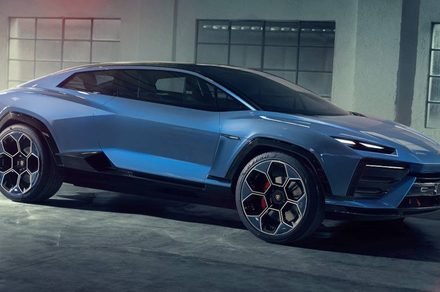
Lamborghini kills its upcoming all-electric Lanzador because of nearly zero interest
The Italian supercar maker shelves its first planned EV, embraces hybrids through 2030, and signals wealthy customers still crave engine noise over silent performance.
Lamborghini is done with the Lanzador. The all-electric supercar the Italian automaker showed off back in 2023 — the one that was supposed to drag the brand, kicking and screaming, into the EV era — was quietly axed late last year (via The Times).
CEO Stephan Winkelmann confirmed it this week, and frankly, he didn’t sound too broken up about it. The reason? Winkelmann put it bluntly: EV development was becoming “an expensive hobby.”
EV dream runs out of charge
And when your hobby involves billion-dollar research and development budgets, along with a customer base that basically doesn’t want the thing you’re spending the money on, it’s time to put down the soldering iron.
Instead of going all-electric, Lamborghini will pivot to plug-in hybrids (PHEVs) across its entire lineup by 2030. The Lanzador itself will reportedly be reborn as a PHEV — which, to be fair, might actually be a better fit for a brand whose identity is wrapped up in the sound and fury of a roaring V10 or V12.
EVs, Winkelmann admitted, “struggle to deliver this specific emotional connection.” Translation: a silent Lamborghini is basically just an expensive golf cart.
Industry-wide reality check
The numbers back him up. The “acceptance curve” for battery-powered cars among Lamborghini’s wealthy clientele is, in his words, “close to zero.” Meanwhile, the company just had its best year ever — delivering a record 10,747 cars in 2025, with its PHEV lineup of the Urus, Temerario, and Revuelto doing all the heavy lifting.
Lamborghini isn’t alone in this rethink.
Stellantis just ate a $26 billion charge to ditch some EV models, and Ford wrote down nearly $20 billion on its EV plans. The electric gold rush, at least in the luxury supercar space, appears to be on pause.
Never say never on a Lamborghini EV, though — Winkelmann himself used that exact phrase. But for now, if you’re hoping to buy a silent raging bull, you’ll have to wait.
For more than five years, Shikhar has consistently simplified developments in the field of consumer tech and presented them…
Why Tesla should worry about BYD’s latest move
The Chinese automaker is scaling up chargers that hit 1,360kW and store grid power for peak times.
Tesla has a new problem in China. BYD is finally rolling out its megawatt flash chargers at scale, and the specs leave Superchargers in the dust. These new units push 1360kW, enough to add roughly 400 kilometers of range in about five minutes.
The timing matters. BYD has talked up this technology before but held back on deployment. Now construction is visibly underway based on the social media posts as reported by Car News China, and the company is betting that ultra-fast charging will pull more drivers to its EVs.
The next big car threat is an AI backdoor you can’t detect
Researchers found a new hack called VillainNet that stays hidden in your vehicle’s system until it’s too late.
Forget the fender bender. The real danger to self-driving cars might be a hack that sleeps inside the vehicle’s AI, waiting for the right moment to strike. Georgia Tech researchers uncovered a new vulnerability called VillainNet, and it exposes a critical blind spot in autonomous systems.
The backdoor stays inactive until specific conditions wake it up. Then it works 99% of the time. A criminal could program the trigger for almost anything, say a self-driving taxi responding to rain. Current security tools can’t spot this threat. Your car could be compromised and you’d never know until it’s too late.
Here’s your chance to grab a cheaper Cybertruck but you have to hurry
Tesla slashes Cybertruck pricing in rare 10-day promotion
Tesla has made a bold pricing move on its long-anticipated Cybertruck, offering one of its more affordable trims at a price that finally starts to feel within reach for a broader range of buyers. For a limited time, the dual-motor all-wheel-drive Cybertruck is listed at $59,990 in the U.S. – the lowest price yet for the futuristic electric pickup and a significant shift from the vehicle’s previously high price tags.
The discounted price, which CEO Elon Musk says will only be available for 10 days, represents a rare opportunity for prospective buyers who have been turned off by the Cybertruck’s historically premium cost and slower-than-expected sales.
